A Case of Implant Treatment for 4 Teeth in a Patient in Their 40s
Hello, I’m Lee Hyun-seop, Director of Seoul Centum Dental Clinic.
Today, I’d like to introduce a case of multiple implants for a patient in their early 40s.
A total of 4 implant sites were placed, and this was a case in which sinus lifting and bone grafting, which many people worry about, were performed together.
I’ll explain step by step what we considered at each stage of treatment and how the procedure was carried out.
Implant Treatment Plan in the 40s
The patient who visited this time was in their early 40s and needed a total of 4 implants in the upper right molar area and the lower left first molar.
In the upper right molar area, there were three sites: the second premolar, the first molar, and the second molar.
The upper right second premolar was already missing, but there was sufficient bone volume.
The upper right first molar was missing, and partial sinus lifting was needed.
The upper right second molar needed extraction, and bone grafting was definitely necessary along with the extraction.
The lower left first molar was already missing, and angulation of the adjacent teeth was observed.
In particular, for the upper right first molar, the residual bone height was measured at about 7.5 mm, making treatment difficult without sinus lifting.
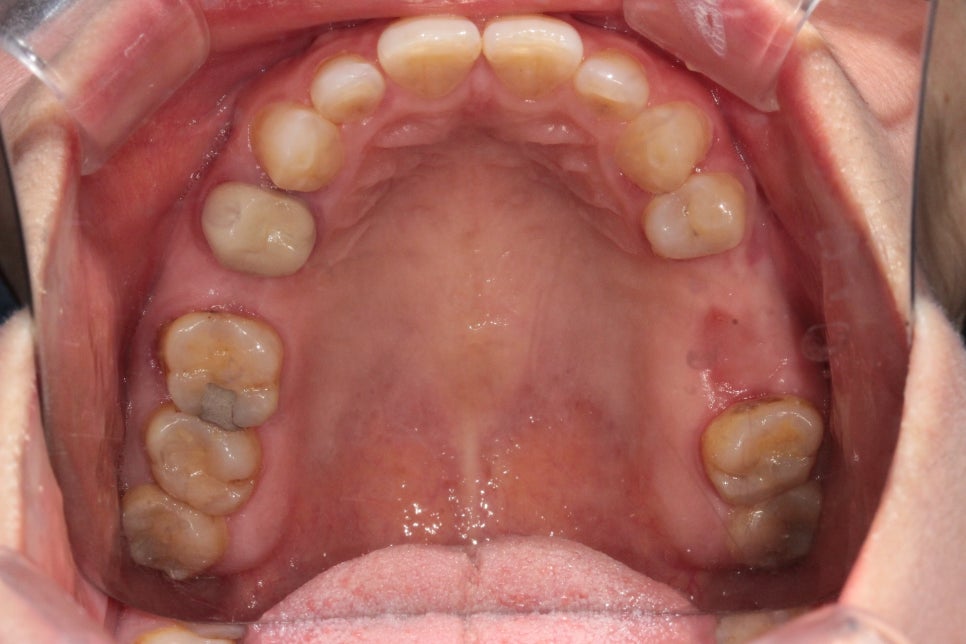
Occlusal view of the upper teeth
By contrast, the adjacent upper right second premolar area had a sufficient bone height of 11.4 mm.
Occlusal view of the lower teeth
Preoperative Examination and Bone Evaluation
For an accurate diagnosis, panoramic imaging and CBCT were performed.
This process is essential because it allows for precise evaluation of the bone condition, the location of nerves, and the distance to the sinus—things that cannot be seen with the naked eye.
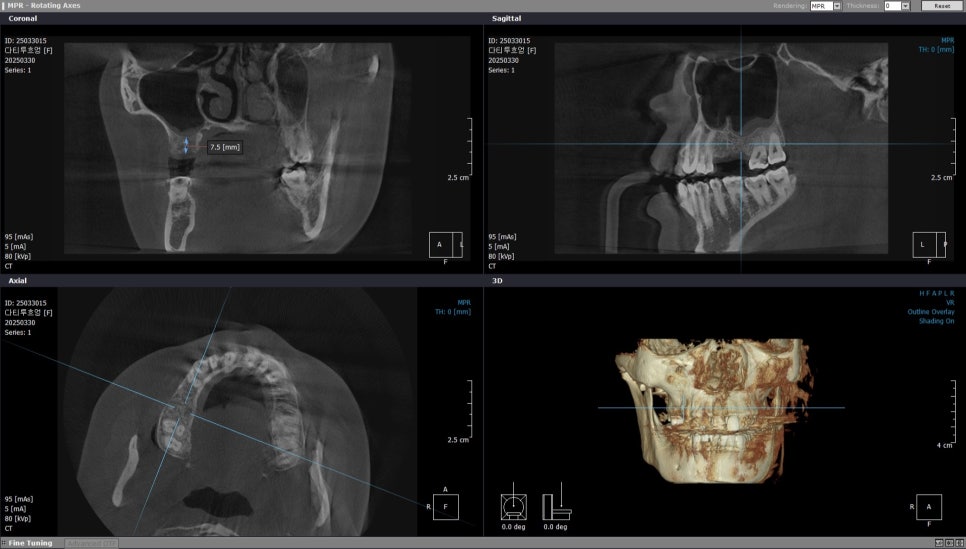
CT of the upper right first molar area
Summarizing the test results:
The upper right second premolar had a bone height of 11.4 mm,
which is sufficient for implant placement.
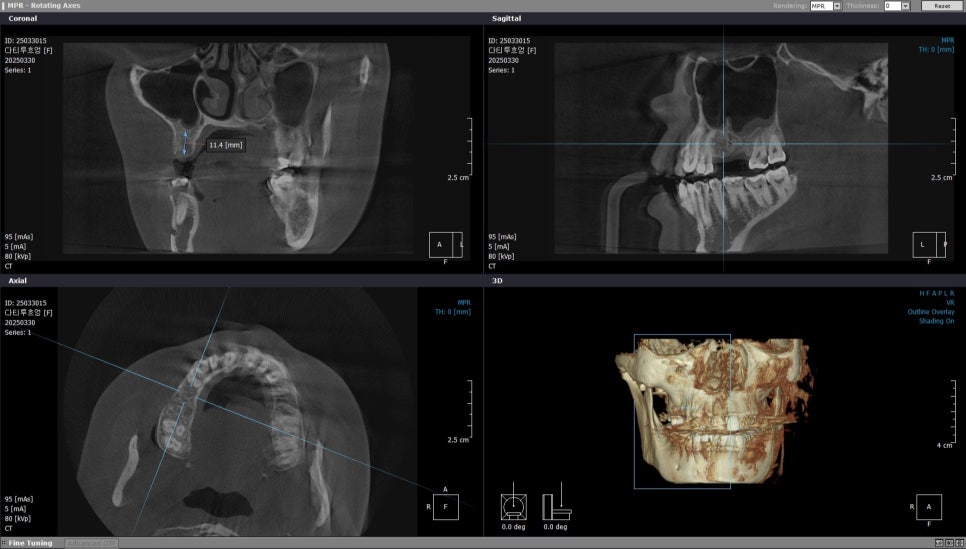
Upper right second premolar area
In the case of the upper right first molar,
the residual bone was only about 7.5 mm,
so sinus lifting was essential.
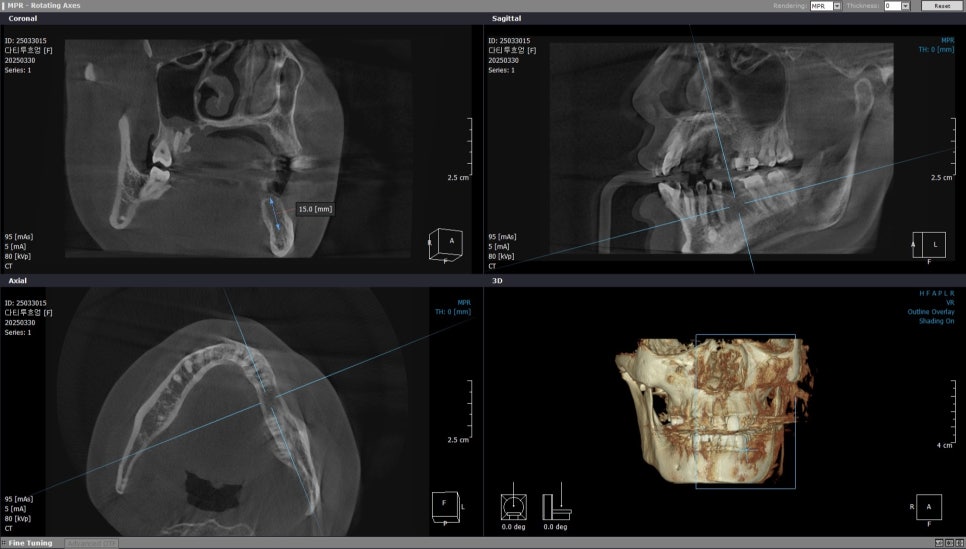
Lower left first molar area
For the lower left first molar,
it was confirmed that the adjacent tooth was tilted forward.
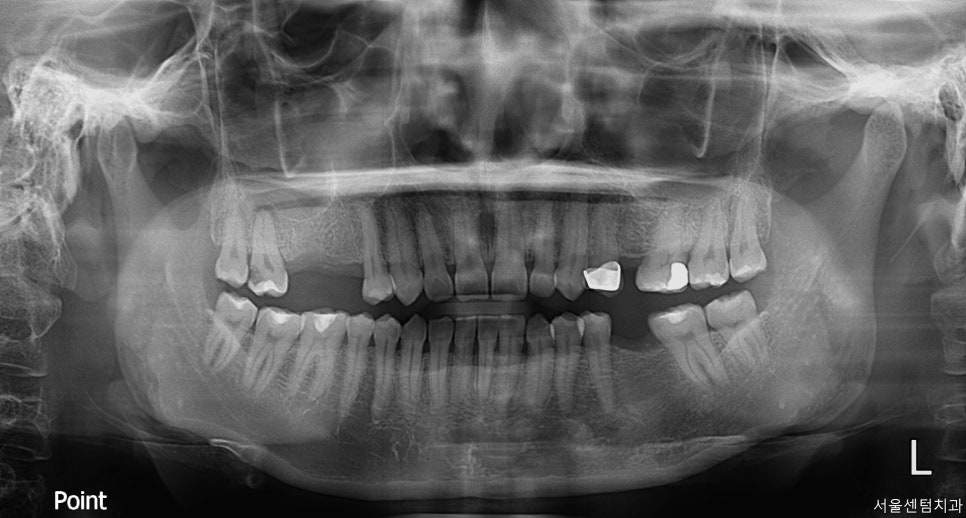
Overall tooth photo before treatment
Through this detailed examination,
each tooth’s condition can be understood in detail.
Implant Placement and Bone Grafting
After all examinations were completed,
we explained everything to the patient and discussed that all 4 sites could be treated in a single day,
so we decided to complete the placement on the same day.
Although it could have been divided into multiple sessions,
considering the patient’s condition and overall health,
we determined that doing it all at once would be more efficient,
so we proceeded with a single-session treatment.
For the areas where sinus lifting was performed,
the upper right first and second molar sites underwent sinus lifting using the crestal approach.
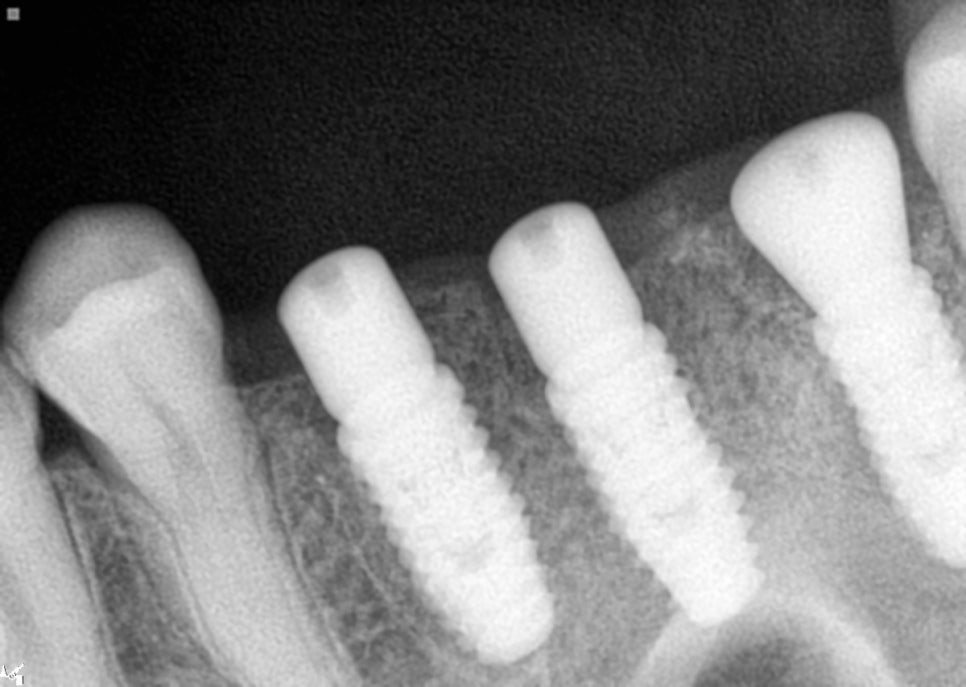
Placement of three upper implants completed
This method lifts the sinus membrane through the implant placement hole.
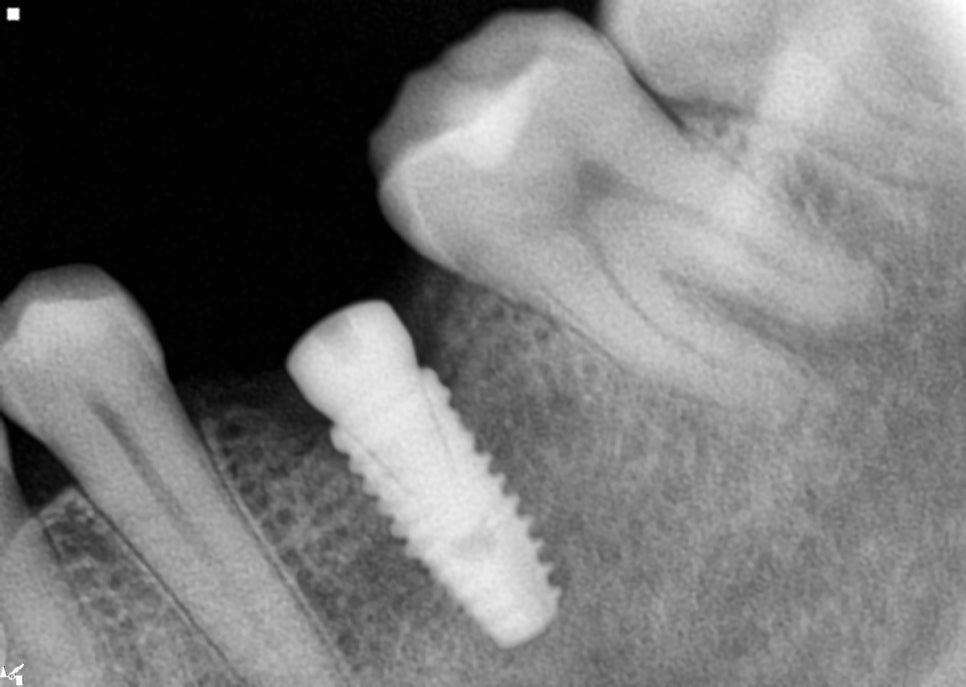
Lower implant
It must be done with great precision.
Compared with the lateral approach, it is less invasive and has the advantage of faster recovery.
Appropriate bone graft material was used at each implant site,
and it is important to place the implants at the correct angle, parallel to the long axis of the adjacent teeth.
Fortunately, the initial stability was good,
so I told the patient that we would wait for osseointegration with the healing abutments in place.
Osseointegration Period and Healing Process
After implant placement, time is needed for osseointegration.
The initial treatment plan was to wait 5 months for the upper jaw and 3 months for the lower jaw before proceeding.
Generally, the bone density of the upper jaw is lower than that of the lower jaw.
So it usually requires much more time.
During this period, regular visits to the dental clinic are essential.
The osseointegration status is checked through ISQ measurements, which assess implant stability.
Fortunately, osseointegration at all sites progressed better than expected,
which was a relief.
Second Surgery and Impression Taking
Three months had already passed since the placement.
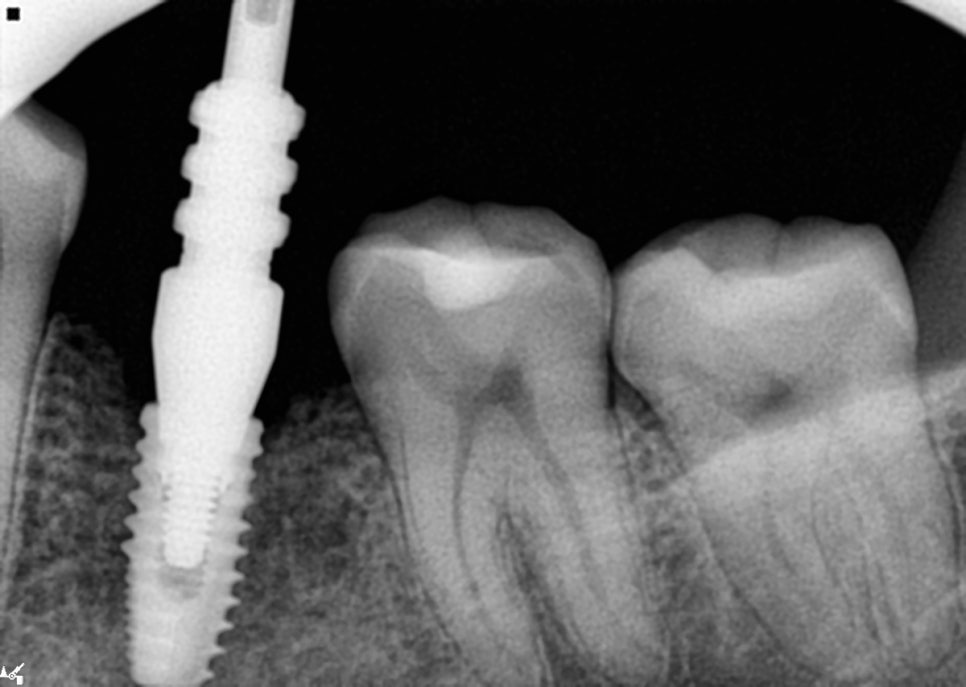
Impression taking in the lower jaw
An impression was taken at the lower implant site.
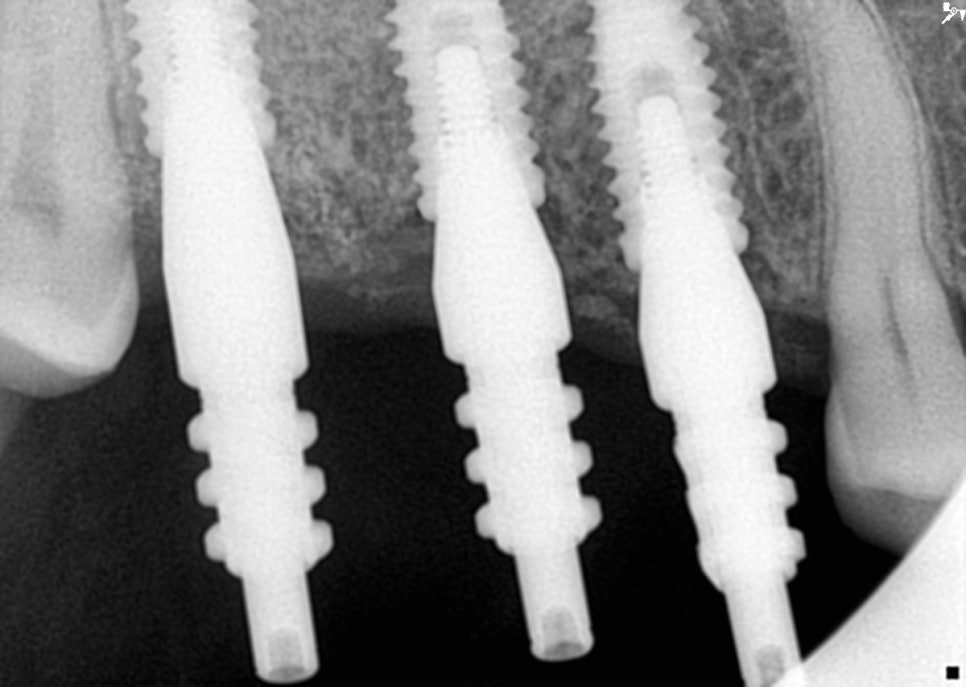
Upper impression taking
One notable point was discovered.
Normally, in the upper jaw, osseointegration would likely not have progressed yet,
but the condition was much better than expected,
so we were able to take impressions 2 months earlier than originally planned.
Why was it possible to proceed 2 months earlier?
The patient’s overall health was good,
and they carefully followed the precautions I explained after surgery.
They were a patient who maintained their care without any unnecessary complications,
so they left a strong impression on me.
Custom Abutment Fabrication and Placement
After taking the impressions,
we fabricated individualized custom abutments.
Stock abutments are also available,
but because each patient has different gum shape and implant angulation,
custom fabrication can be more advantageous for the patient.
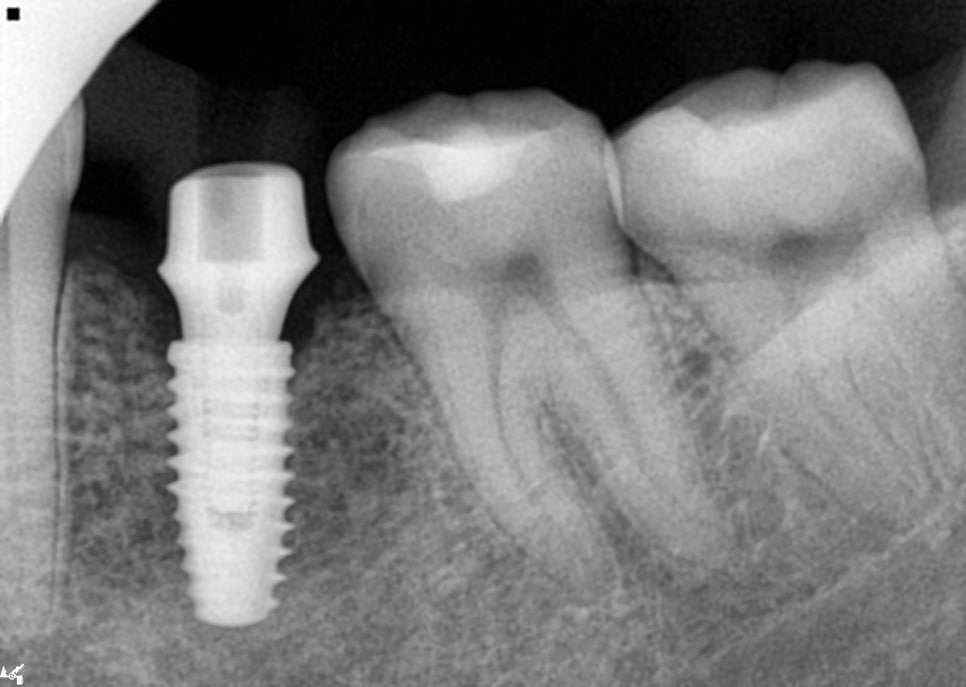
Lower abutment placement
Especially in cases like this, where multiple teeth are treated at once,
it is very important to design the final prosthesis so that it can look natural,
like the original teeth, by considering each angle and depth.
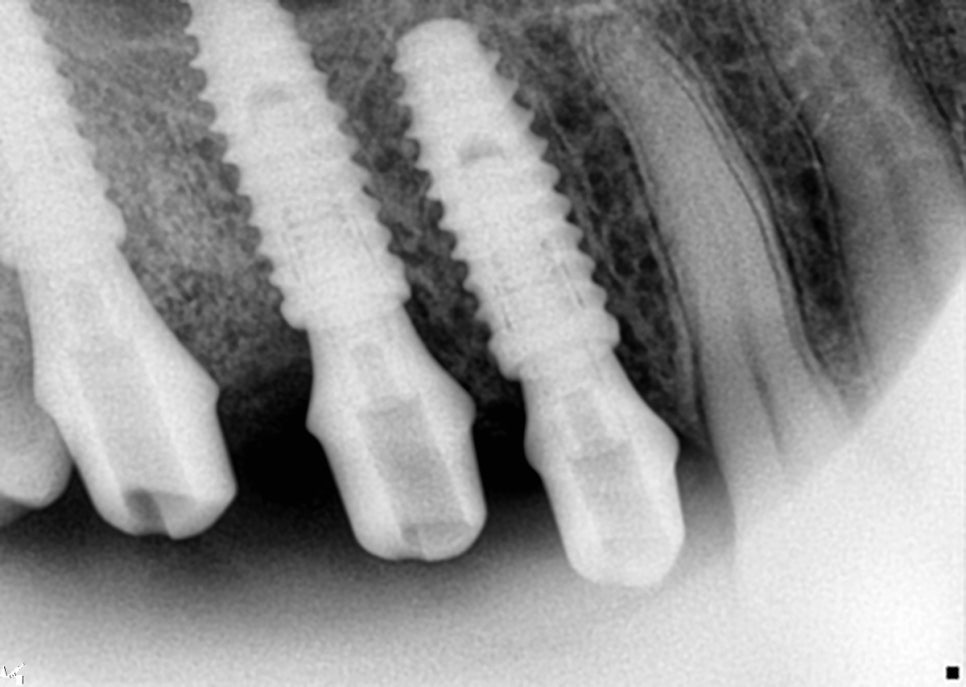
Placement of all three upper abutments completed
After abutment placement,
the fixation must always be double-checked with radiographs.
Even if it looks fine by eye,
that may not always be the case,
so careful confirmation is necessary.
Final Prosthetic Restoration and Completion
Finally, we reached the last stage of this long treatment:
the fabrication and placement of the final crowns.
At this stage, several things must be checked.
Whether the upper and lower teeth fit together comfortably with the final prosthesis,
whether they contact the adjacent teeth naturally,
whether the color and shape look natural,
and final confirmation must also be done with radiographs.
In particular, occlusal adjustment must be carried out very carefully.
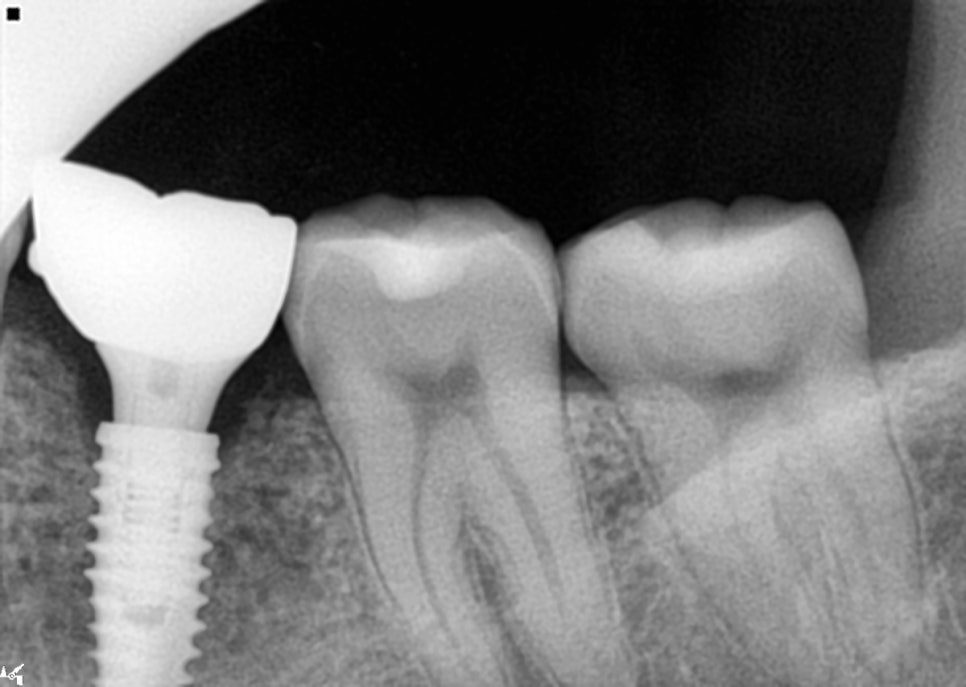
Completion of the lower prosthesis
If it is too high, it can feel uncomfortable when biting;
if it is too low, it may not function properly,
so fine adjustments are unavoidable.
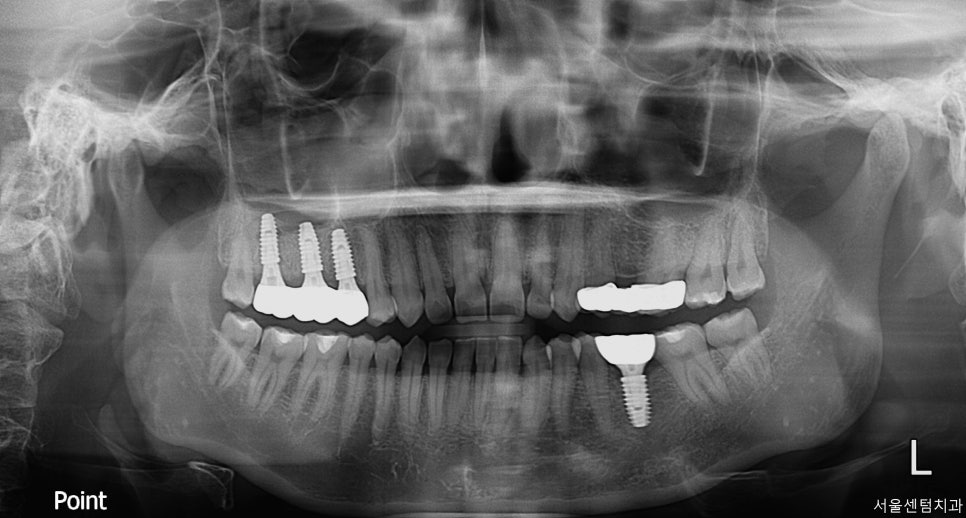
Final completion: all 4 implant sites successfully finished
The contact points with adjacent teeth must also not be too tight or too loose.
It’s not over until it’s over.
Implants cannot be considered finished simply because the prosthesis has been placed.
Because they are different from natural teeth,
maintenance is one of the most important parts of this treatment.
During the first 6 months, the patient should visit every 3 months for an examination.
After that, regular checkups and thorough oral hygiene management are needed every 6 months.
Up to now, the implants have shown a stable prognosis without bone loss around them.
We plan to continue monitoring them long term through regular checkups.
This case involved complex treatment with sinus lifting, bone grafting,
and multiple implants performed at the same time.
Thanks to a systematic long-term treatment plan
and the patient’s active cooperation in strictly following the precautions,
this case was completed successfully faster than the expected treatment period.
If you are considering implant treatment,
it is important to choose a clinic that can create an accurate diagnosis and a customized treatment plan
that takes into account factors such as your individual bone height.
You do not need to give up on implants just because there is not enough bone.
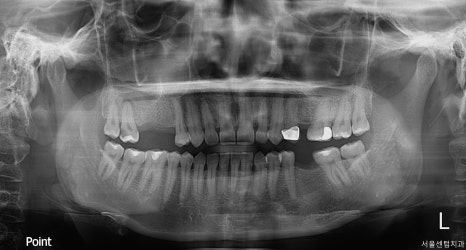
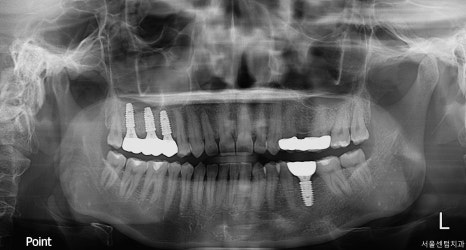
BEFORE / AFTER
If bone grafting is performed together with sinus lifting,
you can have an implant that is similar to a natural tooth rather than dentures.
Even in the early 40s, tooth loss can happen from time to time.

If you have questions about implants,
please feel free to visit anytime for a consultation.
This was Lee Hyun-seop, the chief director of Seoul Centum Dental Clinic, Sinsa Station Dental Clinic. Thank you.
Implants after extraction
Where should the implant process begin?