Is there anything to check before deciding on an implant?
When thinking about how to manage the space left by a missing tooth,
many people consider implants.

Missing teeth are not very appealing visually,
and the biggest issue is the discomfort when eating.
Later on, the gums and surrounding teeth
can also change,
so it is best to move forward as soon as possible.
That said, treatment should be approached based on the current oral condition
with long-term stability in mind.
For those of you currently considering dental implants,
we have prepared a few helpful pieces of information,
so we hope you will take a moment to read through them.
The oral structure and bone condition determine the scope and method of treatment.
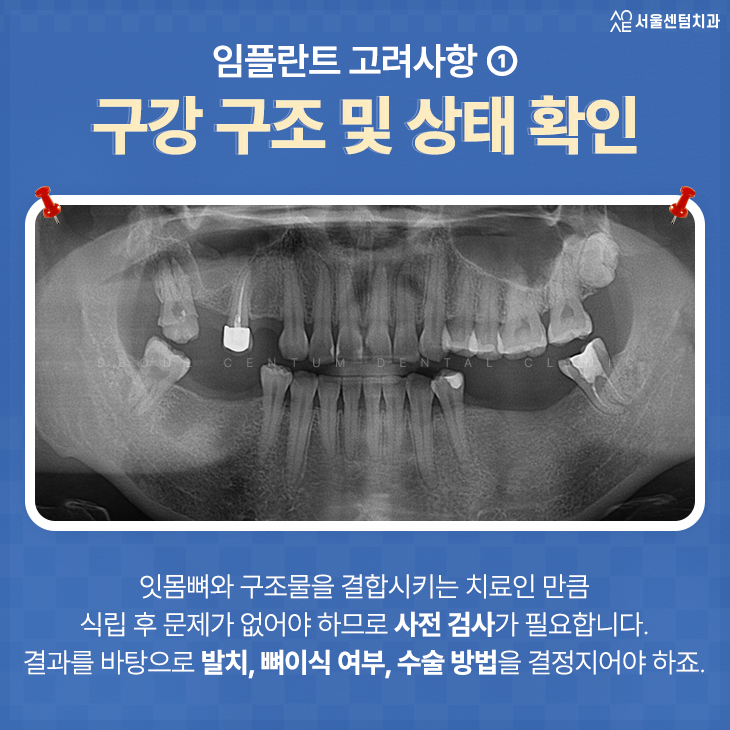
Because implants are placed by fixing an artificial root
into the jawbone,
the thickness and density of the jawbone become important criteria
for determining whether treatment is possible and how extensive it can be.
The longer a tooth has been missing,
the more bone resorption progresses,
which can make placement more difficult.
In such cases, additional procedures such as bone grafting or sinus lift surgery
may be needed,
so when planning treatment, it is important to accurately assess the current bone condition
and hear in advance what necessary steps may be required.
Consider your overall health and medication history

Since the procedure involves incision and suturing,
bleeding can occur,
so overall health should be regarded as a variable during treatment.
We also ask our patients in advance whether they are taking any medication,
whether they have any illnesses,
or whether they have had surgery because of them.
Conditions such as high blood pressure, osteoporosis, and diabetes
can affect recovery speed and infection risk.
In particular, if you are taking anticoagulants or immunosuppressants,
more careful planning is needed for bleeding control and the recovery process.
Please do not forget that your health condition is
very important,
and be sure to tell the medical staff openly
whether you are taking any medication.
The placement location and prosthetic selection also affect the outcome.
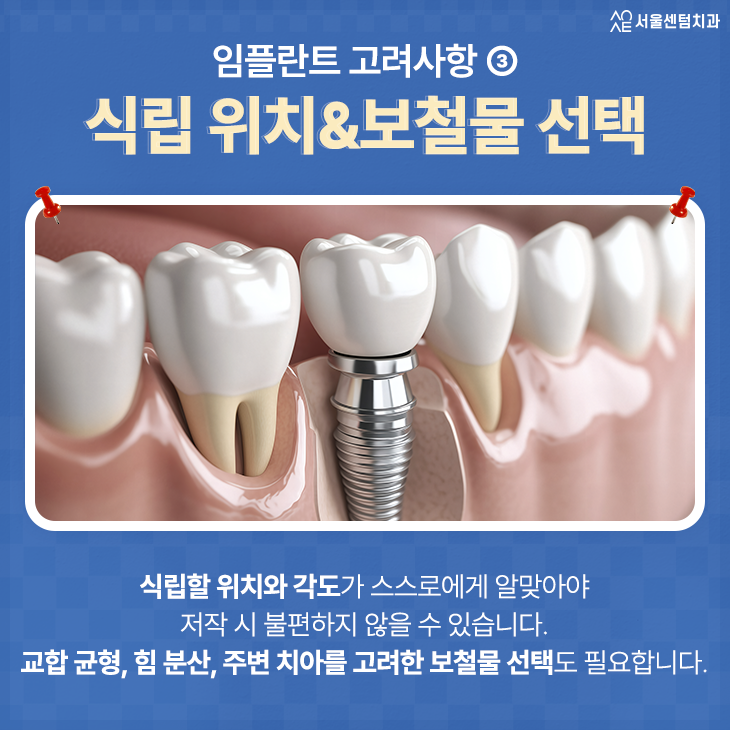
The conditions required for dental implants
differ depending on the location.
In areas such as the molars, where chewing force is concentrated,
the fixture diameter and placement angle must be considered carefully,
while in the front teeth, which are immediately visible,
color, translucency, and harmony with the gum line
become even more important factors.
A stable result can be expected only when the treatment is custom-designed,
while also considering occlusal balance, force distribution,
and interaction with the surrounding teeth.
Choosing the right dental clinic is also an important criterion

The quality of the result is influenced not only by the treatment itself
but also greatly by the clinic’s diagnostic system and management process.
It is worth checking whether precise diagnosis using equipment such as panoramic X-rays and 3D CT is possible,
whether a treatment plan suitable for each person’s oral structure is established,
and whether regular checkups and follow-up care after dental implants
are carried out systematically.
In addition, the clinical experience of the medical staff
is the most important factor,
so you should make a careful decision while checking these conditions as well.
The timing of treatment and the placement plan can be decided flexibly.
There is no clear rule for when placement must be done.
If there is no inflammation after extraction and the bone condition is good,
immediate placement can be considered,
but
if there is inflammation and the gums have not fully healed,
it is better to proceed after allowing enough time for recovery.
In this way, the timing and method should vary depending on each person’s oral condition and recovery circumstances,
so a customized approach is necessary.
Because it must be used for a long time after a single decision,
we explained that oral structure, overall health, placement location, prosthetic selection,
and even which dental clinic to receive treatment from
are all interconnected and affect the result.

Rather than vague worry, you should receive guidance on a plan that suits you
through 충분한 상담,
which can reduce discomfort
and help increase satisfaction.
Moreover, the earlier the treatment is done,
the lower the likelihood may be of needing additional procedures.
If you understand and prepare for the considerations before treatment,
the burden of dental implants will also feel much lighter,
so I hope you do not delay too long before replacing the empty space in your tooth
with an implant.
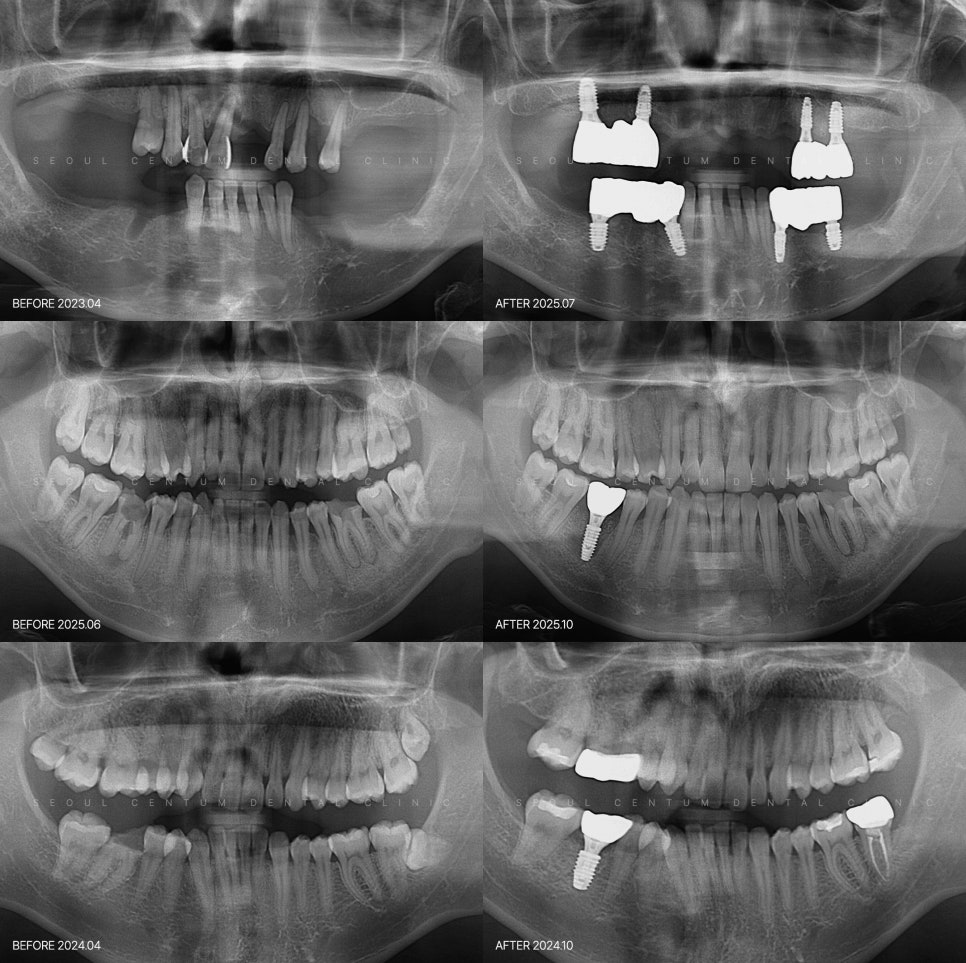
Also check out a treatment case of implants in a person in their 40s.
How can you extend the lifespan of a root canal crown?