From vague worries about pain
we need to reduce them little by little.
It’s not just the cost of implants,
but also the idea that the pain after the procedure
will be severe
that makes some people hesitate about whether to go through with it.
It’s true that people are sensitive to this, too.
Because discomfort can continue for a while in daily life.

Because it is a treatment carried out through a systematic procedure,
the discomfort occurs within a manageable range,
and it gradually improves,
so there is no need to worry too much^^
Rather than assuming it will hurt a lot no matter what,
it may be more helpful to know when it gets worse,
and at what point it improves,
so we’ve prepared some related information.
The first three days are the worst

For about an hour right after placement,
anesthesia is still in effect, so it is relatively fine,
but once the effect gradually starts to wear off,
from about 2 to 3 hours later,
the pain begins in earnest.
The degree can vary from person to person,
depending on the number of implants, the area, sensitivity, and more.
Some people may think it is bearable,
while others may find it difficult enough
that a few tears come out.
There is no need to worry too much,
because if you consistently take the prescribed painkillers and antibiotics,
it can be controlled to a sufficient degree,
and if you reduce strenuous activity,
the swelling will go down much faster.
The gauze placed at the beginning should also be bitten down firmly
until the bleeding stops,
which helps recovery.
In other words, the pain is worst until day 3,
and after that it tends to gradually ease,
so it may be helpful to keep that in mind.
You can return to daily life from the one-week mark

By this point, the swelling has gone down quite a lot,
and the pain has also decreased significantly,
so you can think of recovery as being enough for daily life
without major disruption.
Of course, eating or brushing your teeth may still be uncomfortable,
but light meals are not a problem.
(*You should not eat hard foods.)
Even if some discomfort remains,
it is reduced to the point where you can get by without painkillers,
and as more time passes,
you can live even more comfortably.
Depending on the person, the implant pain period
may become shorter or longer.
What if it continues after one week?
Normally, as mentioned above,
most symptoms resolve within a week.
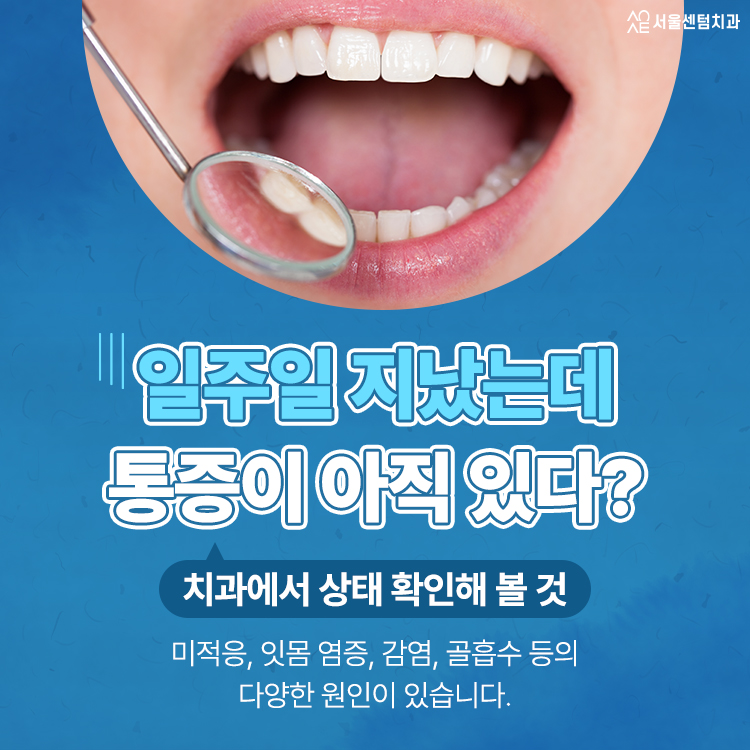
If pain or swelling continues even after this period,
gum inflammation or infection may be suspected,
so it is a good idea to visit the dental clinic and check the condition.
There is also the possibility that there is no particular reason,
such as not yet adjusting to the bite,
so it would be best to get examined first.
Drinking alcohol, smoking, or irritating the surgical site
can also act as factors that delay recovery,
so please make sure to follow the precautions carefully.
If the implant pain period becomes longer than average,
it is better to check the progress rather than simply endure it.
Recovery speed varies depending on the implant site and treatment difficulty
There can also be differences depending on the location.
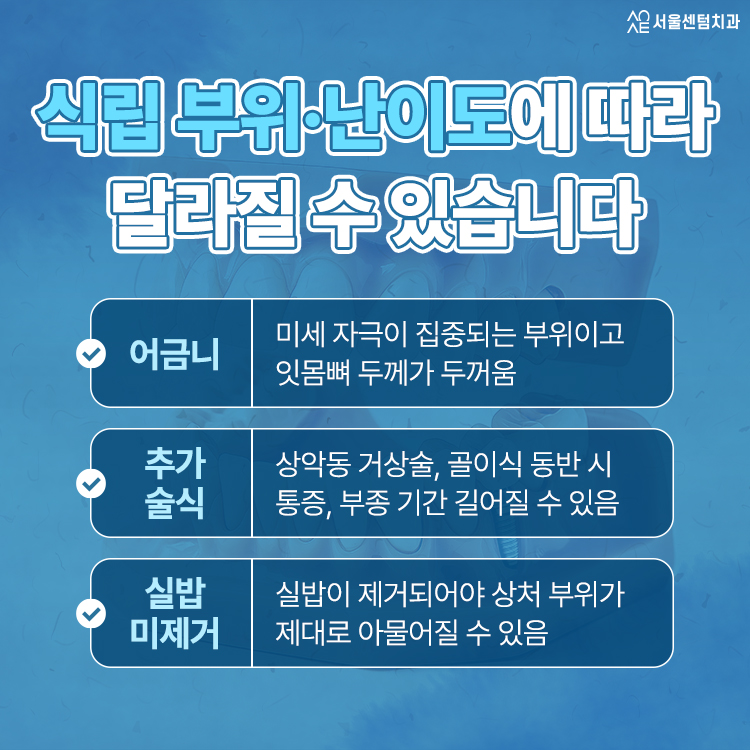
The molar area is where chewing force is concentrated,
so recovery may take a little longer,
and if sinus lift surgery or bone grafting is performed together,
pain or swelling may be greater.
In the front tooth area, or when the bone condition is good,
there are not a few cases where it almost disappears within two days.
This means variation can occur depending on various factors,
such as each person’s oral condition, the treatment method,
and lifestyle habits.
Body type and overall health can also have an effect.
The implant pain period is influenced not only by the treatment itself,
but also by the patient’s overall health and body type,
which can change the recovery response.
If you are taking medication for diabetes or hyperlipidemia,
recovery may be slower than usual,
and the possibility of infection is relatively higher.
Stress and accumulated fatigue can also have an effect,
and if your immunity is weakened or your oral hygiene is poor,
the inflammatory response may become stronger and last longer,
so it is better to manage your condition even before treatment, right?
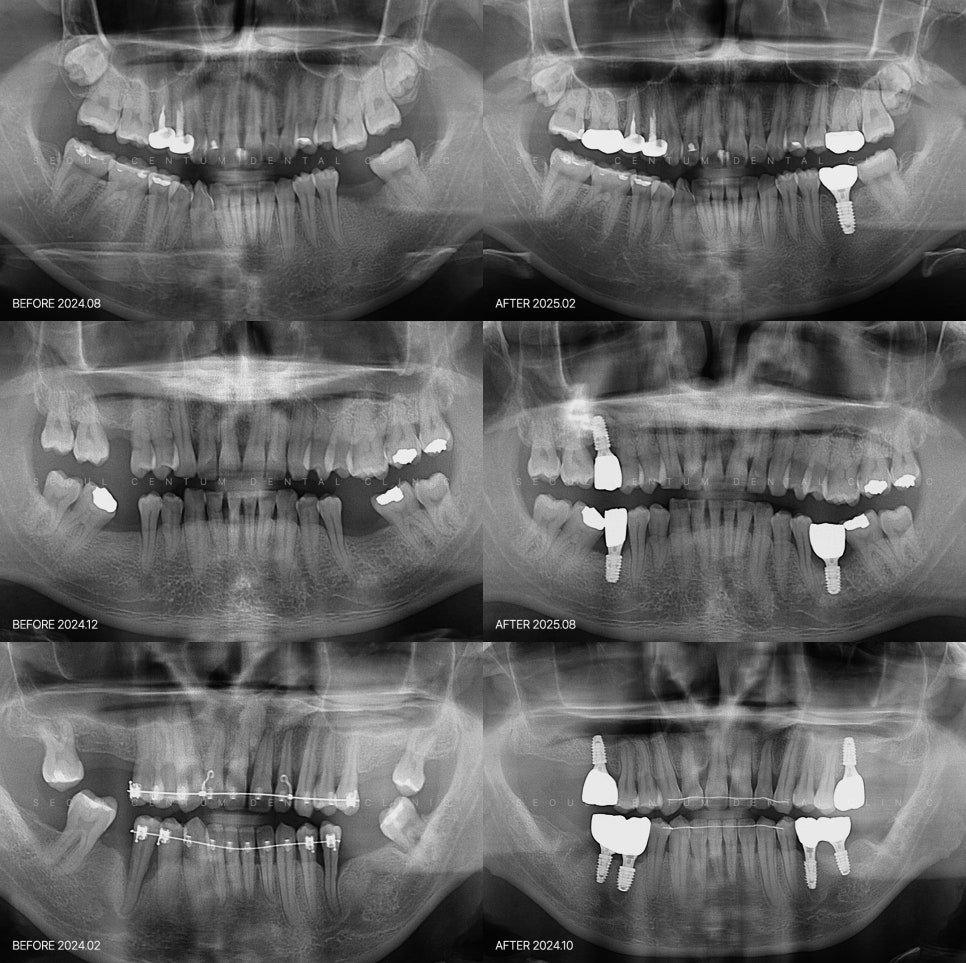
A certain amount of pain after treatment
is considered a normal recovery response.
Since sensitivity and how much each person can tolerate differ,
rather than just enduring it unconditionally,
it is better to go to the dental clinic right away and get checked
if there are any unusual signs.
The concept of implant pain duration
is only an average standard,
so it is something to use as a reference,
and carefully observing and managing your own recovery
is more important in terms of aftercare.
For the sake of achieving both aesthetics and comfort,
there is probably no better choice than an appropriate treatment plan and proper management.

How to relieve pain when a molar is broken
When treatment is needed for a loose tooth