When you eat, are you only chewing on one side?
Surprisingly, many people do this unconsciously,
using only one side of their teeth
without even realizing it.
It may be that if you check just during today’s meal,
there will be quite a few people who do this.

"After using them, I realized I was only
using the side that felt more comfortable."
"When I try using the other side,
it feels uncomfortable, so I end up not using it much."
There are often people who say this.
Today, I’ll explain, from a clinical perspective,
what problems can actually develop in your teeth
if the habit of chewing on only one side continues.
What is the first negative change that happens when you chew on only one side?
At first, there is not much obvious discomfort.
But over time, the teeth and gums on the unused side
begin to lose function gradually.

On the other hand, the side that keeps being used
becomes exposed to excessive force.
If this continues and accumulates over time,
imbalance begins to develop.
Tooth wear and cracks occur
If this continues for even longer,
repeated pressure on specific teeth can lead to
tooth wear, microcracks, and broken teeth.
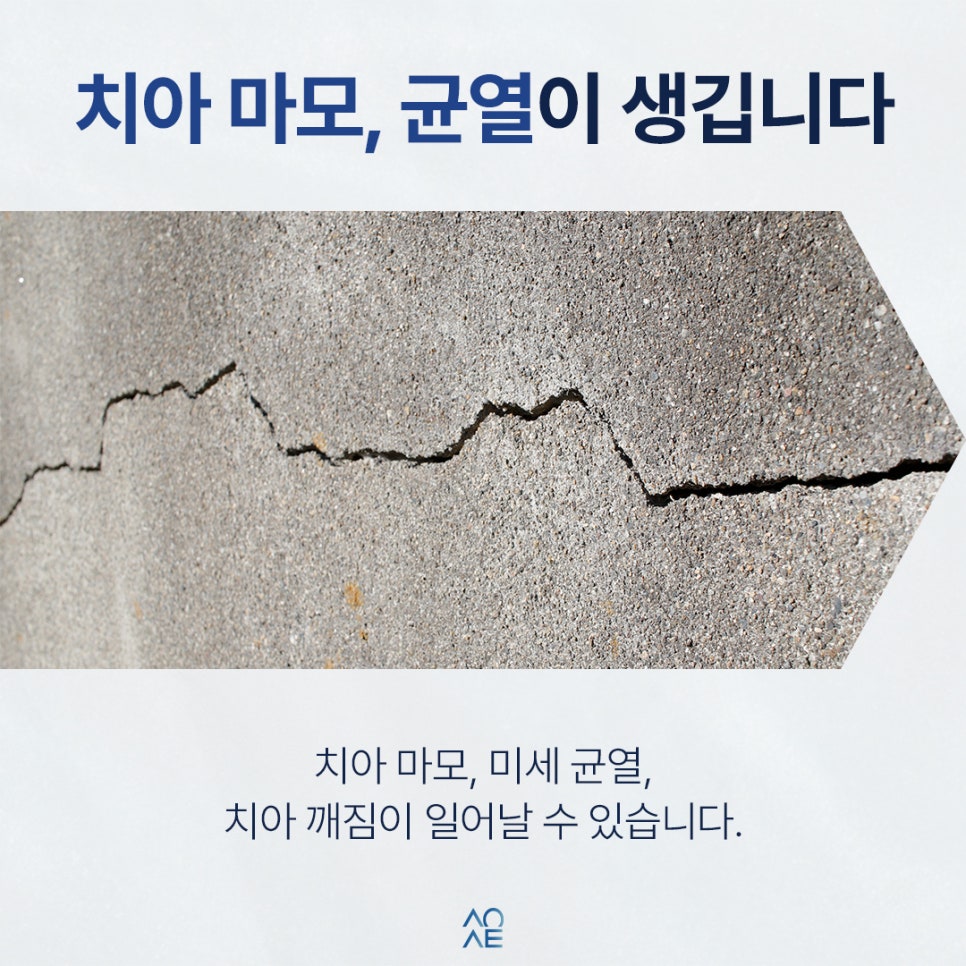
Especially if you often eat hard foods,
these changes can progress even faster.
It also affects the gums and bone
You may wonder what the gums and bone have to do with it,
but chewing force is transmitted not only to the teeth,
but also to the gums and the jawbone.

If you keep using only one side, the used side can become overloaded,
while the unused side may lose function.
In this case, resorption of the jawbone can progress,
so it is important to use both sides evenly.
It can also affect the temporomandibular joint.
When the balance of chewing force starts to break down,
asymmetry can also develop in the temporomandibular joint.
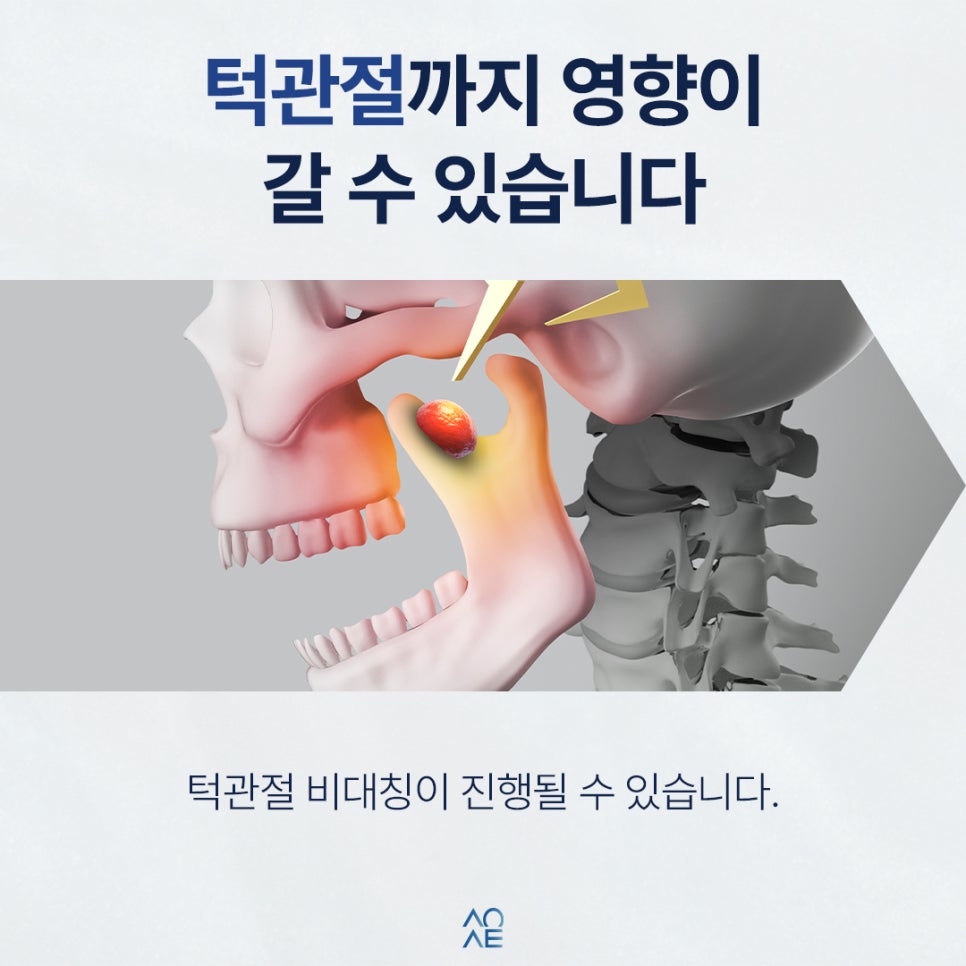
As a result, you may hear clicking sounds in the jaw,
feel discomfort when opening your mouth,
or experience jaw pain.
Eventually, it can lead to implants
At first, it may seem like just a simple habit,
but over time the damage continues to accumulate,
which can lead to tooth damage, worsening gum health,
and even tooth loss.
In particular, if you are already avoiding one side because it feels uncomfortable,
the cause is likely to be a cavity, a cracked tooth, or gum disease.
If this condition is left untreated for a long time,
it can lead to extraction and then implants.
A case commonly seen in actual treatment
Among patients, there are many cases like this:
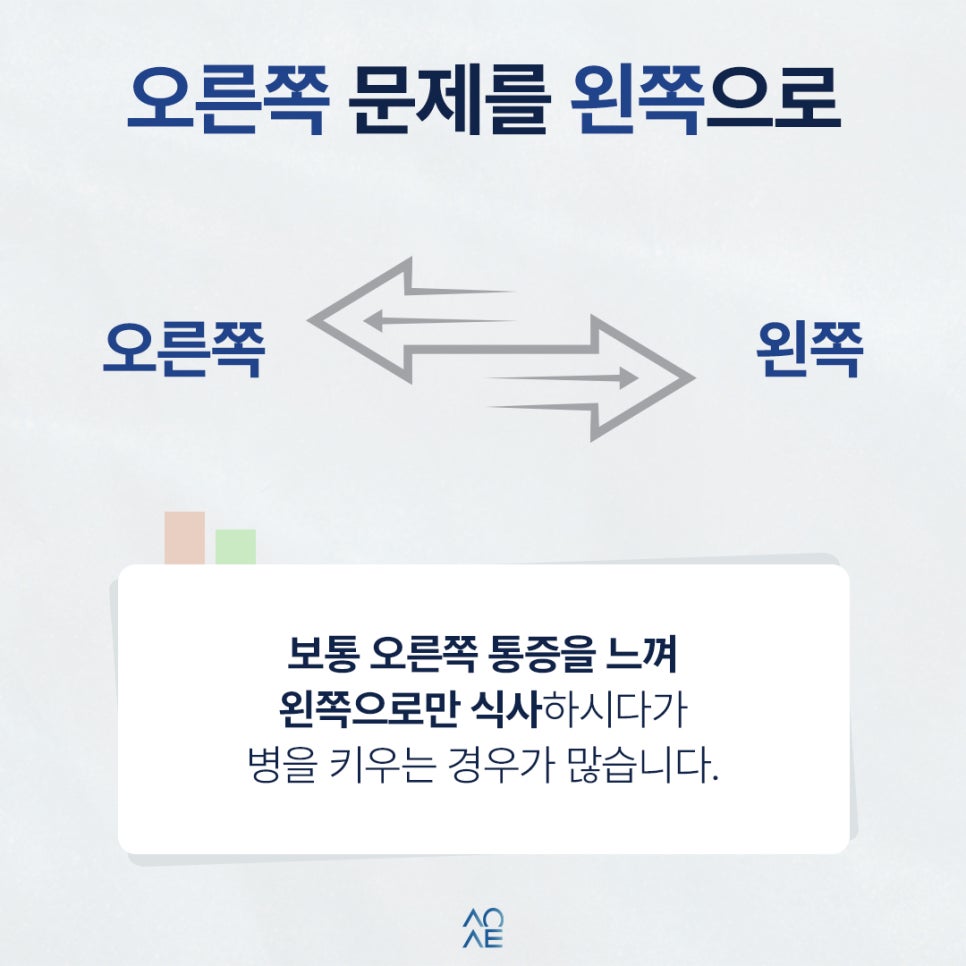
"The right side was uncomfortable, so I used the left side.
Then it seemed like the left side got damaged too."
People often say this.
In the end, a problem on one side often develops into a problem on the other side.
How can this be prevented?
To reduce the habit of chewing on only one side,
you need to first identify the cause.
You should check for pain in specific teeth,
discomfort with restorations,
and bite problems.
If the cause is one of these,
that part should be treated first.

The habit of chewing on only one side may seem like a simple lifestyle habit,
but over time it can affect the teeth, gums,
and even the temporomandibular joint.
Especially if you are using the other side because one side feels uncomfortable,
there may already be a significant problem on the uncomfortable side.
Rather than ignoring the discomfort, it is important to identify the cause accurately
and restore balance between both sides of the teeth.
What does "the villain of full implants" mean?
Is simultaneous extraction of four implants okay?