If you are worried about congenital tooth absence, which is not uncommon
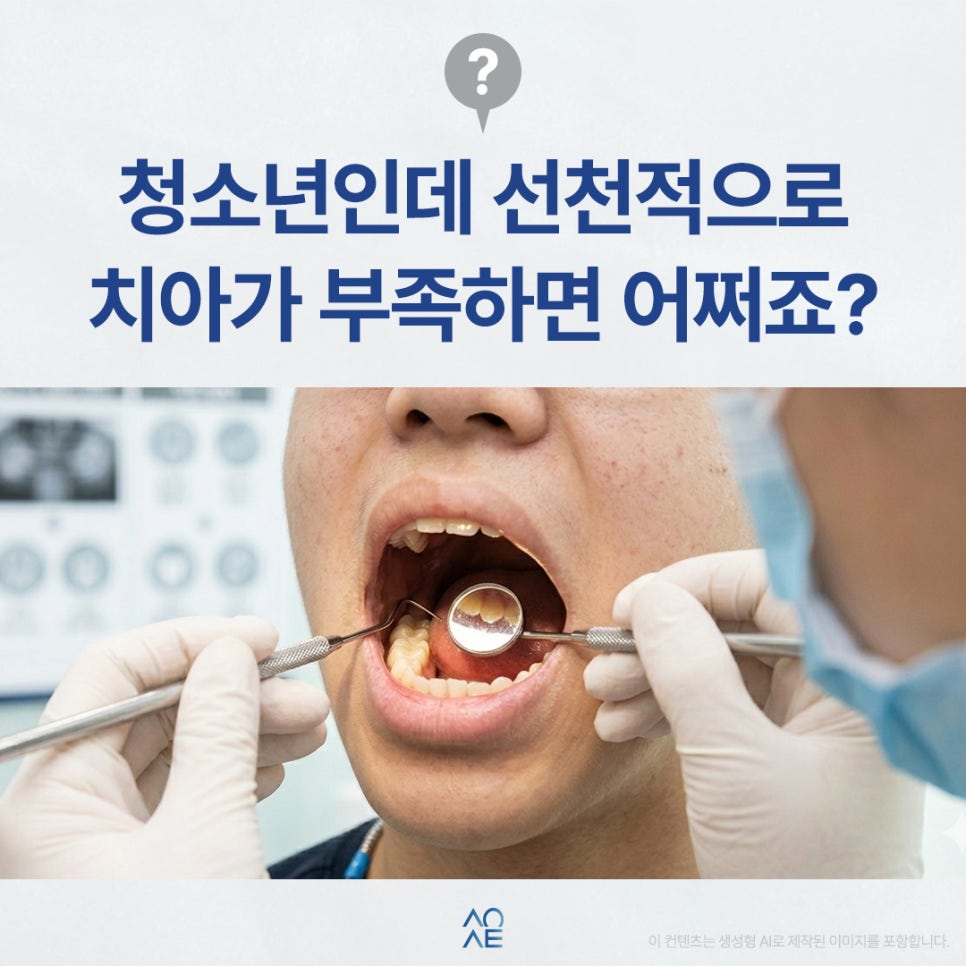
When you were young, did you ever remove a loose baby tooth yourself or have a dentist remove it?
Even though a permanent tooth should come in after a baby tooth, there are cases where that does not happen.
In other words, there are cases where the permanent tooth does not develop, and this is called congenital tooth absence.
It is not as rare as you might think, and many people only find out later during a checkup while growing up, or after being examined late because a cavity worsened.
If the upper and lower bite feels like it is in a straight line, it may be a change caused by tooth alignment and the location of the missing tooth.
Since it is also connected to function, it is a good idea to look for a way to solve the problem.
Keep the baby tooth? There is a separate reason
If there is congenital tooth absence, the first thing to consider is how long the baby tooth can be kept.

You probably know that baby teeth eventually fall out.
You may not know that in an area where there is no permanent tooth, the basic treatment direction is often set toward using the baby tooth for as long as possible.
This is also why dentists explain, "Let’s use it a little longer and then extract it."
If the condition is good, there are cases where the baby tooth can be used for several years, and this can help maintain balance in the dental arch^^
So rather than rushing to extract it, you need to make a careful judgment while considering the current condition and prognosis.
Why you should not ignore pooled blood
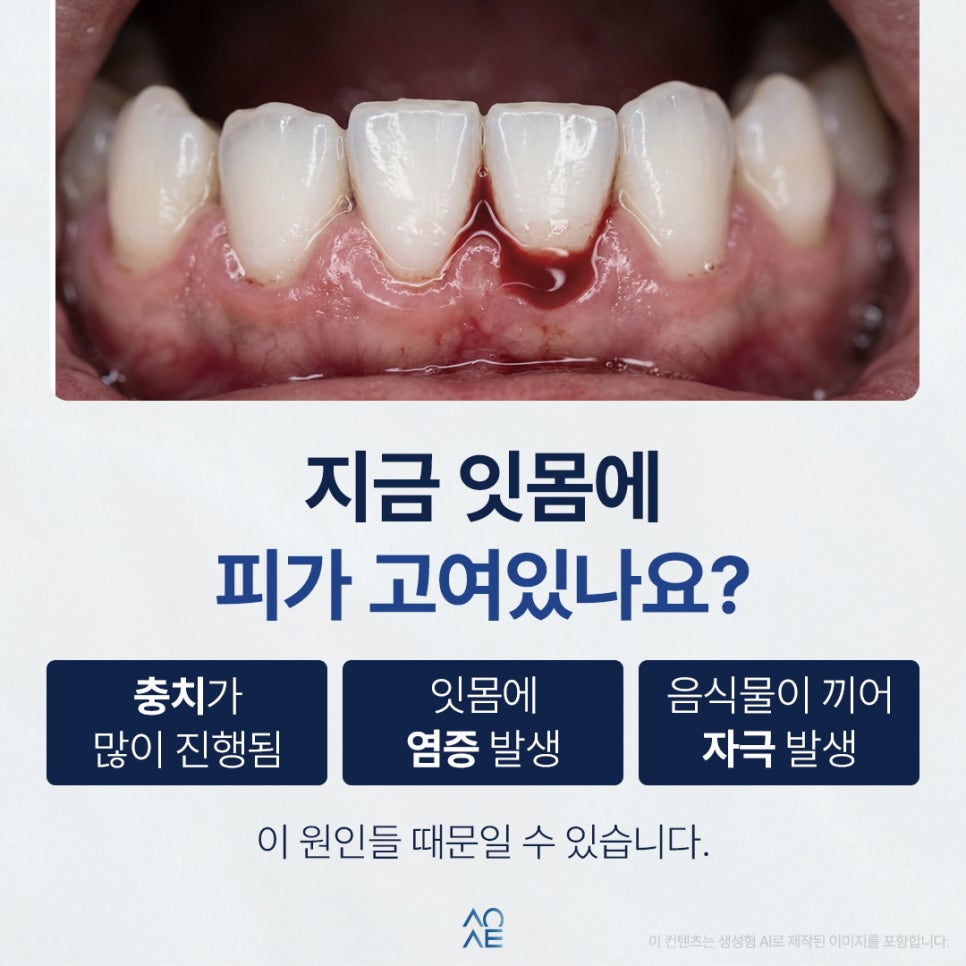
If blood is pooled in the gums along the tooth line, you may need to consider the possibility that the condition has progressed beyond the early stage of tooth decay.
It may have been irritated by repeated food impaction at a fractured area, the cavity may have progressed significantly, or there may also be accompanying gum inflammation.
Even if the pain is not severe, there may be major changes happening inside.
If you are using a baby tooth for a long time because of congenital tooth absence, the burden of care may become greater, so extra caution is needed.
What happens to the space when a permanent tooth is missing?

If there is no permanent tooth, an empty space remains, which can become a concern.
As time passes, nearby teeth may gradually move, increasing the likelihood that the alignment will become distorted.
This can lead to changes in the bite or to force being concentrated in a specific area.
It can even cause tooth fractures or temporomandibular joint pain, so depending on the situation, orthodontic adjustment may be needed to prevent changes in the dental arch.
Rather than leaving the space empty, you need to set a direction for management.
Methods available during the teenage years

The absence of a permanent tooth can become a concern in adulthood, but it may also be a source of stress starting in the teenage years.
You may think, "Can’t I just get an implant?"
However, during the teenage years, the jawbone is still growing actively, so it is difficult to do that right away.
The realistic treatment direction is divided into a few options.
① Keep the baby tooth as long as possible
② If needed, adjust the space through orthodontic treatment
After that, a step-by-step approach is needed, with implants planned in line with the end of jaw growth.
The most important criterion right now

For now, you need to first check how long the baby tooth can be used and what condition it is in.
If treatment can keep it in place for a sufficient period, it is better to make full use of it, but if it is structurally difficult to maintain, extraction should be considered.
After that, you need to plan space management with the growth process in mind, along with the future treatment direction.
How to get help so treatment does not feel frightening
If you have dental phobia, the words treatment or extraction themselves can feel like a major psychological burden.

During treatment, a drape is placed over the face, so you generally cannot see the dental tools or the process, but if you are afraid of having a drape placed over you, it can be loosely placed or the procedure can be done without one.
You may also worry that it will hurt, but most treatments are performed after anesthesia, so you will feel almost no pain and can relax.
Depending on the patient’s level of tension, the treatment speed and chair angle may also be adjusted.
Phobias can happen to anyone, regardless of age!
If you feel anxious, do not hold it in and let the clinic know in advance.

Right now is a time when treatment timing is especially important.
Rather than delaying because of anxiety, it is more important to check the condition regularly and set the direction going forward.
Maintaining function through an approach suited to each stage can have a positive effect on future oral health, so rather than worrying too much, it would be good to get evaluated once.
Do you know that chewing only on one side can cause problems?
It may not be necessary to get a full-mouth implant right away, but it is good to know the meaning of full arch full mouth in advance.