I’m still in my 30s, but I was advised to get a dental implant. What should I do?

You may be quite shocked if you visit the dentist because of severe pain caused by a cavity and are then advised to get a dental implant in your 30s.
It is natural to wonder whether you really need one already, even though you are still young.
Since dental implants are still commonly perceived as a treatment for older adults, they may feel even more unfamiliar.
However, if the tooth has already been severely damaged and is in a condition where restoring its function is difficult, a dental implant in your 30s may be a realistic option.
Is there a reason if two dentists have both recommended an implant?
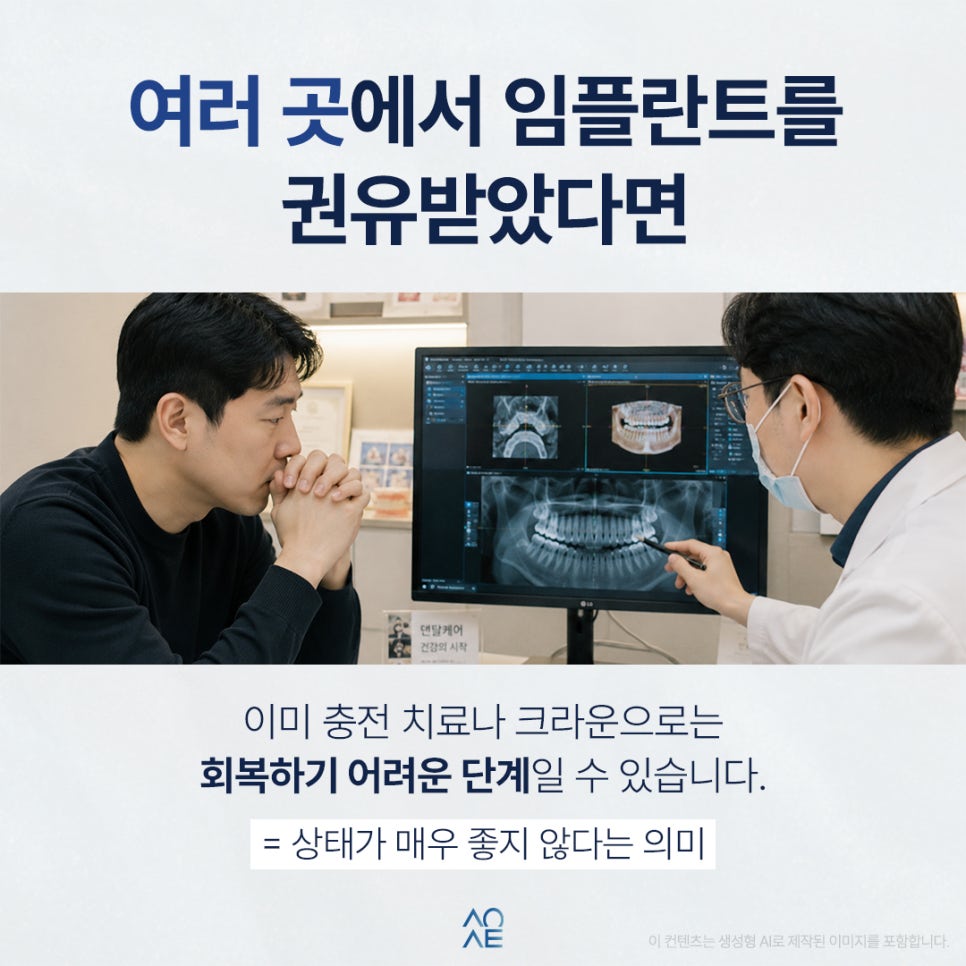
In this case, it is highly likely that they judged the tooth to have a low chance of being preserved.
In particular, if the tooth has already undergone root canal treatment, the crown is almost entirely damaged, and only the root remains, it is difficult to restore it with conventional filling treatment or a crown alone.
To protect the crown, a certain amount of healthy tooth structure must remain to support it.
If there is not enough, the restoration may come loose easily or be at risk of fracturing.
What conditions are needed to save the tooth?
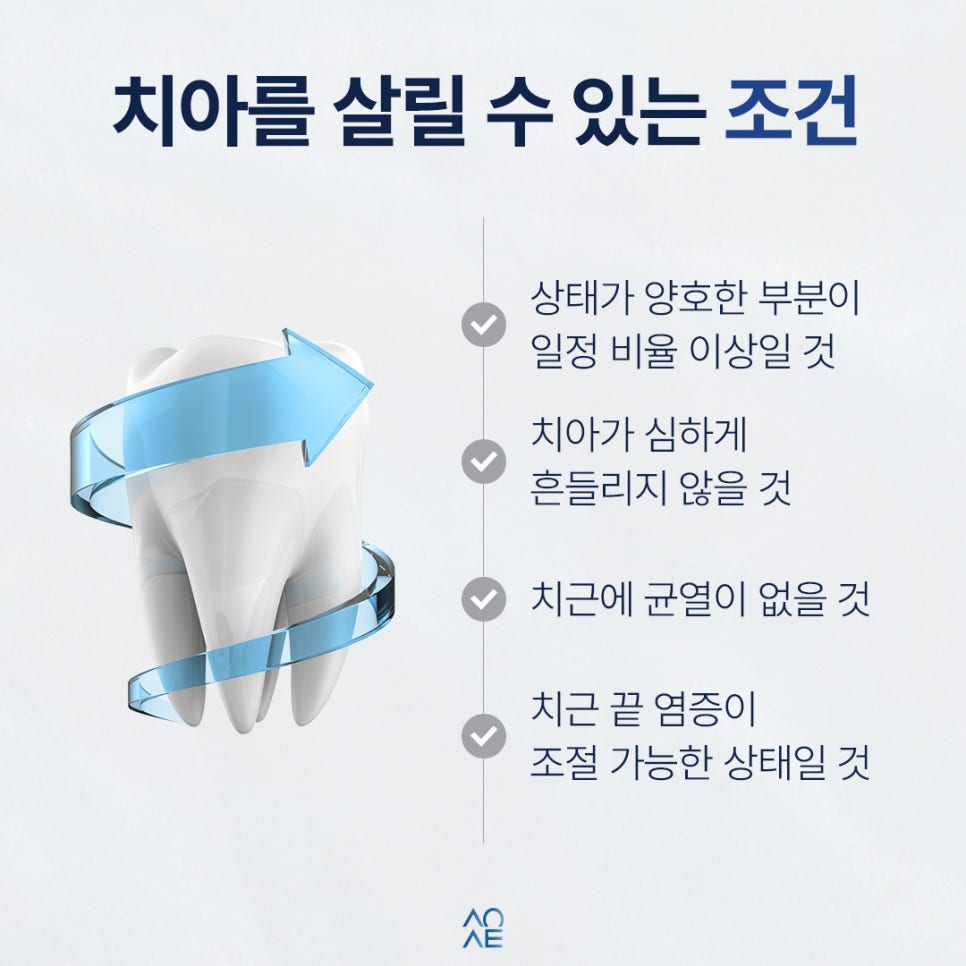
✔ A certain proportion of the tooth must remain in good condition.
✔ The cavity or fracture must not have progressed too deeply.
✔ There must be no cracks in the root.
✔ The inflammation must be within a controllable range.
If these conditions are met, the tooth may be preserved through retreatment of the root canal or post-and-core treatment.
Is trying to save the tooth at all costs always the best option?
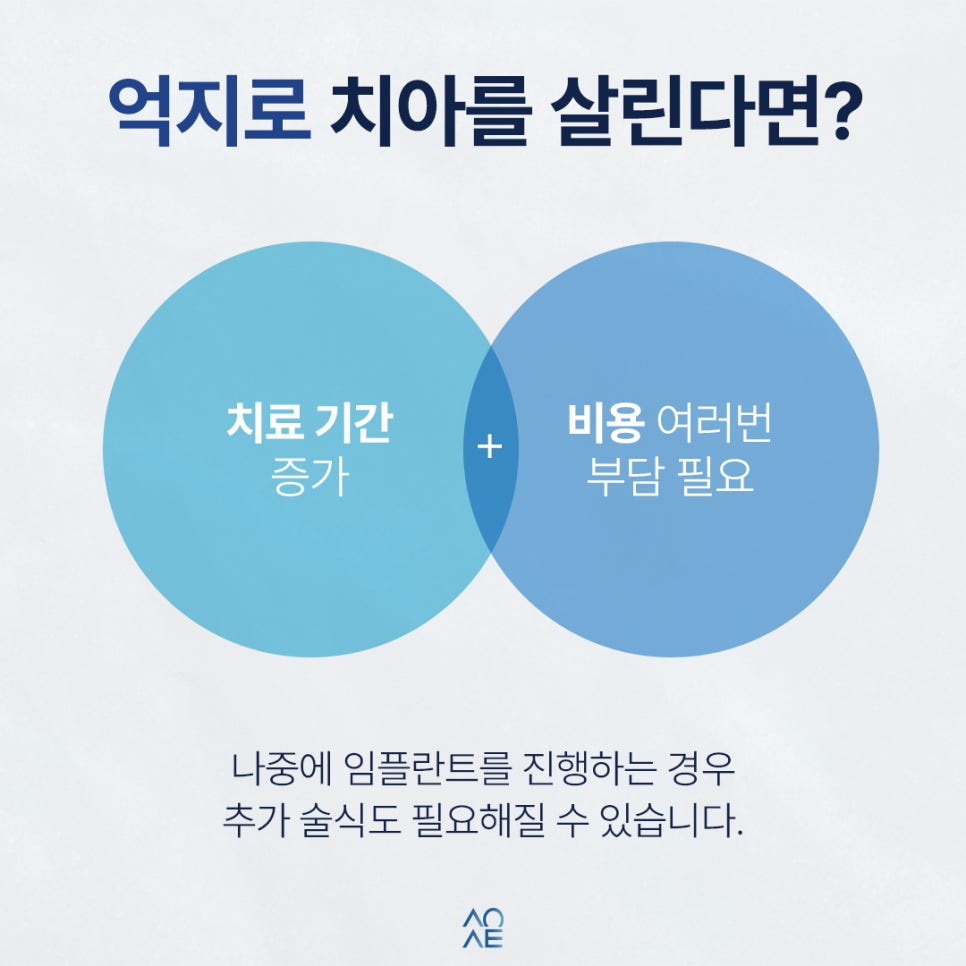
It is certainly important to preserve the natural tooth as much as possible.
However, if the prognosis is poor and you try to save it forcefully, the treatment period may become longer, and costs may recur.
Even if the tooth is initially managed with root canal treatment and a crown, various problems may develop over time.
The biggest concern is that repeated inflammation can also affect the surrounding jawbone.
If this happens, bone grafting may be needed when proceeding with an implant, and the treatment may become more difficult.
I wonder whether there are criteria more important than age.
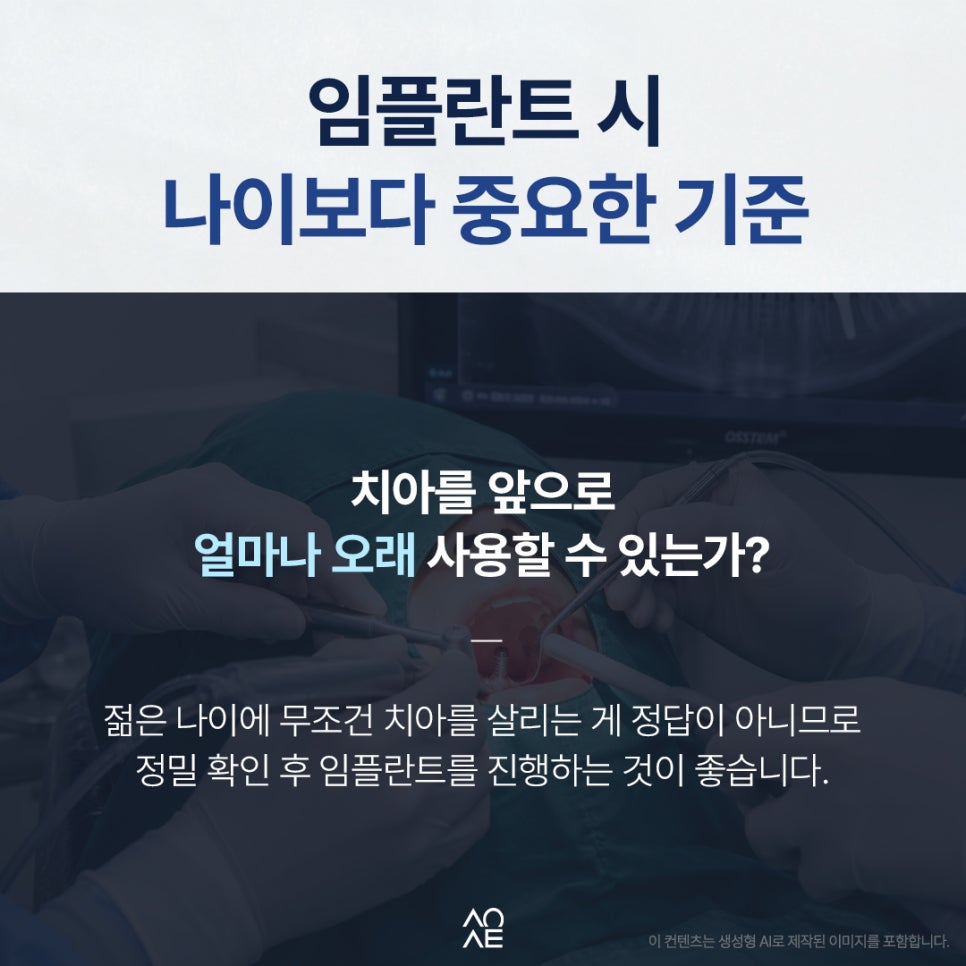
Being told that you need a dental implant in your 30s may feel burdensome, but these days it is not an unfamiliar treatment.
It has become a common way to restore chewing function and is also performed in younger adults.
In other words, what matters more than your age is how long you can continue using the tooth.
If the tooth is unlikely to remain stable, getting an implant may actually be the more reliable option.
Can wisdom teeth also cause problems?
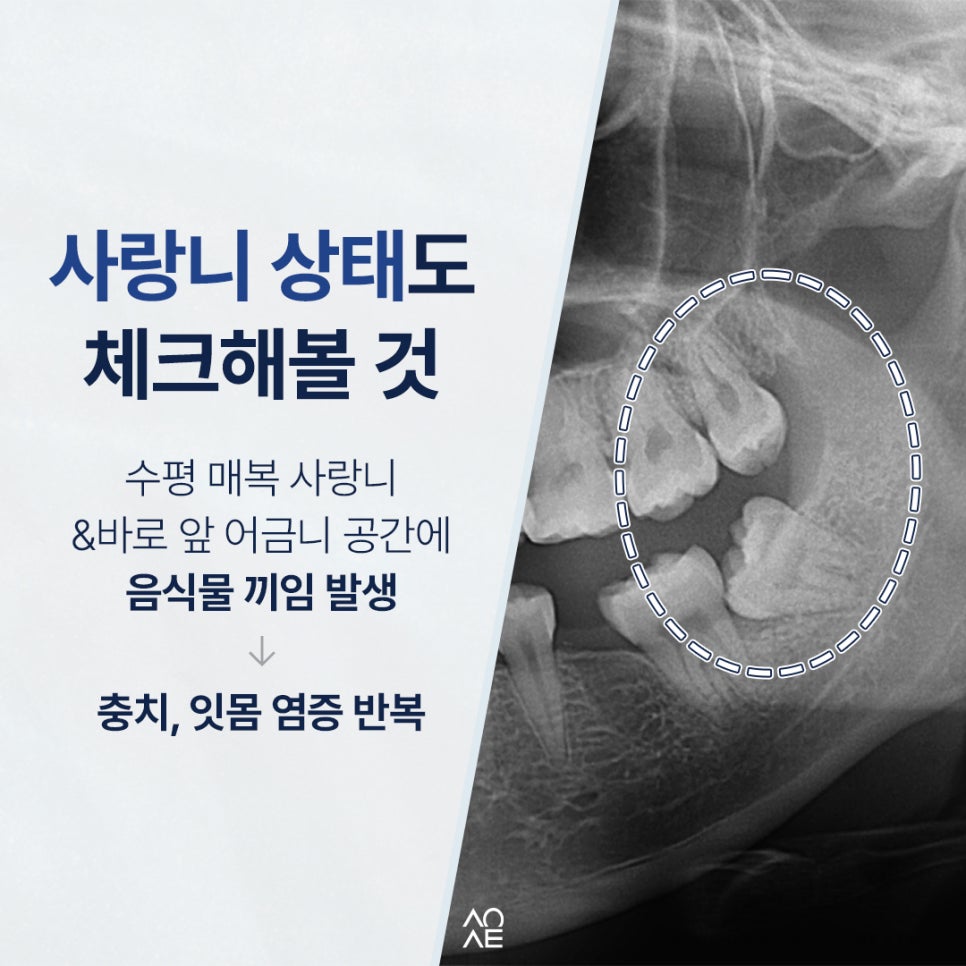
If you have not yet had your wisdom teeth removed, it would also be worth checking whether any of them are horizontally impacted.
A horizontally impacted wisdom tooth can come into contact with the molar directly in front of it, creating a structure where food becomes easily trapped.
Because a toothbrush cannot reach this space well, cavities and gum inflammation can easily recur.
In fact, there are cases in which the molar in front of the wisdom tooth becomes damaged, rather than the wisdom tooth itself, eventually leading to root canal treatment, extraction, and an implant.
How can I check whether other treatments are possible?
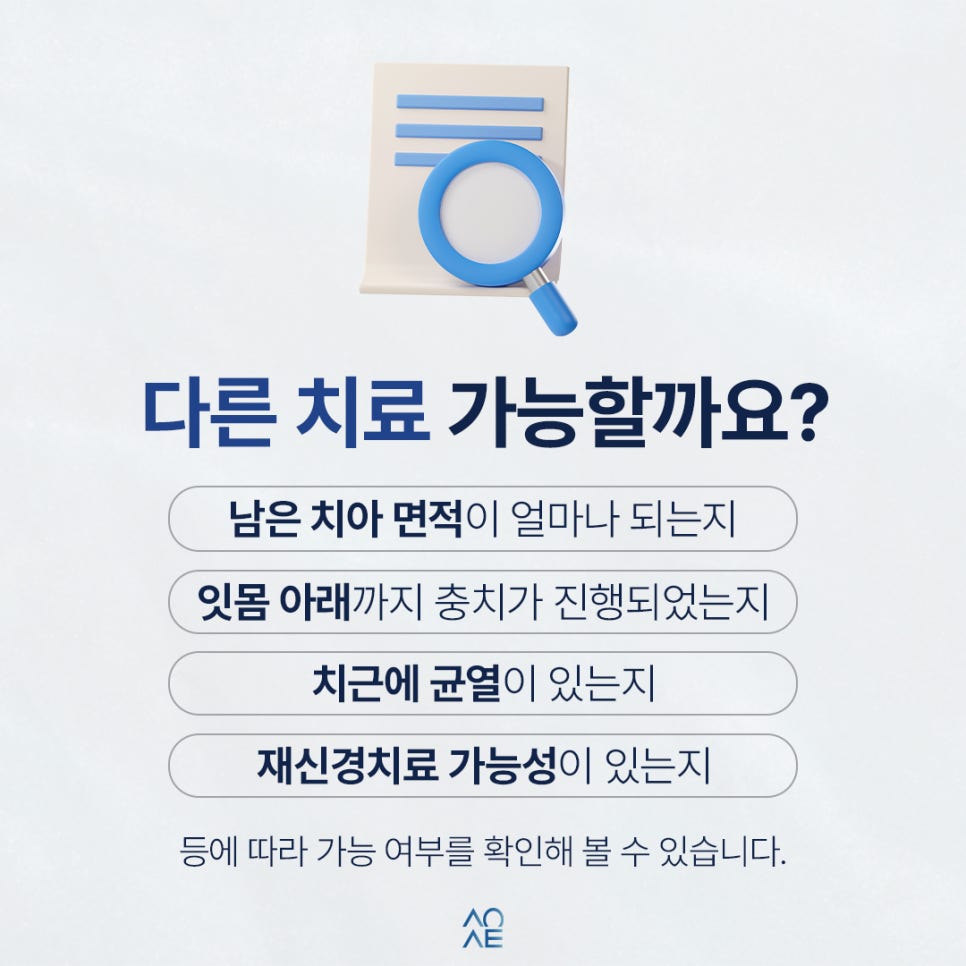
Ask your dentist specifically about the likelihood of saving the tooth.
For example, ask how much tooth structure remains, how deeply the cavity has progressed, whether the root has cracked, and whether root canal retreatment is possible.
You can also check whether alternatives such as a crown, bridge, or partial denture are available.
Keep in mind that if the long-term prognosis is poor, repeated treatments may be required instead.
It is natural to feel afraid when you are advised to get a dental implant in your 30s.
However, when deciding on treatment, it is better to consider the actual condition of the tooth rather than making a decision based on emotion.
If the tooth can be saved, preserving it as much as possible is preferable. If not, it may be better to plan an implant after extraction at the appropriate time.
If you are very concerned, make your decision after receiving a sufficient explanation of your current condition.
Previous post
What Causes a Chipped Tooth? Could It Be a Cavity?