How often do you need to visit the dentist after your full-mouth implant treatment is complete?

Once the treatment process is complete, it is easy to think that you no longer need to visit the dentist as often.
Although implants do not develop cavities like natural teeth, the condition of the gums, the stability of the prostheses, and the balance of chewing forces can change over time.
When treatment involves the entire mouth, multiple implants function together, so even small changes can have a significant impact. Therefore, you should continue to monitor their condition through regular implant checkups.
How often should you have checkups during the first year after treatment?
The first year after treatment is a period that requires relatively careful monitoring.
Changes in your bite may occur as you adjust, and chewing forces may become concentrated in certain areas.
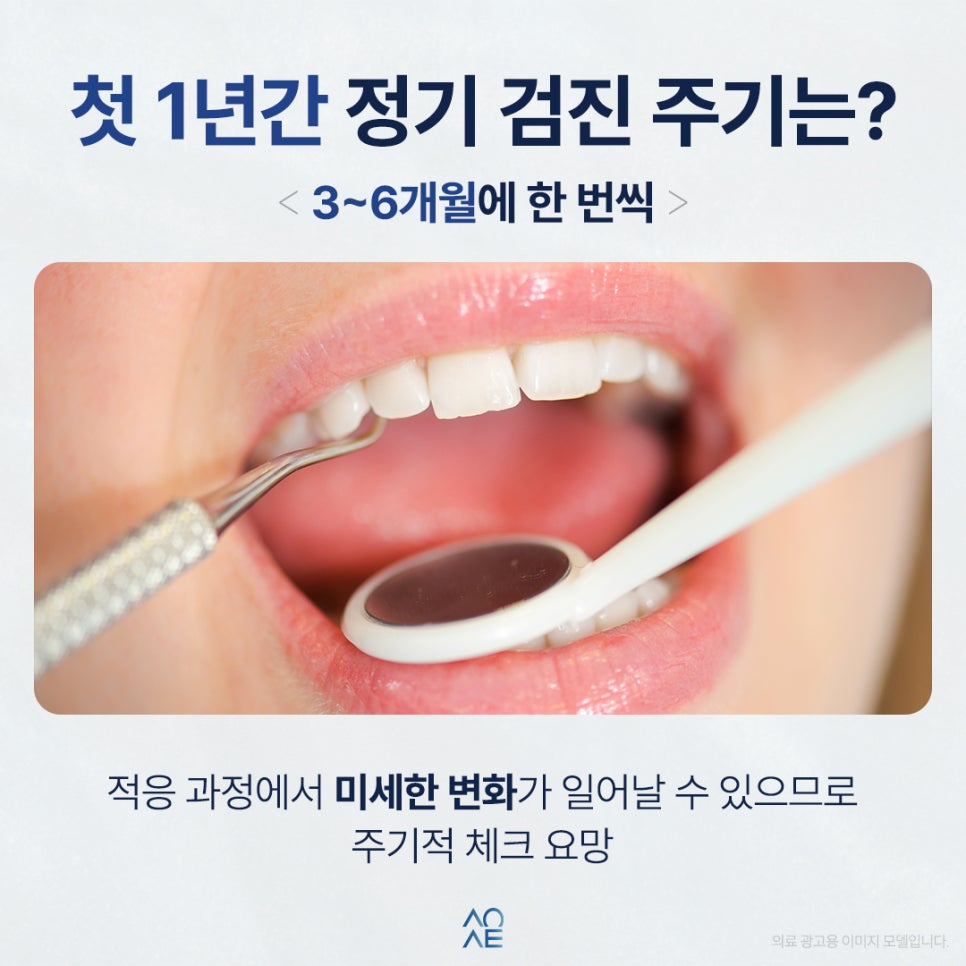
If possible, checkups every 3–6 months during the first year after treatment are recommended.
During this period, the gums, prostheses, and abutments are checked from various perspectives.
Even if everything appears fine to the naked eye, subtle changes may have occurred, so be sure to follow the recommended early checkup schedule.
Once the condition is stable, how many checkups a year are appropriate?
In this case, the intervals between checkups may be extended somewhat.
If there are no particular concerns, you may have checkups once or twice a year.
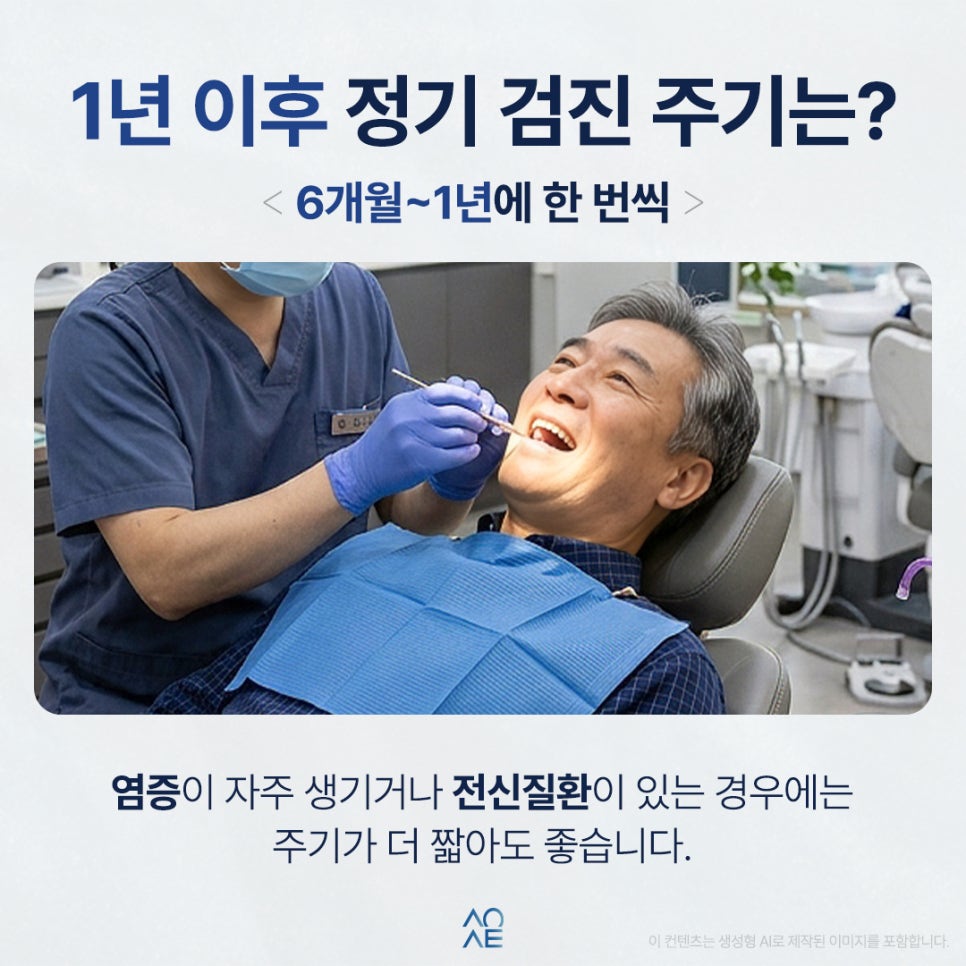
However, because full-mouth implants require care over a wide area, it is better to have them checked once every six months.
In particular, if you are prone to gum inflammation, frequently get food stuck between your teeth, smoke, or have systemic conditions such as diabetes or high blood pressure, the interval may be shortened to approximately once every 3–6 months.
The schedule should be adjusted according to your individual oral condition.
Implants do not develop cavities, so why are checkups necessary?
Because implants consist of metal fixtures—fixtures and abutments—and prostheses, such as crowns, they do not develop cavities like natural teeth.
However, inflammation around the implant can occur.

In the early stages, there is often little pain or discomfort, so it can be difficult to notice on your own.
As time passes, the gums may swell or bleed, and in severe cases, the bone supporting the implant may decrease.
For this reason, regular implant checkups can be viewed as a process of preventing and easing problems before they occur or spread further.
What is checked during a regular implant checkup?
First, we check whether you have experienced any discomfort in your daily life, whether there is inflammation or bleeding, and whether excessive force is being applied to a specific area when you chew.
Afterward, X-rays may be taken as needed to check the condition of the surrounding bone.

This allows the condition of the fixtures and abutments to be examined in greater detail.
Depending on the results, the abutments may be tightened, the crowns may be remade, or the bite may be adjusted.
You can also have areas where food frequently gets trapped examined and receive guidance on care suitable for you. Scaling is also available if you wish.
In short, cleanliness, inflammation, bleeding, bone, and the implant structures are checked.
Is scaling still necessary?
Maintaining oral cleanliness is important at all times.
Plaque and tartar can build up around the gums, and complete care can be difficult with a toothbrush alone.

Because of the structure, food may become trapped beneath connected prostheses, and bacterial film may remain there.
Regular scaling helps keep these areas clean and maintain them properly.
Insurance coverage is available once a year, so it would be good to have scaling every year.
What are some tips for using full-mouth implants for a long time?
It is better to monitor and care for their condition regularly rather than waiting until discomfort develops.
Habits such as repeatedly eating hard or chewy foods, grinding or clenching your teeth, and smoking can also have an effect, so review your daily habits.

At home, after brushing your teeth, it is even better to use interdental brushes, a water flosser, or other oral-care tools designed for this purpose.
However, using these tools incorrectly can irritate the gums, so be careful.

In conclusion, to use implants safely and stably for a long time, you should develop the habit of monitoring their condition even when you have no particular symptoms.
The end of treatment is not the moment the prostheses are placed. Rather, it is when ongoing care afterward is continued consistently that treatment can truly be considered complete.
Please be sure to follow both thorough care and regular checkups.
What causes a tingling or itchy feeling in the gums?
I had a bone graft for implants and smoke—what about electronic cigarettes?