What treatment should you consider when a cavity looks severe?
If the cavity appears to be quite advanced,
or if you notice a darkened area
around an existing filling,
you may be worried about whether the tooth can be saved.
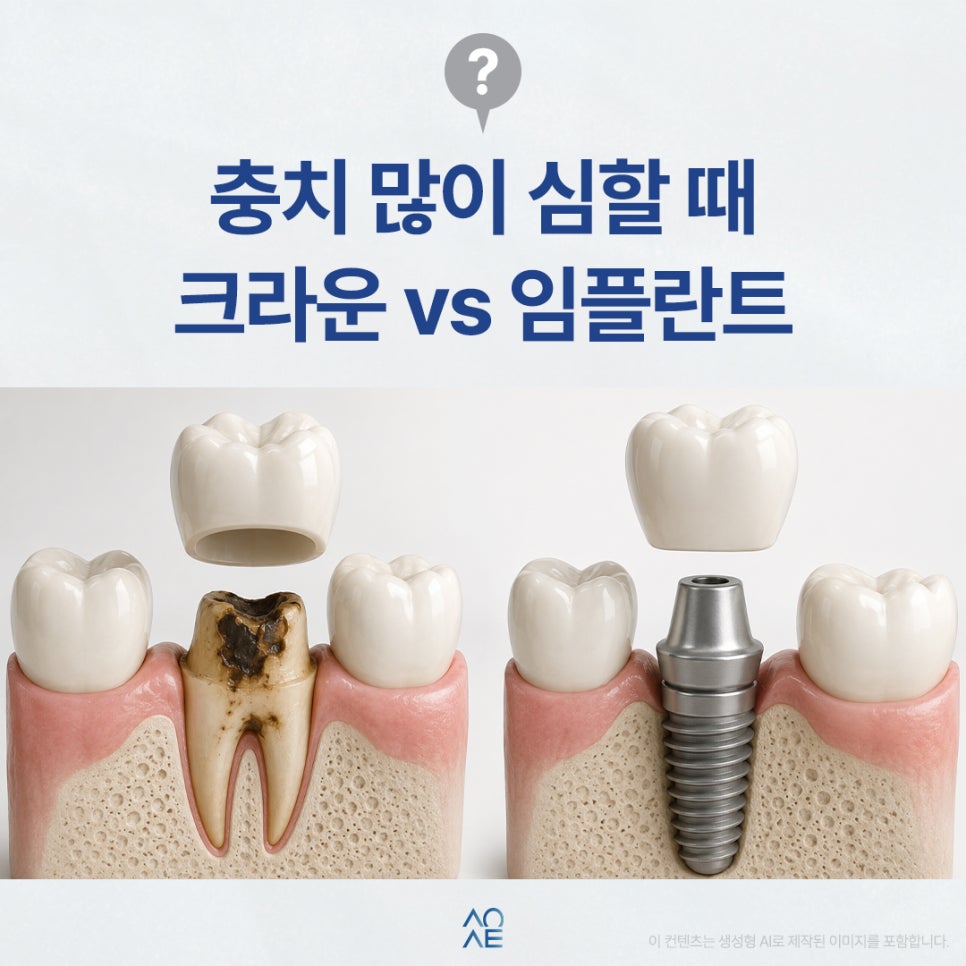
Especially when the crown portion appears to be deeply damaged,
you may have to choose between a crown and an implant,
which can make the decision even more difficult.
Rather than immediately thinking about an implant in this situation,
it is necessary to first check
whether there is still a possibility of preserving the tooth.
Even when a tooth looks severely damaged,
not every case leads to extraction.
What examinations are performed before treatment?
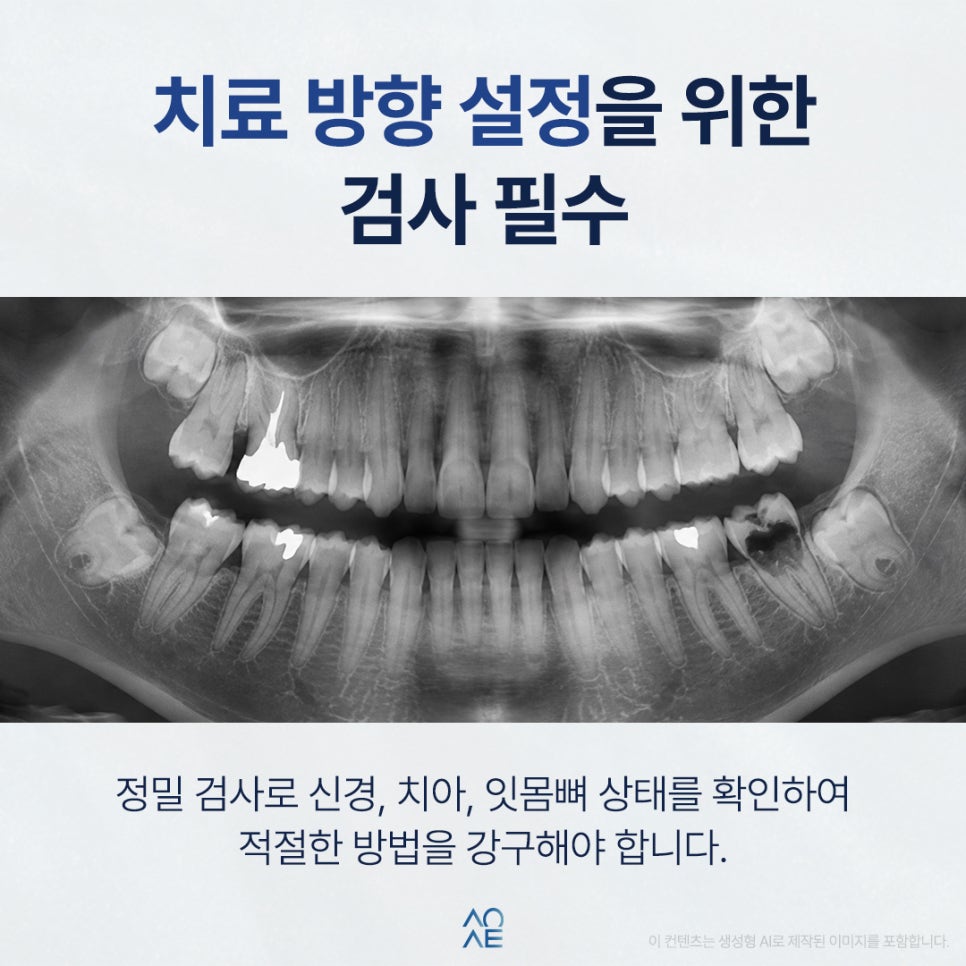
X-rays and an oral examination are used
to check whether the decay has progressed close to the nerve,
whether there is inflammation around the root,
and whether the damage has extended
below the gum bone.
When recurrent decay has developed beneath an existing restoration,
the damage inside may be more extensive than it appears on the surface,
so a detailed evaluation is needed.
Based on these findings, the treatment plan is established by determining
whether the tooth can be preserved
or whether an implant should be considered.
Are there criteria for trying a crown?
This treatment involves shaping the damaged tooth
and protecting it by covering its surface with a restoration.
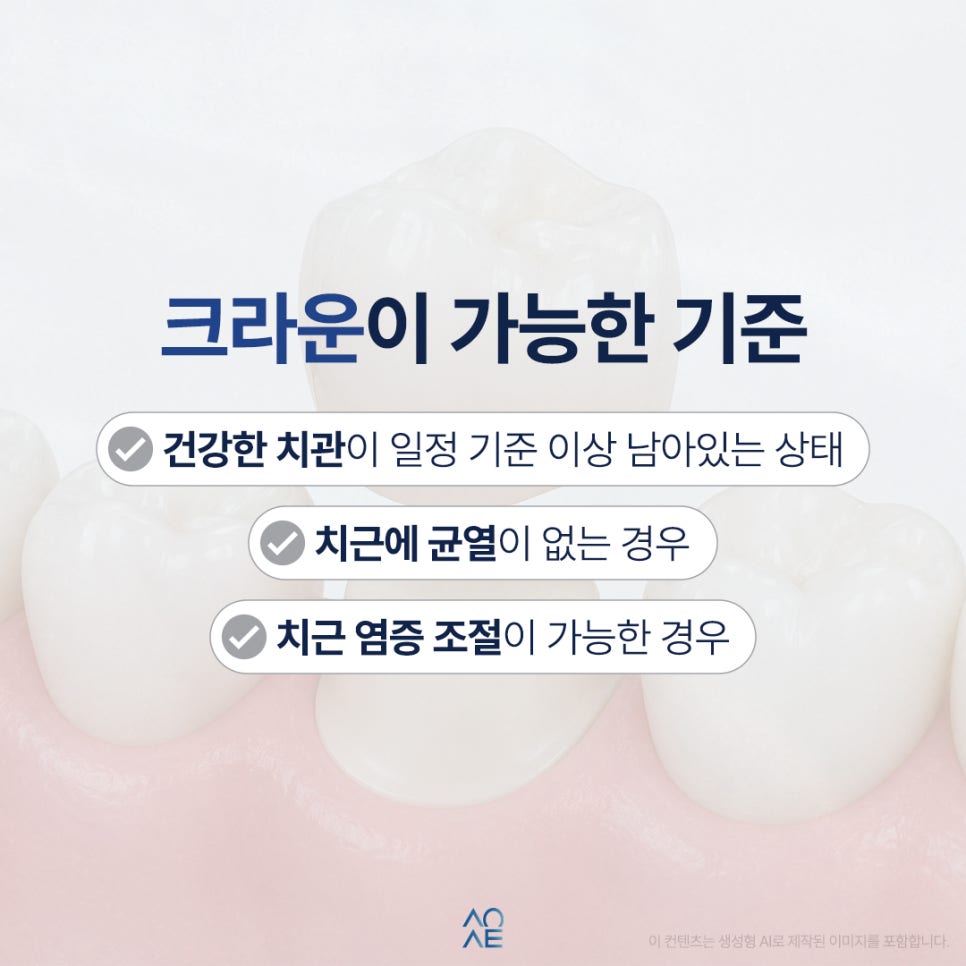
For a crown to remain stable,
there must be a certain amount of the tooth crown left
to support the restoration.
If there is no crack in the root
and the damage has not progressed to the jawbone,
there are also cases that can be completed
with a crown after root canal treatment.
However, if the remaining tooth walls are too thin,
if the damage extends below the gums,
or if there is a root fracture,
it may be difficult for the tooth to last long.
Therefore, when choosing between a crown and an implant,
the key is to consider whether the tooth will remain stable after the crown is placed.
Why is a crown usually considered before an implant?
If there is a possibility of saving the tooth,
preserving the natural tooth is generally considered first.
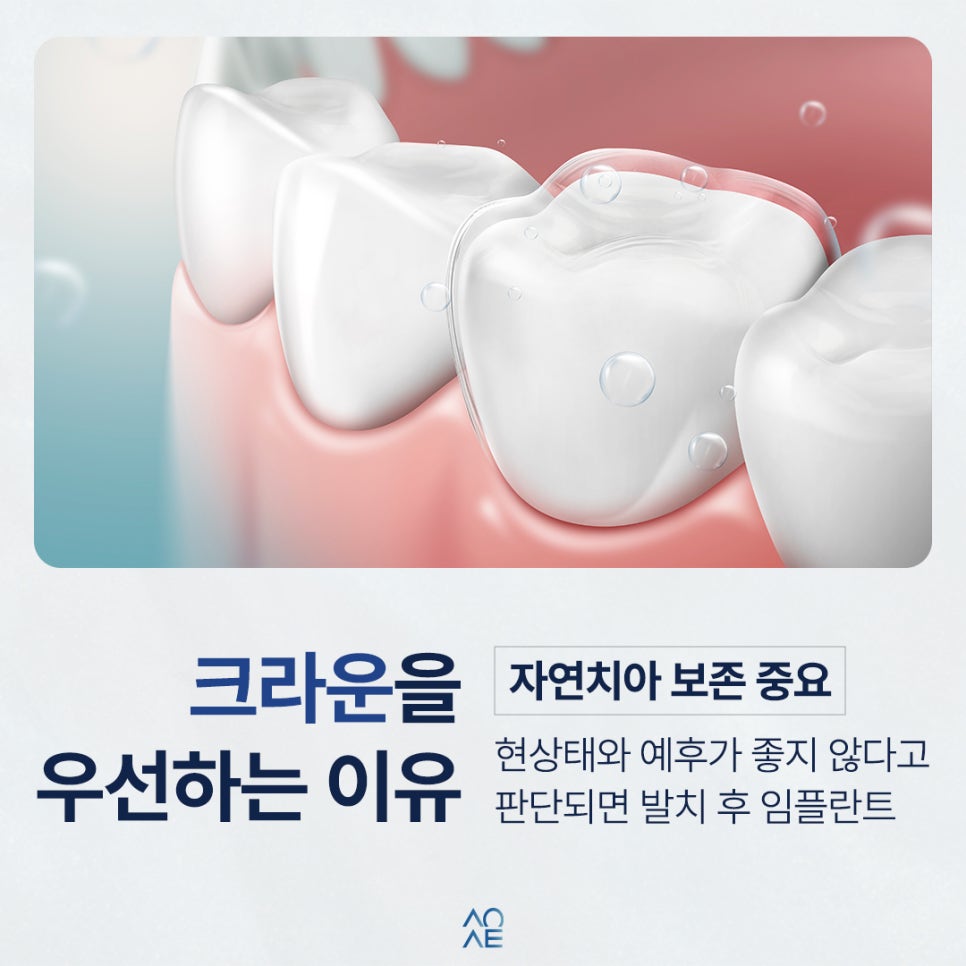
Natural teeth can sense and distribute chewing forces
through the periodontal ligament,
so when the conditions are suitable,
it is preferable to maintain them for as long as possible.
In particular, when the root is in good condition
and a crown can be attempted
after root canal treatment or other reinforcement,
preservation treatment may be considered first.
However, trying to save a tooth at all costs
is not always the best choice.
If the tooth is repeatedly fractured after treatment
or the possibility of recurring inflammation is high,
an implant may be more suitable.
Why can a final decision sometimes only be made after the cavity is removed?

Although examinations can provide some indication
of the likely treatment direction,
the final decision can often only be made
after the decay has been removed.
A tooth that initially appears unlikely to be suitable for a crown
may turn out to have more healthy tooth structure remaining than expected
after all the decay is removed,
making it possible to try preservation treatment.
Conversely, the damage may be found
to extend to the gums,
in which case extraction may be necessary.
That is why a dentist may explain
that the tooth needs to be examined after removing the decay
before a decision can be made.
When should an implant be considered?
Rather than being a treatment that means giving up on the tooth immediately,
an implant can be viewed as the final option to consider
when it is determined that maintaining the natural tooth
for the long term will be difficult.
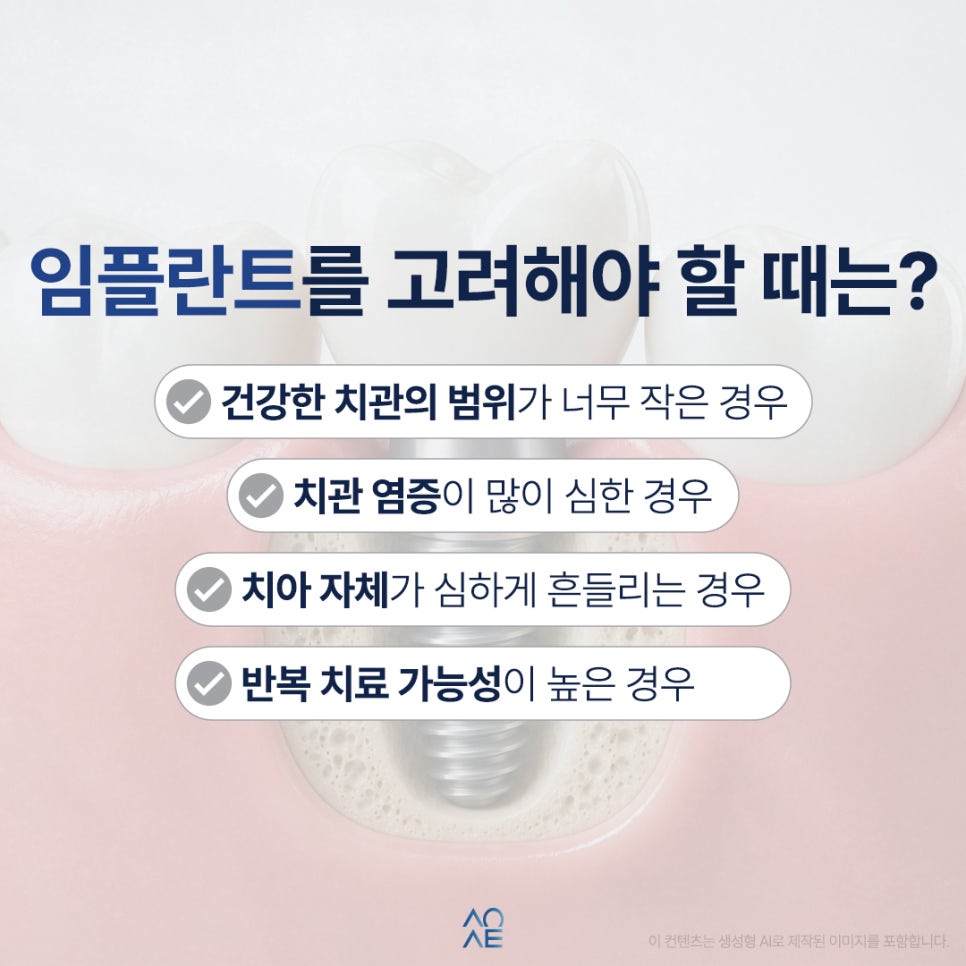
For example, it may be considered
when there is a crack in the root,
when the cavity has progressed deeply below the jawbone,
or when too little of the crown remains
for a crown to be placed.
It may also be a realistic option
when inflammation is severe and the likelihood of recovery is low.
However, attempting to save a tooth at all costs
can increase both the time and expense involved,
as well as the likelihood that the bone condition will worsen,
so caution is needed.
Just because a cavity looks severe
does not mean that extraction is always the right answer.
If the condition of the crown, root, and jawbone is favorable,
there are cases in which the tooth can be saved
with root canal treatment and a crown.
When the damage is extensive, an implant
may be the more realistic option.

The important consideration when choosing between a crown and an implant
is how long the remaining tooth
will be able to function in the future.
Check the prognosis of your current tooth
and decide on the direction of treatment.
I’m curious what tongue cleaner appeared on YouTube 117. It seems like it would be good for oral care.
The area below my ear is swollen and painful. What could be the problem?