Have you ever received a diagnosis at the dentist
and experienced pain in a tooth
other than the one that was diagnosed?
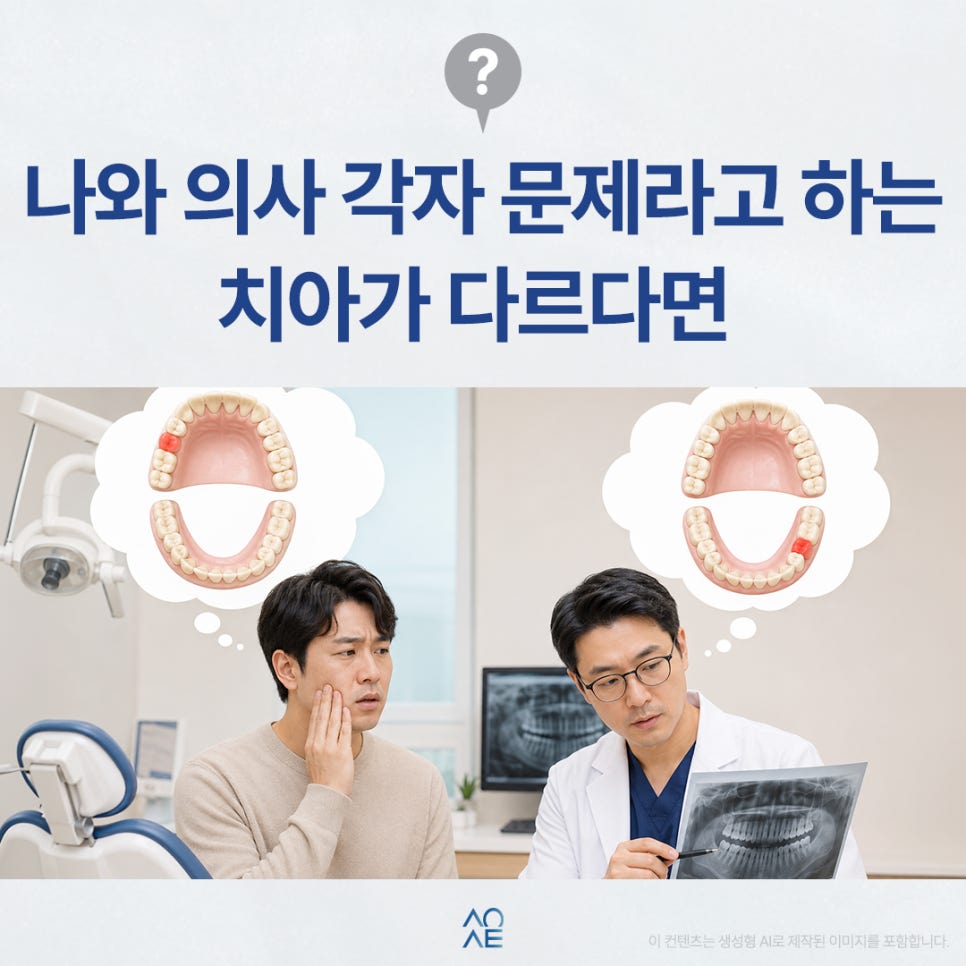
Yes, many people probably find themselves
answering, “That has happened to me.”
They said my tooth was cracked and that I needed an implant
Today’s case involved a patient who was told
that their tooth was cracked and that
an implant would be necessary.
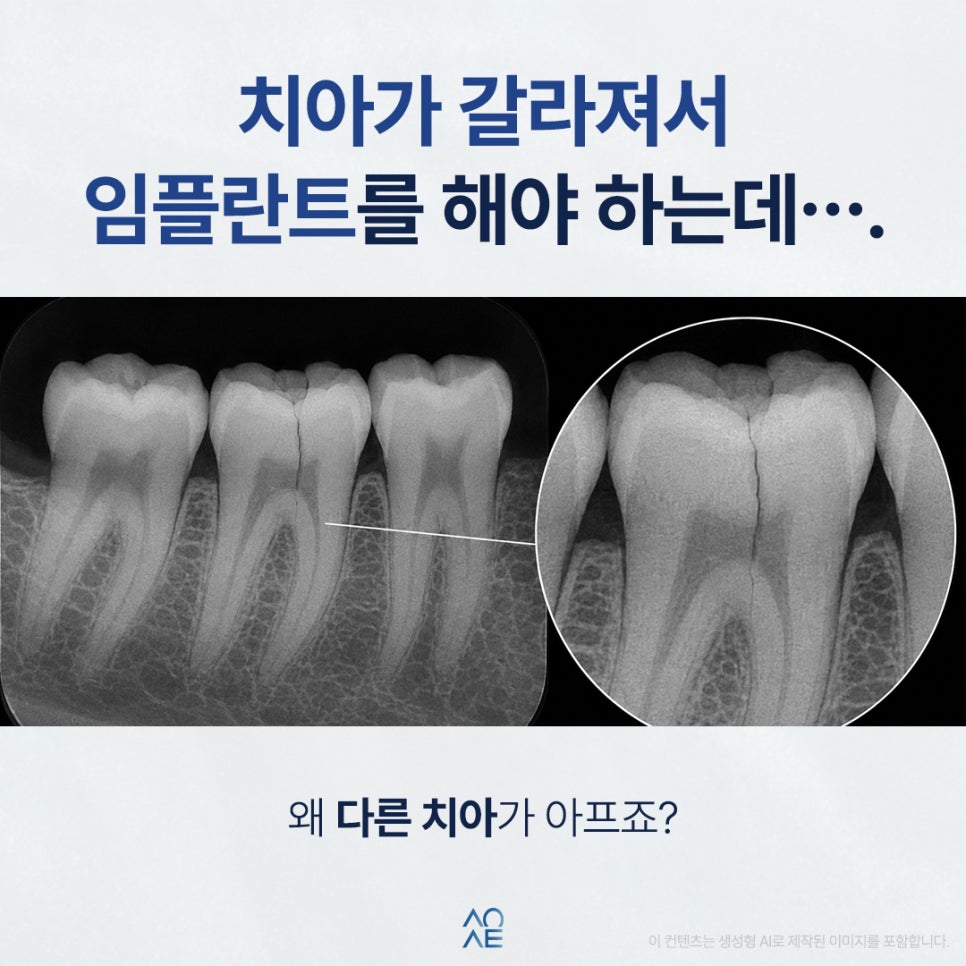
Even on the X-ray, the crack running through
the center of the tooth was clearly visible.
The issue was that the patient felt pain
not in that tooth, but in the tooth in front of it,
which naturally raised questions.
Can the tooth that actually hurts be different from the tooth where the pain is felt?
My answer was that this can certainly happen.
When we actually examined the images,
the tooth with the problem matched the findings
from the other dental clinic, as the patient had been told,
and we could see findings suggesting
a fracture line running along the center of the tooth.
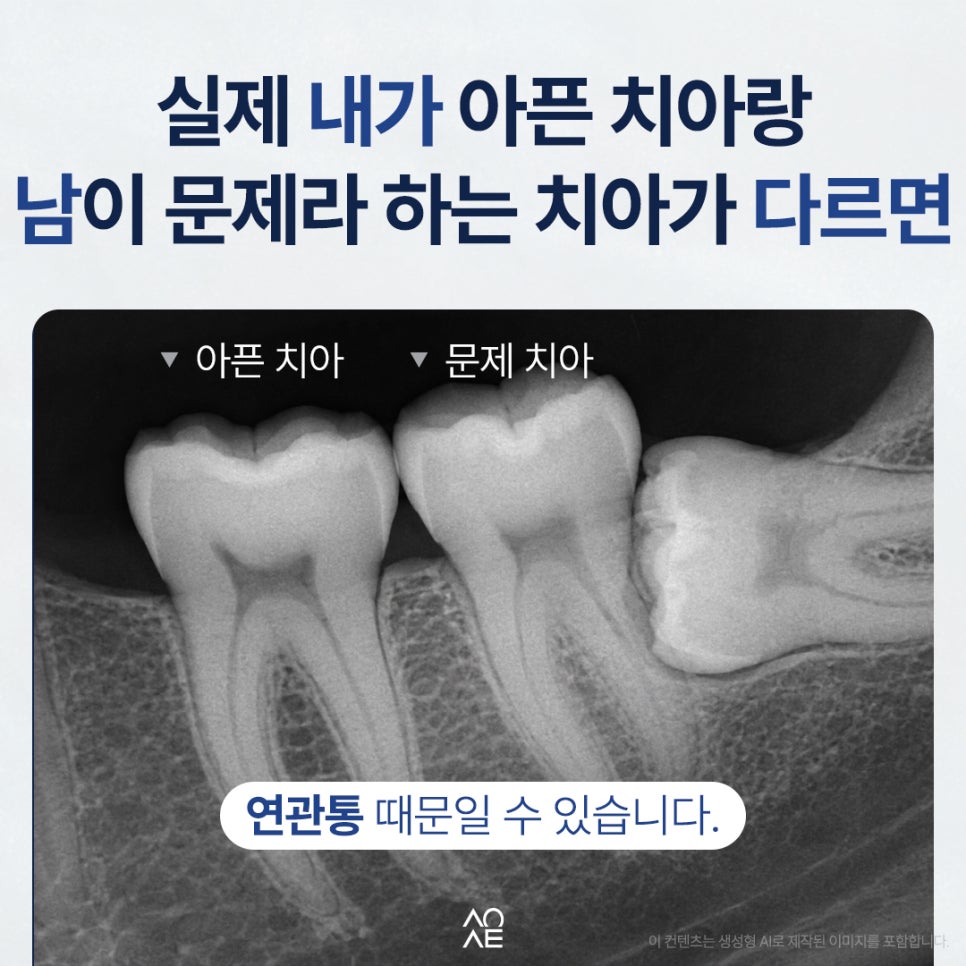
Behind the painful front tooth was
a wisdom tooth lying sideways.
Because of this impacted wisdom tooth,
cavities and damage to the periodontal tissues
were also observed.
Although the patient felt the pain near the front tooth,
that does not necessarily mean the cause
is located only in that tooth.
In fact, it is fairly common for patients
to feel pain in a different location
from the tooth that is actually causing the problem.
One representative cause is referred pain.
What is referred pain?
Referred pain occurs when the actual cause is another tooth,
but it feels as though the front tooth
or the adjacent tooth is hurting.
Many people also confuse pain from the upper and lower teeth,
and some have difficulty distinguishing
exactly which tooth hurts among adjacent teeth.
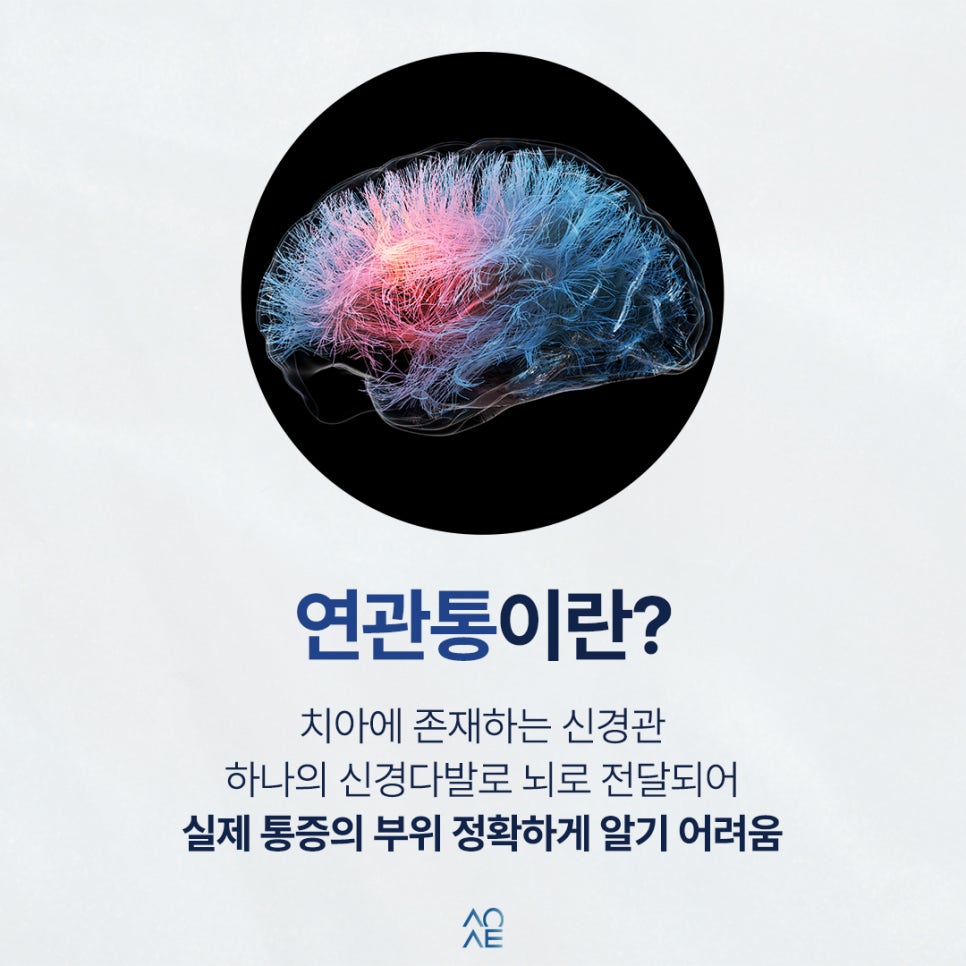
This is because the nerves in the teeth
eventually converge into a single nerve bundle
before transmitting signals to the brain.
The brain recognizes the fact that there is pain,
but in some cases it has difficulty determining
exactly which tooth the pain comes from.
Of course, it cannot be ruled out completely
that another cause may be present.
There could be a cavity,
periodontitis,
or an issue with the bite.
Accurate diagnosis
Ultimately, it is difficult to determine an accurate diagnosis
from just one image. A comprehensive examination—including
tapping the teeth, having the patient bite down on something hard,
periodontal pocket measurements, X-rays,
and CT scans—is necessary to identify
the exact tooth causing the problem.

In this case, when the patient came in,
they had sent part of the X-rays from the dental clinic
where they had received the diagnosis. However,
there was not enough information to examine
the other teeth or the overall condition of the mouth.
Based on the images alone, the tooth with the visible fracture line
appeared to be the problem, consistent with the findings
from the other dental clinic—not the sideways wisdom tooth
and the tooth in front of it mentioned by the patient.
It is more common than you might think
to feel pain in a tooth other than the one that seems painful.
This also happens fairly often in everyday life.
Rather than becoming alarmed, it is best to visit a dentist
and find out the cause.
Which should I get, a crown or an implant?
I was diagnosed with a cavity at the dentist—is this diagnosis correct?