I stopped root canal treatment midway. Can it be continued?
There are cases where treatment is discontinued because
pain has decreased or the schedule no longer works.
Later, some people return to the dentist after living with no particular discomfort.

Inside the tooth, there may be an empty space where the nerve was removed or infected tissue that remains.
Over time, the temporary filling may fall out, allowing saliva and bacteria to enter the inside of the tooth and causing decay and inflammation to progress further.
As a result, when you visit the dentist again after a long time,
you may be told that extraction is necessary.
Even though you are still young,
you may feel burdened by the fact that you need a dental implant.
Whether root canal treatment—the final treatment that can be attempted beforehand—can be resumed is not determined solely by how long the treatment was discontinued.
Does being told that the tooth cannot be saved mean it must be extracted immediately?
This expression generally means that the nerve inside the tooth has become necrotic or that the nerve has already been removed.
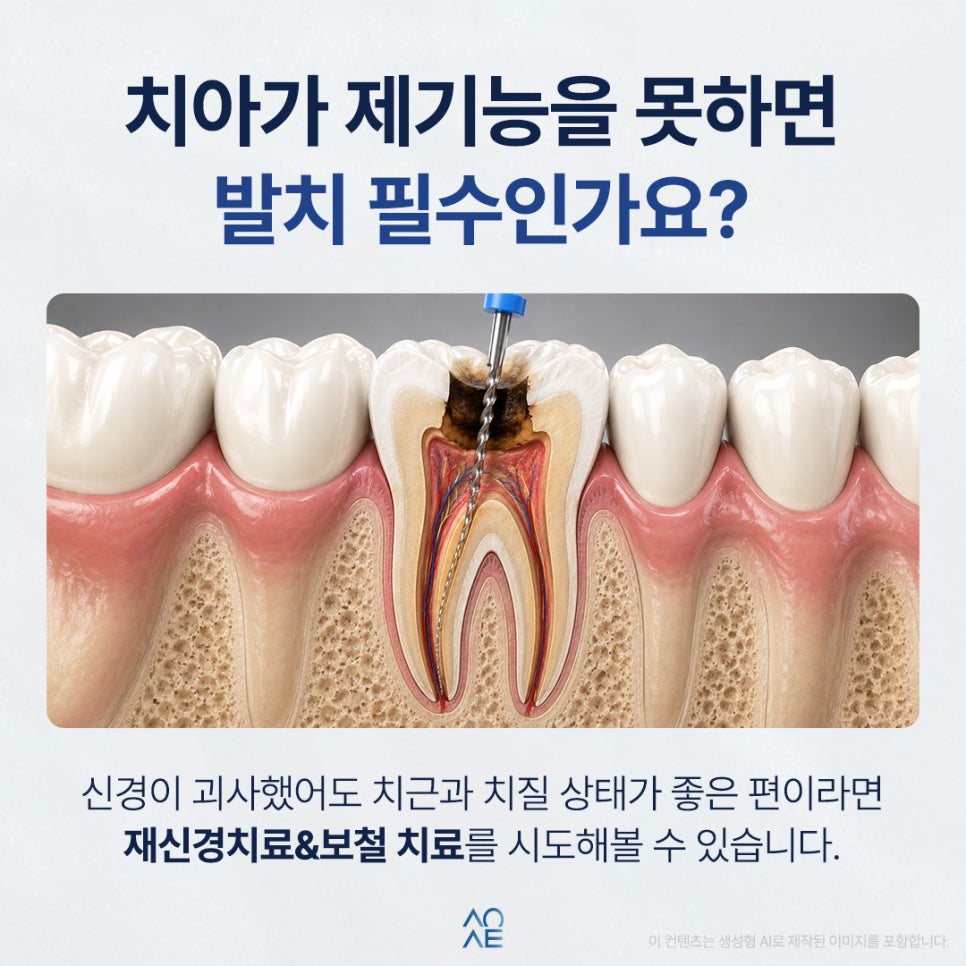
If the root is in good condition and enough structure remains to restore the tooth,
there may be a reasonable possibility of attempting retreatment and prosthetic treatment.
Therefore, the presence of a problem with the nerve alone does not confirm that extraction is necessary.
On the other hand, if the inflammation at the tip of the root is very extensive,
if the crown has severely collapsed,
or if the infection has spread extensively to the area around the root,
the possibility of preserving the tooth may be lower.
Treatment planning is also affected when the previous root canal treatment revealed that the root canal was narrow, structurally complex, or blocked.
Even if you hear the same explanation,
the actual reason for extraction may differ from patient to patient,
so we recommend receiving a specific explanation based on your examination results.
What conditions make a tooth difficult to preserve?
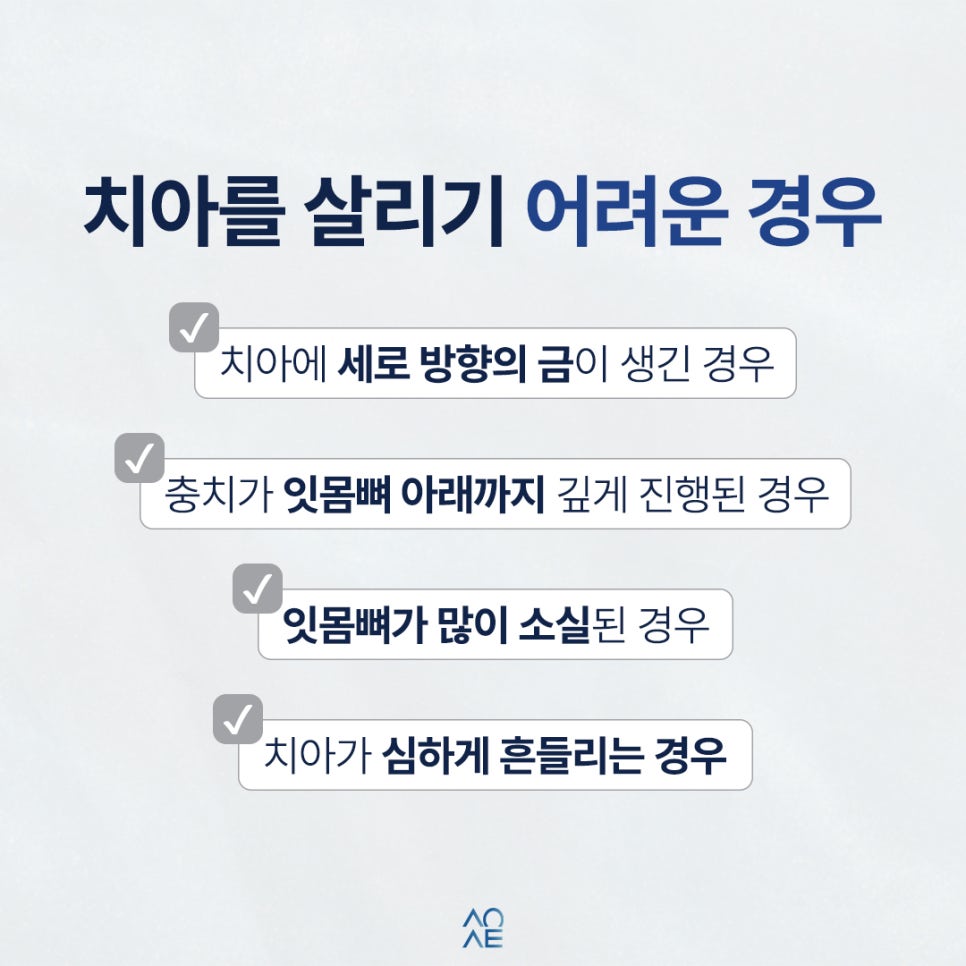
If a vertical crack develops in the tooth,
bacteria can continue to penetrate through the gap,
so it is often difficult to maintain the tooth over the long term.
A poor prognosis may also be expected when decay has progressed deeply below the gumline,
making it difficult for the prosthetic restoration to be supported.
If substantial bone loss has occurred because of inflammation around the root,
or if the tooth is severely loose,
extraction should also be considered.
In some cases, a crown can be placed after a procedure such as crown lengthening,
but if the tooth becomes excessively short after treatment
or too much stress is placed on the root,
it may be difficult to use the tooth for a long time.
Although preserving a natural tooth is important,
if the risk of recurrent inflammation and fracture is high,
the result may be unfavorable compared with the treatment period and cost,
so an appropriate decision is needed.
Are there any treatments worth trying once more before extraction?

If the previous root canal treatment was not completed
or an infection remains inside the tooth,
retreatment may be considered.
This involves reopening the inside of the tooth,
removing the defective filling material and infected tissue,
cleaning the canal,
and then filling it completely without gaps.
If inflammation remains at the root tip
but is difficult to reach with conventional retreatment alone,
procedures such as an apicoectomy may also be considered.
However, not every case is suitable for these treatments.
The presence of a root fracture, the extent of decay, the amount of remaining tooth structure,
the height of the jawbone,
and whether the tooth can be accessed for retreatment
must also be evaluated.
If extraction has been recommended,
you may ask which specific issue makes recovery difficult
and what the expected prognosis would be after retreatment.
If it is still difficult to decide after hearing the explanation,
you may also seek an additional opinion from another dentist.
Is getting a dental implant at age 20 too early?
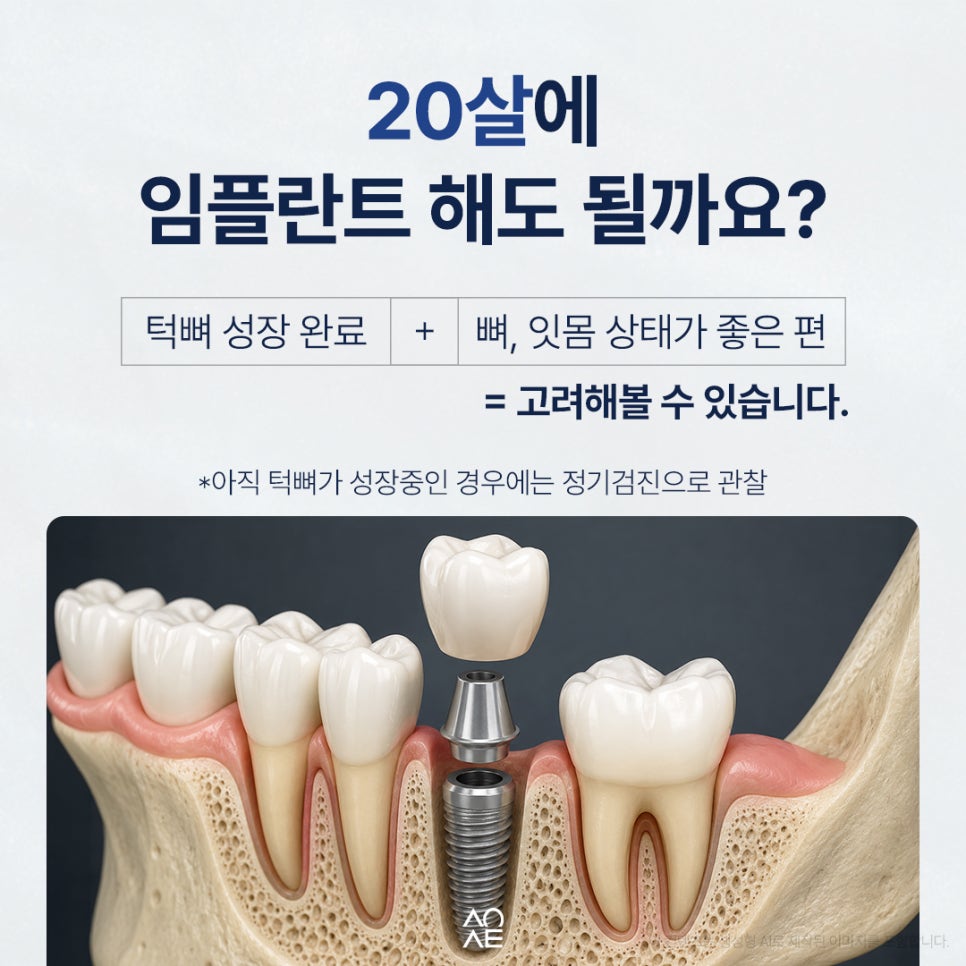
If jawbone growth is complete and the condition is stable,
being young does not by itself mean that a dental implant cannot be placed.
However, because the timing of growth differs from person to person,
it is necessary to confirm whether growth of the face and jawbones has finished.
Even at age 20, some people have completed jawbone growth,
while others have not.
If an implant is placed while growth is still ongoing,
the positions of the surrounding natural teeth may change,
while the implant, which has fused with the bone, remains in the same position,
potentially creating a difference in height between them.
If growth is complete and the gums and bone are healthy,
there are often favorable conditions for osseointegration after surgery.
When receiving a dental implant in your 20s,
how it will be managed over the long term is also important.
There is no need to delay treatment solely because you are young,
but please make your choice only after thoroughly confirming whether the tooth can still be preserved.
Is it okay to leave the space after extraction untreated?
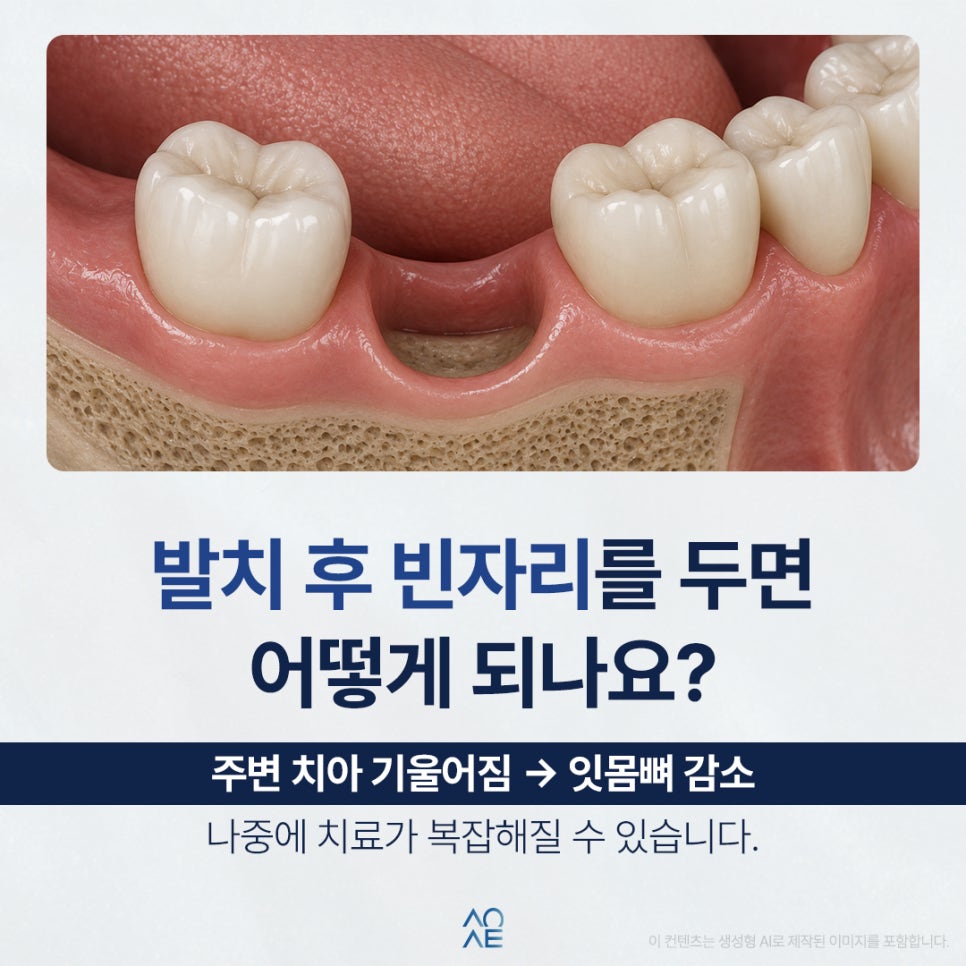
If the empty space left after extracting a tooth that is difficult to save is left untreated for a long time,
nearby teeth may tilt toward the space,
or the opposing tooth may move downward.
This can alter the balance of chewing
and may eventually leave insufficient space for implant placement.
Because the jawbone at the extraction site is gradually resorbed,
the longer treatment is delayed,
the more likely bone grafting may become necessary.
If immediate treatment is difficult,
a temporary prosthesis or a method of maintaining the space may be considered.
Depending on the location and the area of tooth loss,
a bridge or orthodontic treatment may also be an alternative,
but whether it can be used depends on the circumstances.
Planning from the time of extraction how the empty space will be replaced
can help prevent problems that may occur later.
Can a dental implant placed in your 20s last a lifetime?

It would be more accurate to describe it as semi-permanent.
Because it is an artificial tooth, it does not develop cavities,
but inflammation around the implant can occur if gum care is inadequate.
If symptoms persist for a long time,
the supporting bone may decrease,
and in severe cases, the implant may lose stability,
making replacement possible.
If you frequently grind or clench your teeth,
or have a habit of chewing only on one side,
the risk of abutment loosening or fracture may also increase.
Even if the implant fixture remains stable,
the crown connected above it may wear down and require replacement.
Regular checkups are needed to examine wear on the prosthesis,
the tightness of the abutment,
gum inflammation,
and changes in the surrounding bone.
Because dental implants placed in your 20s are expected to be used for a long time,
I would like to emphasize that proper care is extremely important.
There is no need to decide that an implant is too soon based on age alone.
First, check whether root canal treatment can be resumed,
whether there is a crack in the root,
and whether there is enough bone.
If there is a possibility of saving the tooth, preserve it if possible,
but if it is determined that restoring it will be difficult,
you may then consider a dental implant.
Making a decision after sufficiently comparing the examination results and expected prognosis
may help reduce the burden.


How long does pain after implant extraction last?
I’m worried that laminate veneers might cause severe tooth sensitivity.