Hello, I’m Kim Min-young, a specialist in conservative dentistry.
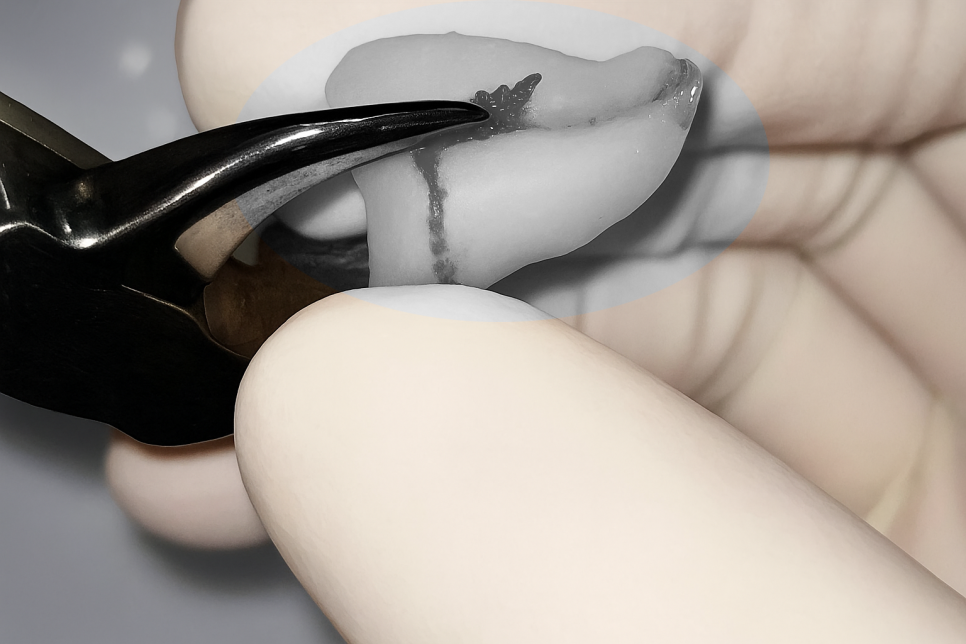
If you look at a tooth being held in a hand,
you can see how small it is.
Inside it are many different elements.
In the root canal treatment stage, a small passage must be created
to remove and disinfect the small internal structures,
and go through a process that promotes cleanliness.
That is why it requires relatively difficult and delicate work,
and what helps in this process is a dental microscope.
Because it enlarges areas that are hard to see with the naked eye,
to show them in detail,
it is usefully employed in various conservative dental treatments.
Even after checking such fine details,
because of the complex structure with numerous accessory canals,
there are cases in which inflammation recurs.
Today, at Dangsan-dong Dental Clinic, I would like to share information about
[apicoectomy], which can be considered when root canal treatment fails.
- What kind of treatment is it?
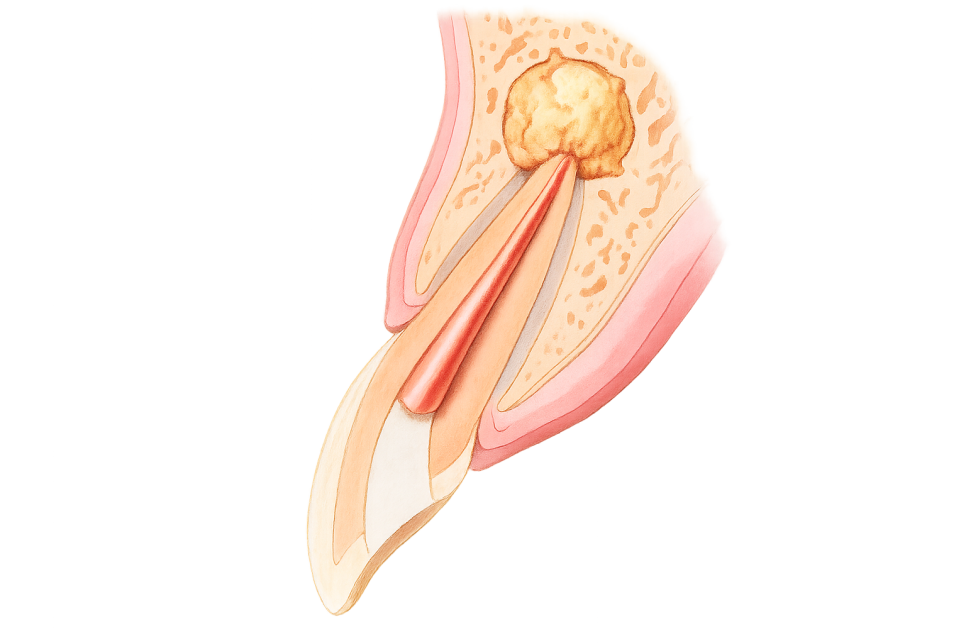
When the apical lesion has progressed
and it is judged that improvement is difficult with root canal treatment alone,
about 3 mm of the root tip is removed,
and biocompatible MTA is used in that area
to perform a retrograde filling,
thereby inducing a favorable course.
This is called apicoectomy.
Since this process is by no means easy,
careful attention is required.
Also, because it is performed in cases where the disease has progressed,
it is not something that can always be successful,
so it is better to proceed with treatment while also considering extraction,
and you should be aware that various side effects such as
swelling, bleeding, infection, and bruising may occur together.
Then, in what cases can it be attempted,
and what steps are involved?
.
.
.
Let me explain in detail while looking at the material prepared by
Dangsan-dong Dental Clinic.
- What is the treatment process?
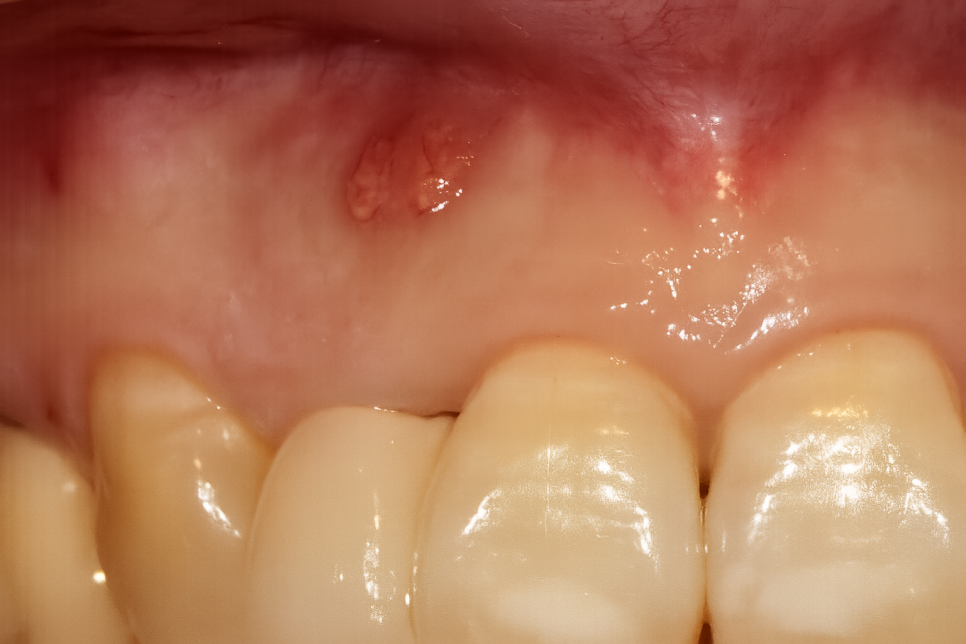
If you look at the photo, you can see a pimple-like bump
on the gums.
Usually, the reason for this appearance is that a large inflammation develops
at the root of the tooth,
and as it worsens, a pimple-like bump
appears on the gums.
It is difficult to identify the problem accurately just by looking,
so a radiograph is taken to check the internal condition.
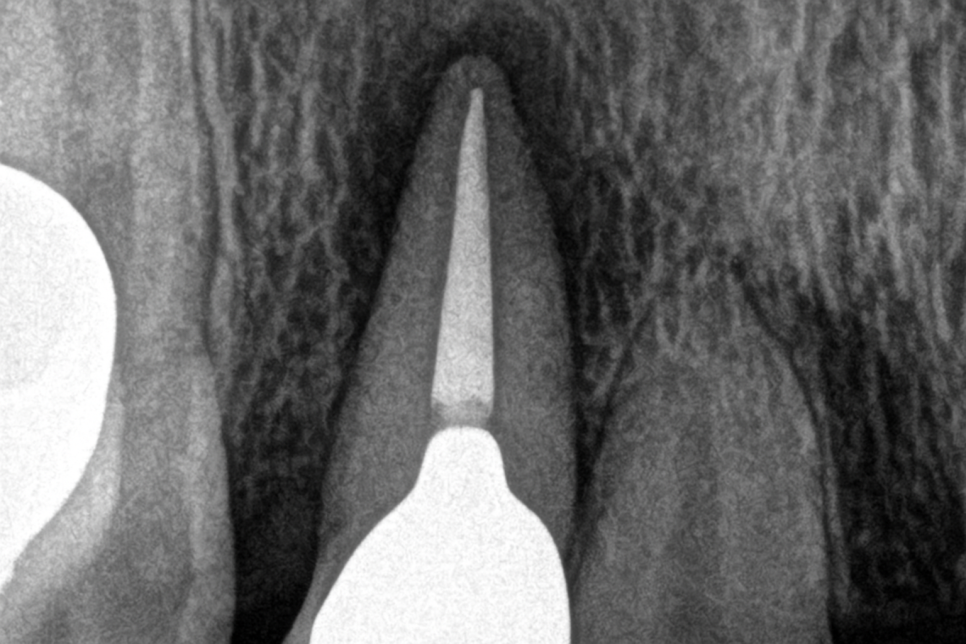
If you look at the Dangsan-dong Dental Clinic photo, you can see that the internal tissue
has been completely removed and the material has been filled in.
This shows that root canal treatment had been performed previously,
but the prognosis afterward is poor.
If you look closely at the root tip, the dark radiolucent pattern
around the tooth is clearly increased.
This appears dark because inflammation has developed,
and a pus-like mass has formed over a fairly wide area,
so it is difficult to expect a favorable course simply by
performing retreatment of the root canal.
This is a case in which apicoectomy can be applied.
By surgically removing about 3 mm of the root tip,
the pathway through which bacteria enter and cause infection
is eliminated.
At this point, every tiny detail must be observed,
so if an in-house microscope is available,
it can be actively used.
I will briefly explain the process at
Dangsan-dong Dental Clinic.
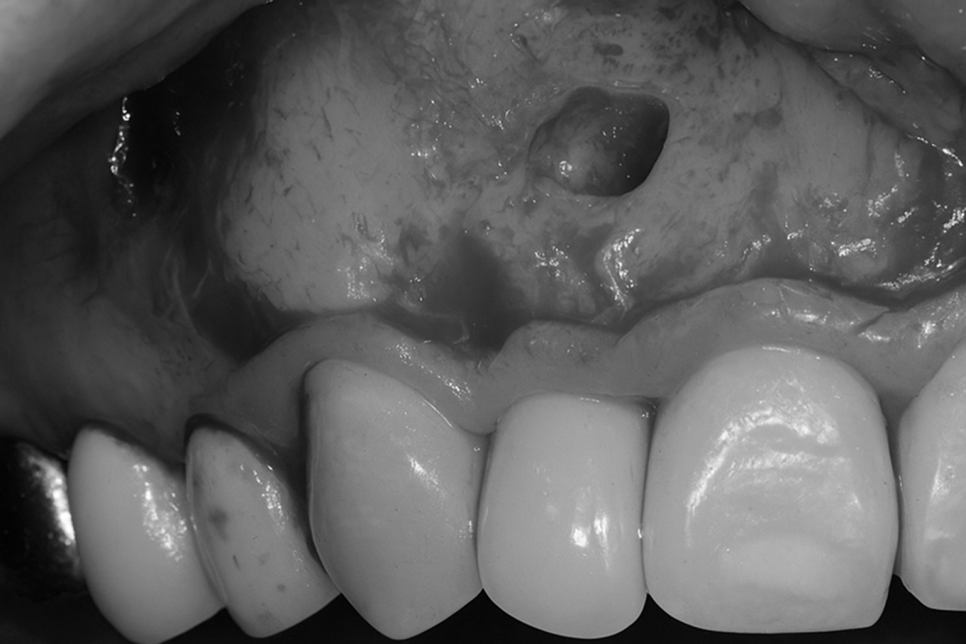
First, the gum is reflected and the alveolar bone is removed
to create a passage through which instruments can enter.
After that, the inflamed tissue is scraped out
to create a clean environment.
Once the tooth root is exposed through these steps,
about 3 mm of the tip is resected.
Then the material filling the inside is scraped out and removed.
This secures space for filling with MTA,
a biocompatible material.
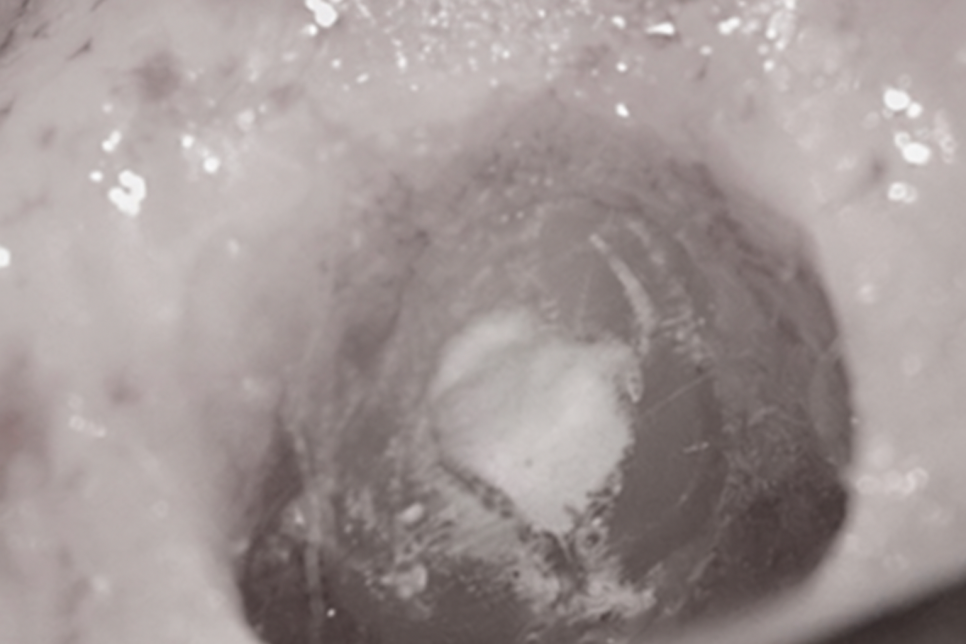
To achieve a proper seal,
we carefully observe under a microscope while performing the retrograde filling.
The material is packed in using an instrument,
and a cotton roll is moistened to shape the contour.
After the filling is completed, if bone grafting is needed
due to bone resorption, it is performed additionally,
and then the incision site is closed.
What happens afterward?
After surgery, you should avoid smoking and drinking,
maintain good oral hygiene,
and monitor the healing progress.
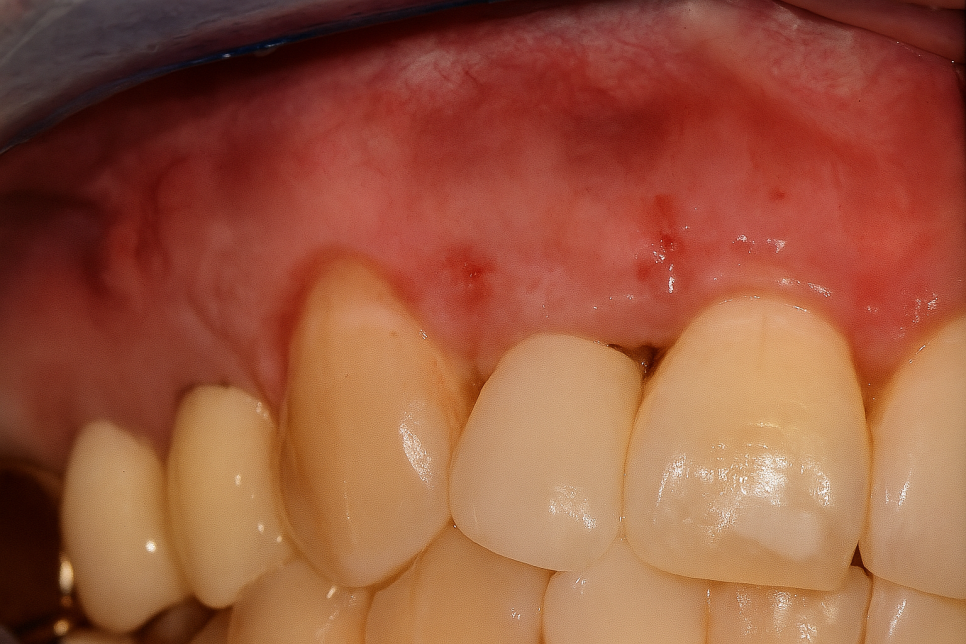
As the inflamed tissue is scraped out and a clean environment is created,
and healing gradually progresses, the pimple on the gums disappears,
just like in the Dangsan-dong Dental Clinic photo,
and the area returns to a stable state.
Today, I shared information about apicoectomy,
one way to preserve a natural tooth.
I hope the information I prepared was helpful,
and I will wrap up here.
This has been Kim Min-young from Dangsan-dong Dental Clinic.
Thank you.