Hello, this is Kim Minyoung,
a specialist in Conservative Dentistry at Yeongdeungpo-gu Office Dental Clinic.
Implants are known as an excellent treatment
for replacing missing teeth.
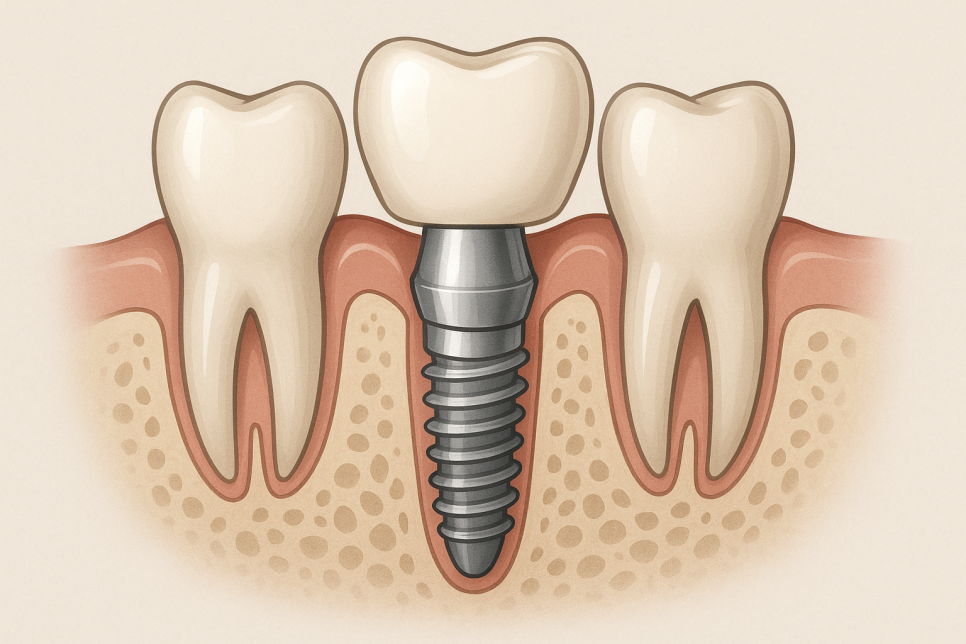
Just a few years ago, because they were known as a difficult
and highly demanding procedure,
many people chose affordable dentures instead,
but these days, dentures are rarely pursued.
In addition, advances in dentistry have made it possible
to place the screw immediately after tooth extraction,
without going through a healing period.
When the screw is placed immediately after extraction,
it is possible to secure initial stability by using the structure of the bone itself,
and it also greatly helps in selecting a good position.
Above all, the treatment period itself is shortened,
which is why many people prefer it.
It is used mainly in the front teeth,
which are directly related to aesthetics.
What is important about front tooth implants?
In addition to restoring the function of natural teeth,
it is also necessary to improve the aesthetic area
so that it does not create problems later
or become a complex that causes stress for the patient.
To achieve aesthetic results in the anterior region,
the shape of the surrounding soft tissue (the position of the gingival margin,
the height and shape of the interdental papilla,
the degree of buccal concavity, etc.)
depends greatly on preserving it as it was before the tooth was extracted.
However, preserving it is more difficult than expected.
I will explain the reason at Yeongdeungpo-gu Office Dental Clinic.
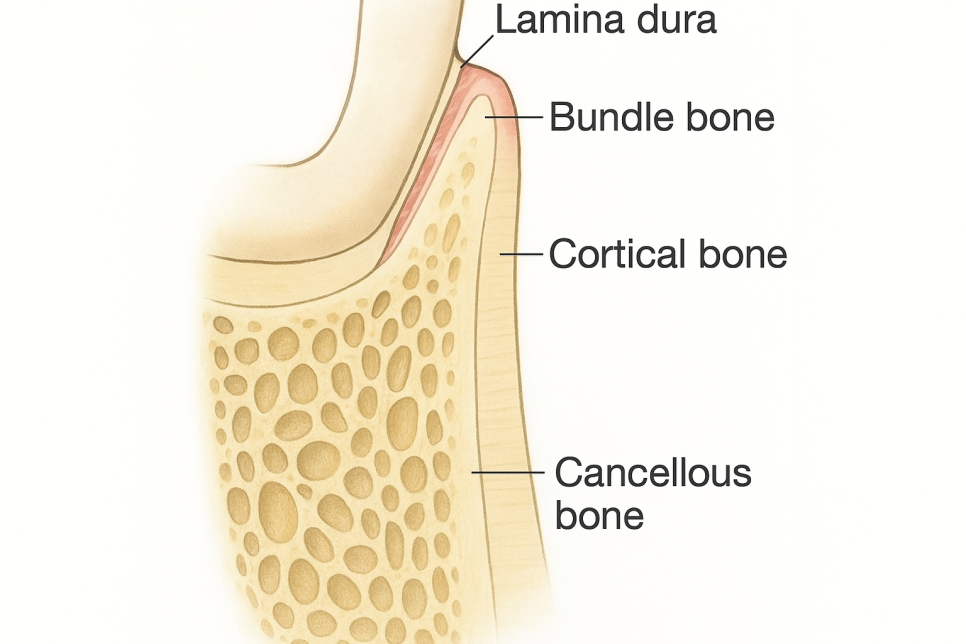
Because the thin alveolar bone on the buccal side of the extraction socket is mostly
composed of bundle bone,
it naturally disappears after the tooth is extracted.
As a result, the buccolingual width and vertical height
of the alveolar bone decrease.
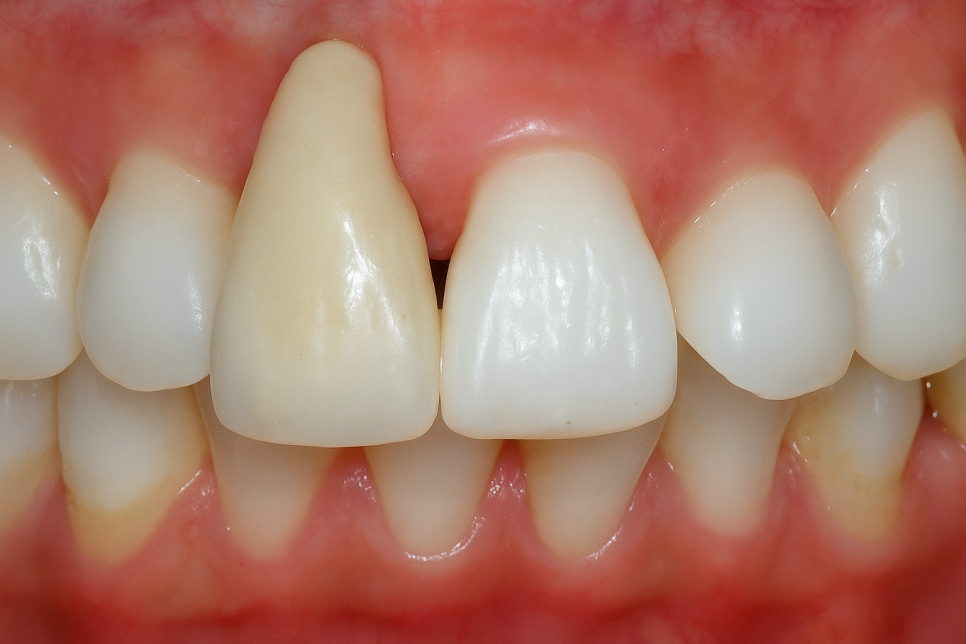
If the bone settles and an adequate amount is not secured,
the gums are bound to look sunken as well,
and this can become a factor that may create issues
directly related to aesthetics.
That is why minimizing bone loss
and preserving the current state
is such an important point.
I will explain this in a little more detail
at Yeongdeungpo-gu Office Dental Clinic.
Changes in the alveolar ridge
In cases where the fixture is placed immediately after extraction,
if the space between the fixture and the extraction socket remains within 2 mm,
bone integration can proceed stably
even without adding a separate bone graft.
However, if immediate placement is performed after extraction
without accompanying bone grafting,
it inevitably leads to alveolar bone resorption.
In one study in which 15 single-rooted teeth were extracted from 10 patients
and implants were placed immediately,
compared with the time of implant placement,
the change in buccolingual width at the alveolar crest
after 6 months of healing and at the time of secondary surgery
showed a significant decrease from 10.5±1.5 mm to 6.8±1.3 mm.
Another study also reported on immediate placement
and delayed placement 6 to 8 weeks after extraction.
In the immediate placement group, the buccolingual width decreased from
10±1.522 mm at the time of surgery to 8.1±1.334 mm at the time of secondary surgery,
while in the delayed placement group, it decreased from
8.86±2.356 mm to 5.8±1.265 mm at the time of secondary surgery.
According to their study, by the time of delayed placement,
alveolar ridge resorption had already progressed,
but after implant placement,
it was found that the alveolar bone continued to settle to a certain degree.
Based on the studies introduced earlier at Yeongdeungpo-gu Office Dental Clinic,
if we summarize them,
when the screw is placed immediately after extraction,
the bone may settle horizontally and cause complications such as gingival recession
from an aesthetic standpoint,
but performing bone grafting in the extraction socket
or using a barrier membrane
can significantly reduce
the extent of bone settling.
Changes in soft tissue
The resorption of alveolar bone is directly linked to changes in the gums,
and this greatly affects both the recession and stability
of the gingival margin around implants.
In a study found by Yeongdeungpo-gu Office Dental Clinic,
bone tissue resorption showed some differences between immediate placement
and delayed placement,
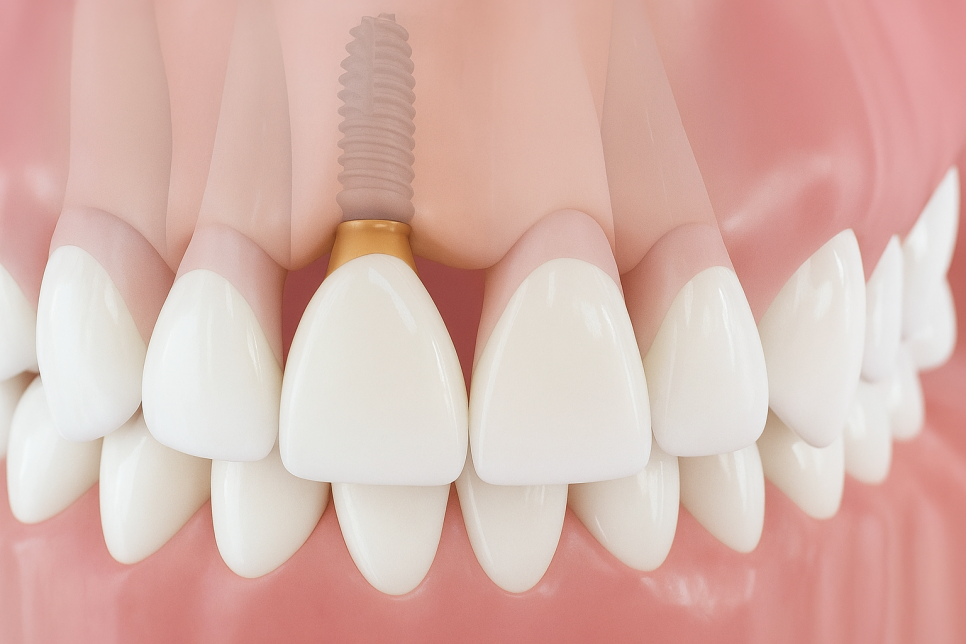
but the gums were more strongly influenced by
the three-dimensional placement position of the fixture.
Also, if alveolar bone grafting is not performed,
the amount of short-term soft tissue recession may be average,
but additional recession can continue to occur over the long term,
which undermines stability.
To summarize,
although the timing may vary from person to person,
it is necessary to preserve the bone as much as possible so that it does not resorb
and to ensure that the gums can stabilize without sinking,
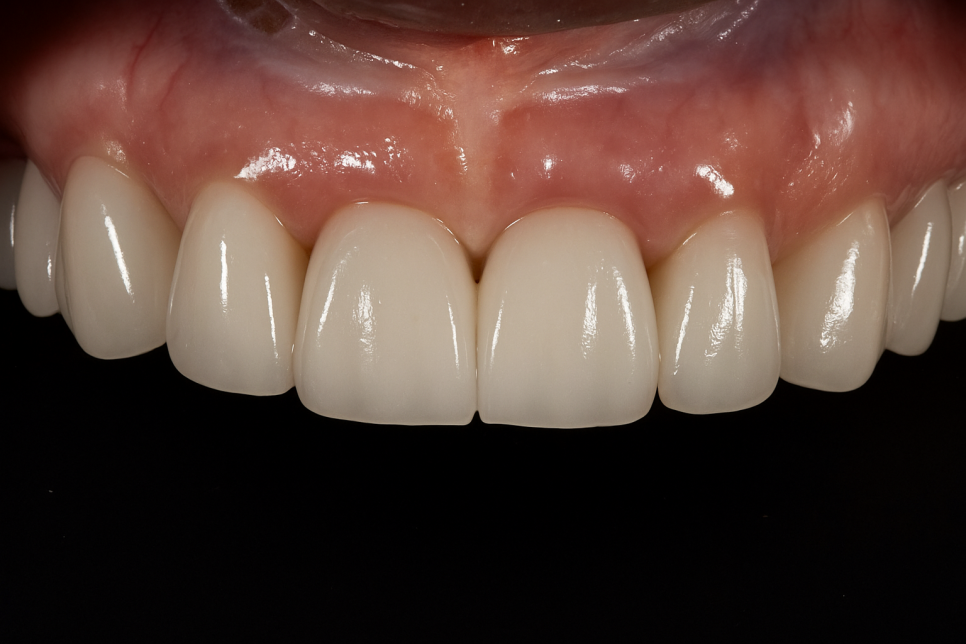
so that not only the function of front tooth implants
but also aesthetics can be restored.
Explaining it in words may make it seem quite simple,
but preventing alveolar ridge resorption and maintaining the original state
requires quite a difficult technique.
Therefore, I believe that receiving treatment at a place
that can provide professional solutions from a conservative perspective
greatly affects the prognosis.
I hope this post from Yeongdeungpo-gu Office Dental Clinic
was helpful for those preparing for front tooth implants.