Hello, I’m Kim Min-young, a specialist in conservative dentistry.
If tooth decay or periodontitis becomes severe and you have to have a tooth extracted,
you need something to replace its role!
The alternative people often think of is an “implant,”
and today I’d like to explain the attached gingiva,
which determines its lifespan.
To help you understand,
I’ll start with an explanation of the gums at Seonyudo Station Dental Clinic.
What is attached gingiva?
You may think they are all the same,
but they are different!
If you touch the area closest to the tooth with your hand,
you’ll feel some degree of movement.
Because it is mobile, there is a pocket called the periodontal pocket.
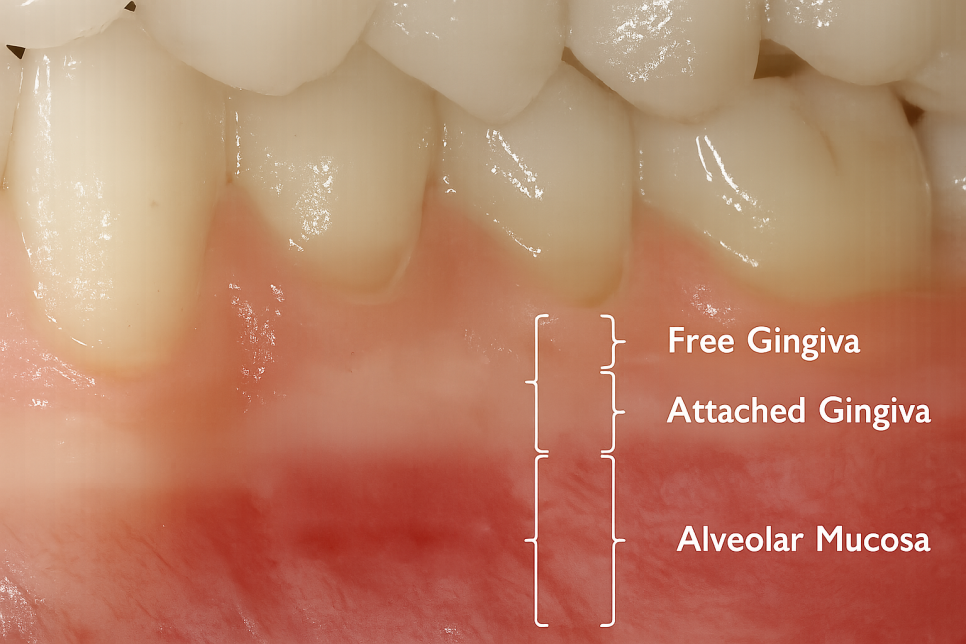
If you touch a little higher up, unlike the area below it,
you’ll feel no movement.
This area is called the [attached gingiva].
And if you go farther upward beyond here,
there is a soft area again,
which is called the mucosa.
The area between the mobile tissue and the mucosa,
this is the attached gingiva.
If there isn’t enough of it, it affects lifespan.
Seonyudo Station Dental Clinic will explain in detail
why that is.
Q. What does it do?
The attached gingiva explained above
acts like a “shield.”
Because it is tissue that is firmly attached to the bone and tooth,
providing stability and protection,
it serves as the first line of defense
to prevent bacteria and other germs from penetrating.
First, because it is firmly attached, it supports implants or the structures around teeth,
minimizing movement and providing “stability.”
Second, it “protects” against external irritation and bacteria.
Third, because it is firm gum tissue,
it “protects” against mechanical irritation such as food and toothbrushing.
Fourth, it helps prevent gum recession
and improves aesthetics.
So to stay healthy for a long time,
an adequate amount must be secured.
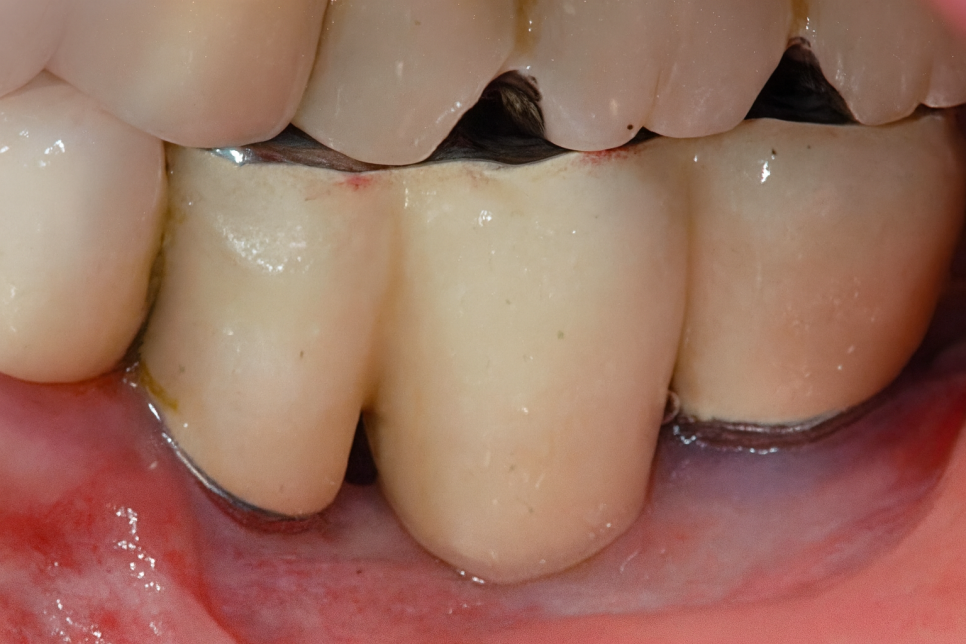
However, if the gums are lost for various reasons, such as
alveolar bone resorption after extraction,
or the bone tissue sinking down because inflammation has been present for a long time,
then the tissue that plays a protective role becomes insufficient,
making it easier for bacteria to invade
and leaving the area vulnerable to inflammation.
If you reach the situation mentioned earlier at Seonyudo Station Dental Clinic,
even small impacts caused by brushing or eating
can easily create wounds,
and symptoms such as sensitivity or pain may appear.
So to keep natural teeth or implants healthy for a long time,
you need to secure an adequate amount.
Q. How much is enough?
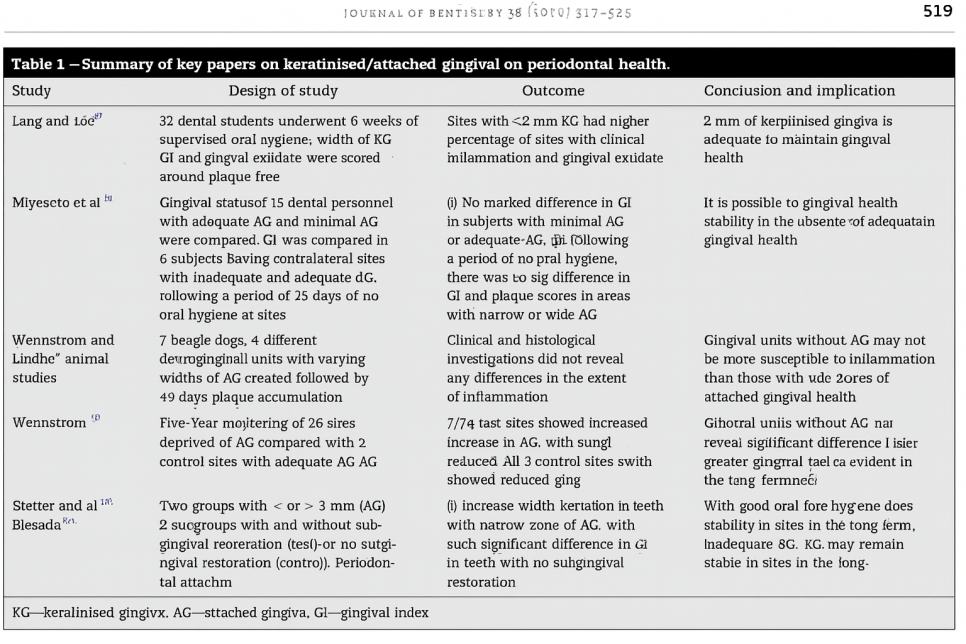
The width of the attached gingiva — Much ado about nothing? / journal of dentistry 38 (2010)
We at Seonyudo Station Dental Clinic have prepared a related paper.
It is a summary based on a review of several papers,
and among them, one study said that more than 2 mm is needed.
Also, in other papers, some authors say that even less than 1 mm is sufficient,
while others say that the height of keratinized tissue
must exceed 3 mm.
In addition, there were those who said that not only the height,
but also the distribution should be secured evenly to some extent.
If there is less than this, then through a procedure called a apically positioned flap,
you need to secure a certain amount.
Q. What is an apically positioned flap?
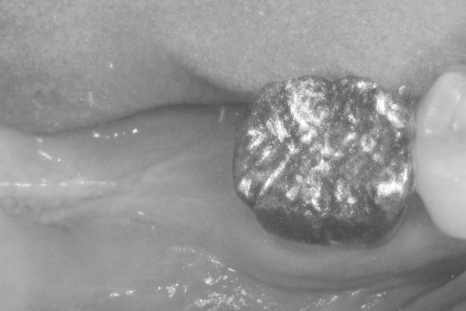
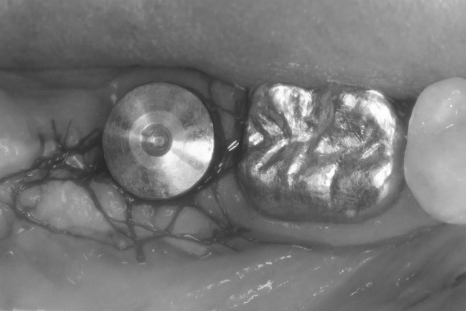
This surgery changes the position of the gums,
turning the mobile area into a firm area attached to the bone.
By pulling the movable area downward and inducing it to become firmly keratinized,
it is a process of sufficiently securing the area
that will serve as a shield.
Because it requires a delicate process,
the experience and skill of the medical staff are important in this surgery.
Today at Seonyudo Station Dental Clinic, I explained the factors
that affect the lifespan of implants.
Just as trees or plants need fertile soil and plenty of sunlight to grow healthily,
implants also need a healthy environment to support them.
I hope the content I shared today was helpful,
and I’ll wrap up the post here.
This has been Kim Min-young, a specialist in conservative dentistry at Seonyudo Station Dental Clinic.
Thank you.