Hello, I’m Kim Min-young, a restorative dentistry specialist at a dental clinic near Seonyudo Station.
Diastema, or gaps between teeth,
occurs due to a combination of factors,
such as differences between tooth size and arch size, periodontal condition,
frenulum attachment position, and occlusal relationship.
This is especially common between the maxillary central incisors,
and the treatment method varies depending on
the patient’s aesthetic needs.
The representative options are resin,
a direct restorative approach, and
laminate,
a prosthetic restorative approach.
However, since they differ in applicable indications, long-term stability,
and aesthetic completeness,
it is important to decide based on an accurate diagnosis.
In this post, I will explain the differences between resin and laminate
in the treatment of gapped front teeth,
as well as the indications for each.
Seonyudo Station Dental Clinic, Restorative Dentistry Specialist Kim Min-young
Causes of Gapped Front Teeth (Diastema)
One of the most representative causes is
a mismatch between tooth size and arch size,
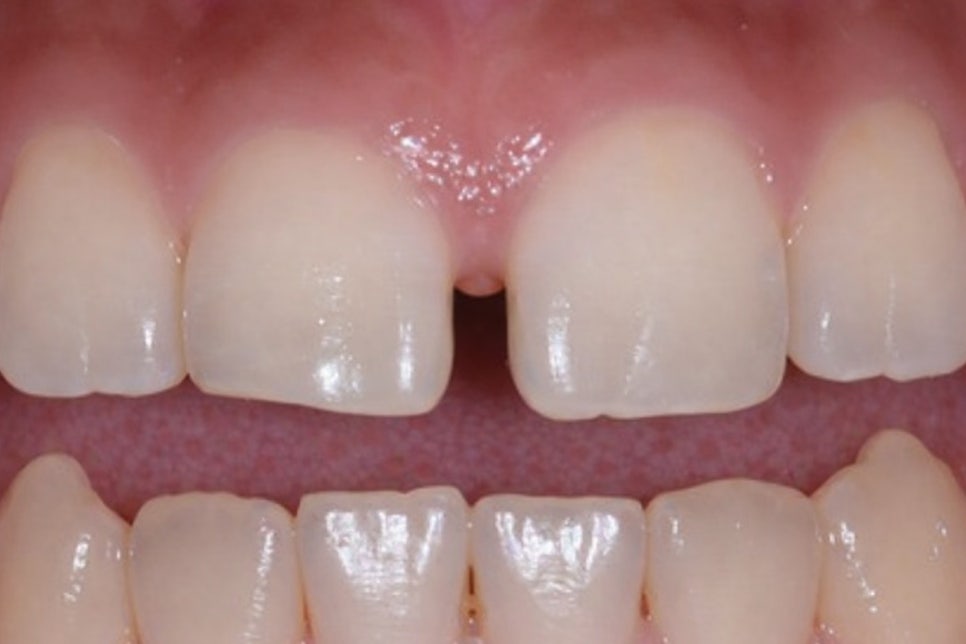
when the arch is wider than the teeth,
or when the teeth are congenitally small,
leaving extra space and causing gaps between the teeth.
In addition, when it appears between the maxillary central incisors,
the upper labial frenulum may be positioned low or be thick,
which can exert a physical force
that pushes the teeth apart.
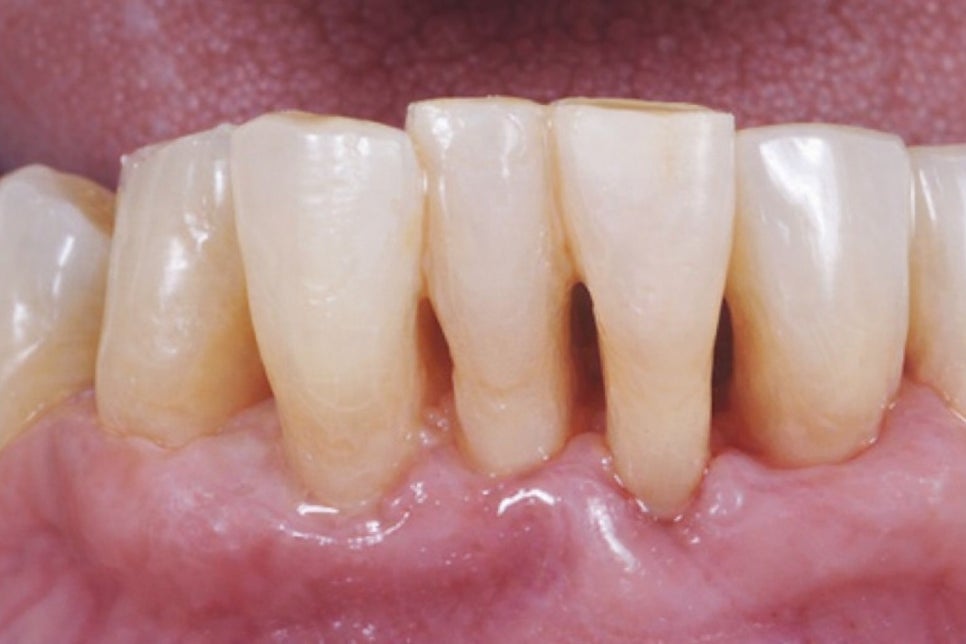
Periodontal disease is also a cause that cannot be overlooked.
As alveolar bone resorption progresses, the structure supporting the teeth weakens,
and as the gums recede,
gaps between the teeth may become more noticeable.
In addition, functional factors such as the habit of pushing the teeth with the tongue
or abnormal occlusal relationships can also
cause diastema over time.
Because these factors often act in combination,
an accurate diagnosis of the cause must come first.
Seonyudo Station Dental Clinic, Restorative Dentistry Specialist Kim Min-young
When Is Resin Restoration Appropriate?
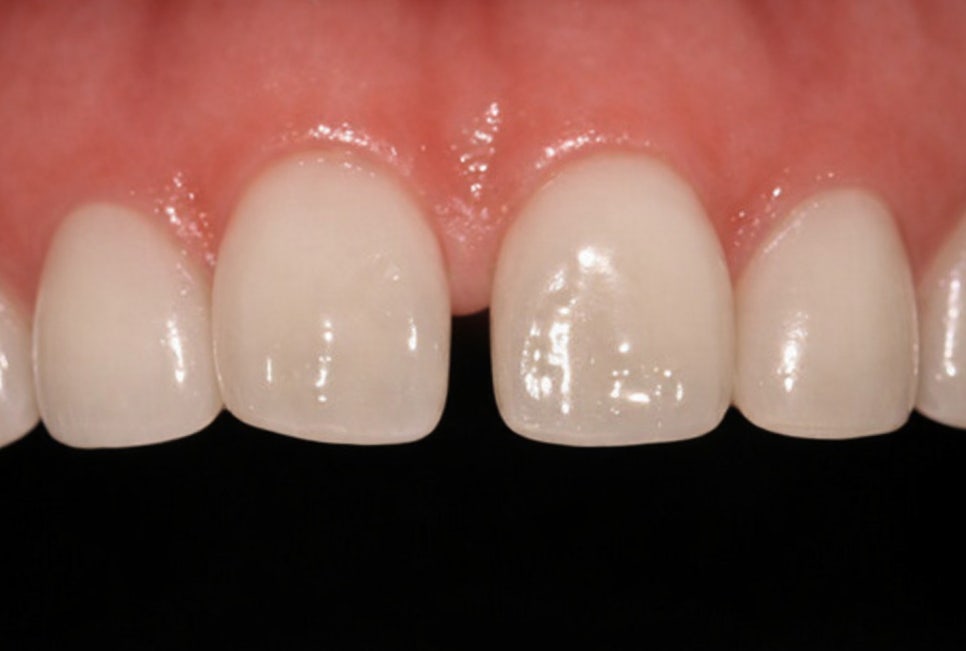
Resin restoration is one of the most conservative methods
for treating diastema,
and it allows minimal removal of tooth structure.
It is mainly applied when the space between the front teeth is minor,
and if there are no major problems with tooth shape or alignment,
it is possible to naturally fill the space using resin.
It also allows results to be seen on the same day of treatment,
requires fewer visits, and can provide
aesthetic improvement relatively simply.
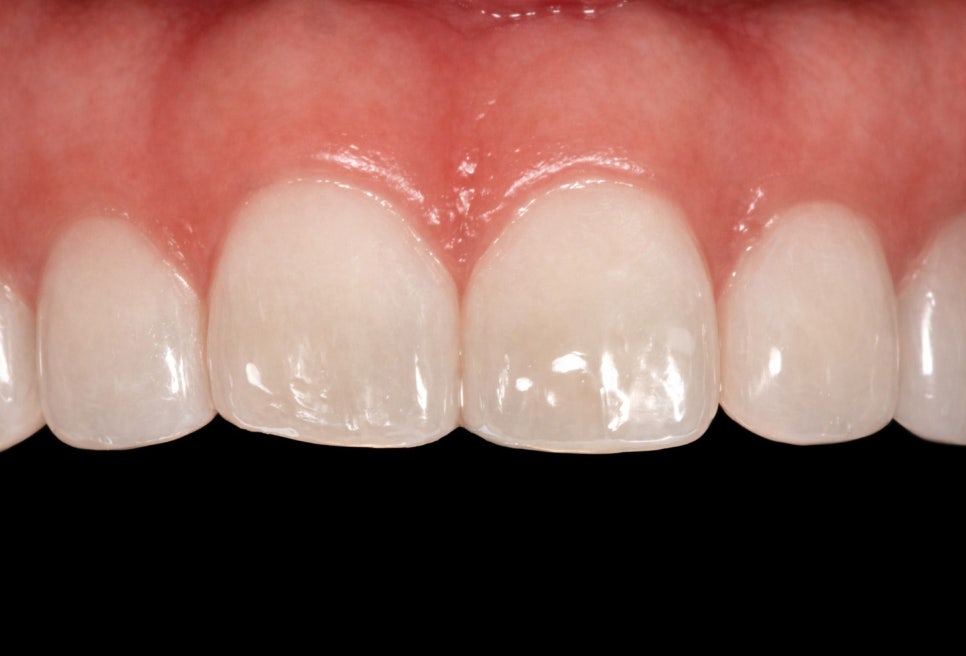
Because it preserves the natural tooth as much as possible without removing tooth structure
and selectively restores only the necessary area,
it is a method that is considered first when a simple aesthetic improvement is desired.
However, due to its nature, resin can become discolored or worn over time,
and when significant force is applied,
there is also a possibility of fracture or debonding.
In addition, when the diastema space is large,
there are limitations, and prosthetic restoration may be needed.
Seonyudo Station Dental Clinic, Restorative Dentistry Specialist Kim Min-young
When Is Laminate Appropriate?
Laminate is a method in which the front surface of the tooth is lightly prepared
and then a ceramic prosthesis is bonded onto it,
and it is a representative way to enhance aesthetic completeness.
It is especially useful when the teeth are small (microdontia)
or when there is a size imbalance between the left and right teeth,
as laminate can produce harmonious results.
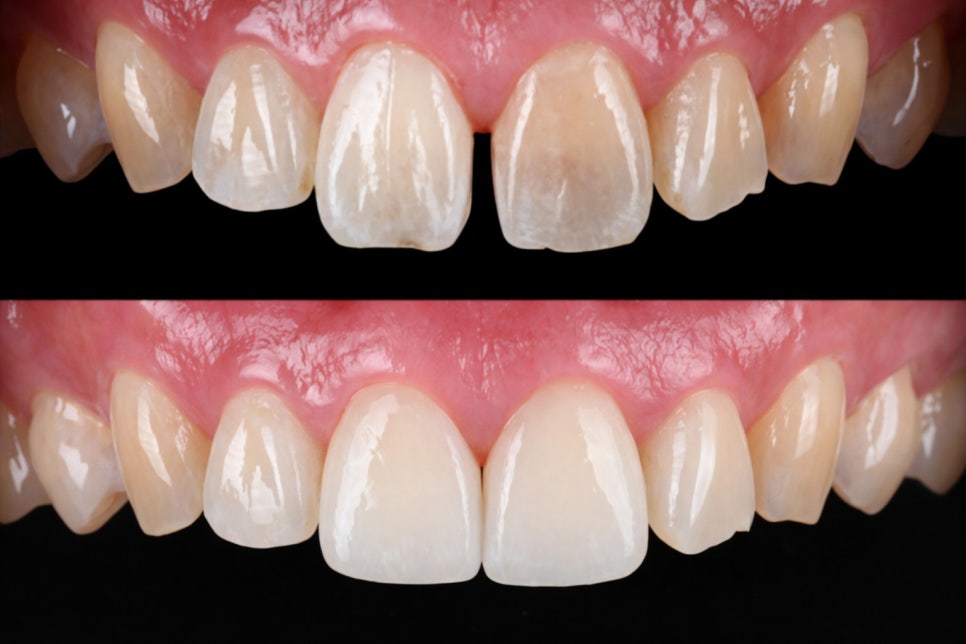
Because of the characteristics of ceramic materials, it can maintain aesthetics similar to natural teeth,
and it also has the advantage of high resistance to staining.
However, it is important to consider in advance that the cost burden is higher than resin.
Seonyudo Station Dental Clinic, Restorative Dentistry Specialist Kim Min-young
Resin vs. Laminate: What Are the Selection Criteria?
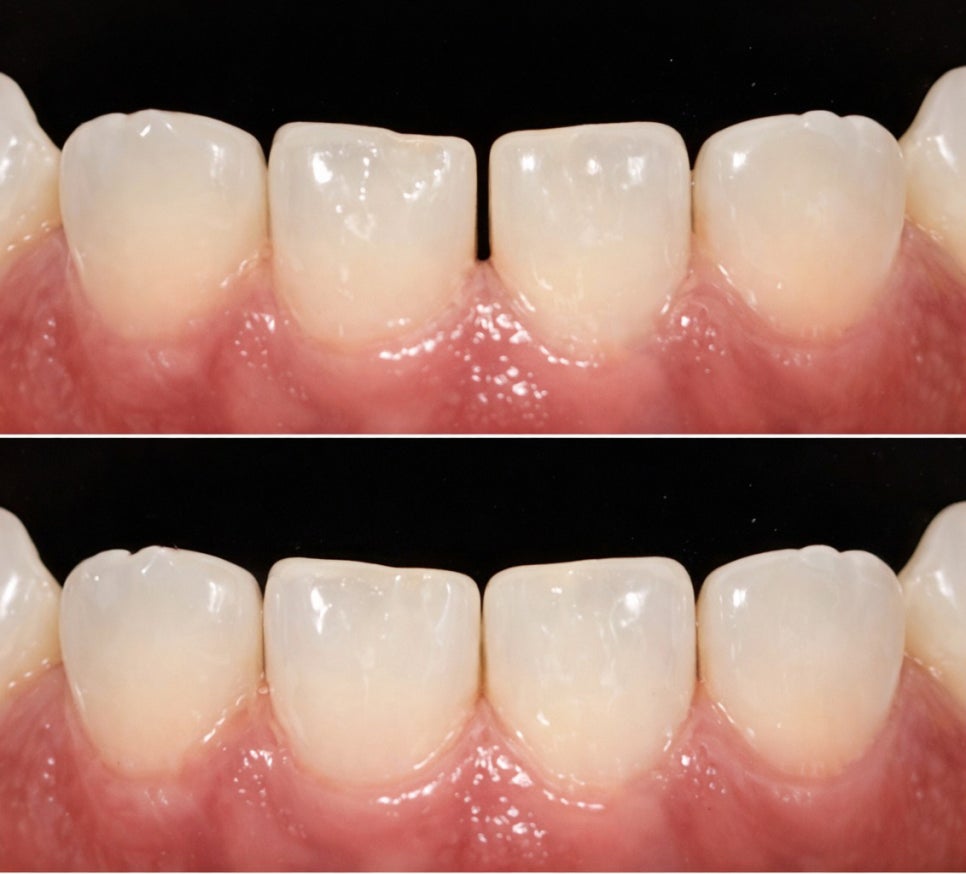
When the gap is not large,
it can often be improved sufficiently with resin,
but when the space is large, the proportions may look unnatural,
so prosthetic restoration may be more appropriate.
If there is discoloration and you want a brighter,
more uniform color improvement,
laminate has an advantage.
Since gapped front teeth require different treatment methods depending on the cause and condition,
it is important to make a plan based on an accurate diagnosis.
This has been Kim Min-young, restorative dentistry specialist at a dental clinic near Seonyudo Station. Thank you.