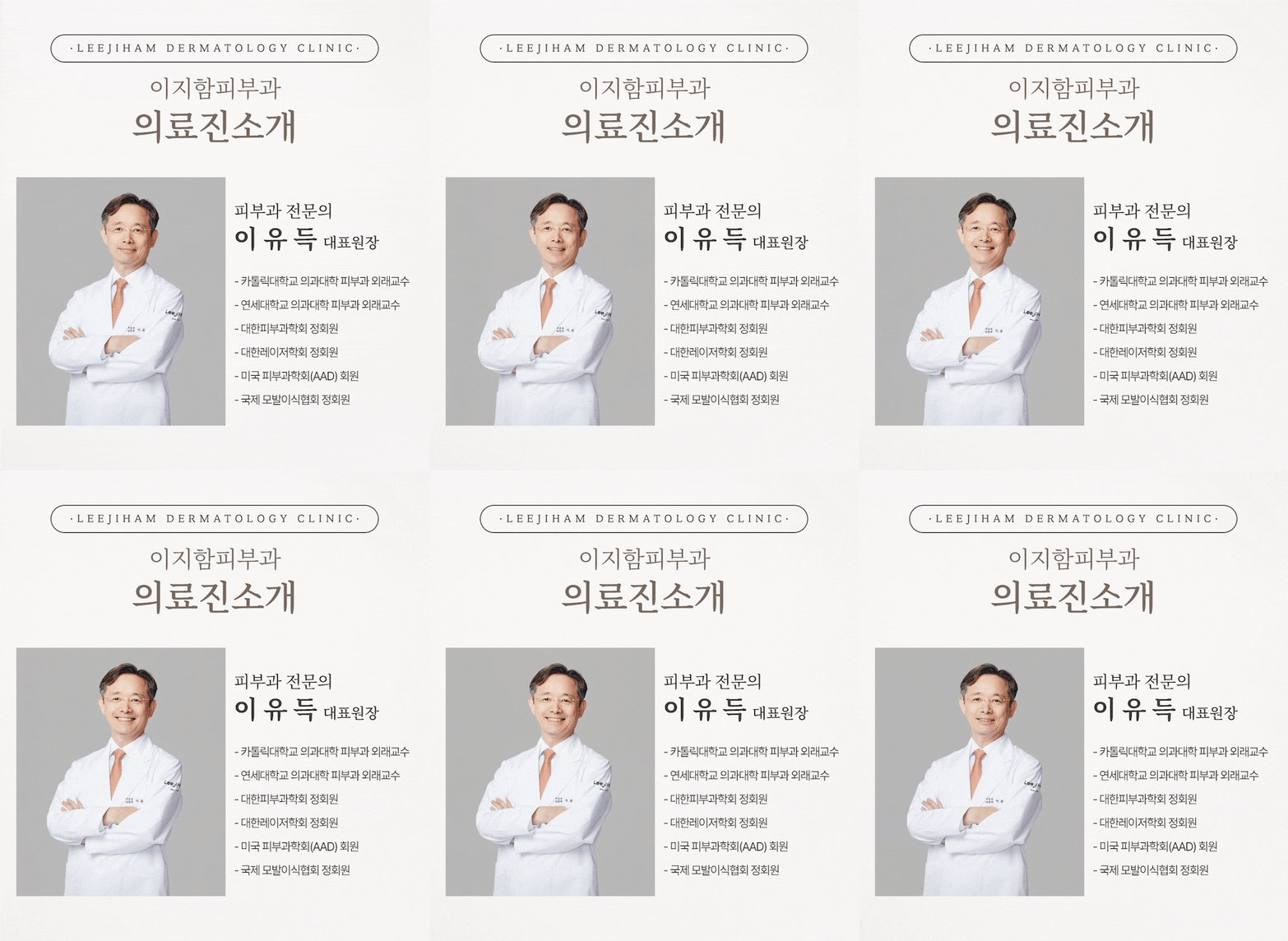
[Dermatologist Lee Yudeuk]
Hello,
A place that creates a comfortable face
rather than an excessive change.
This is Easyham Dermatology.
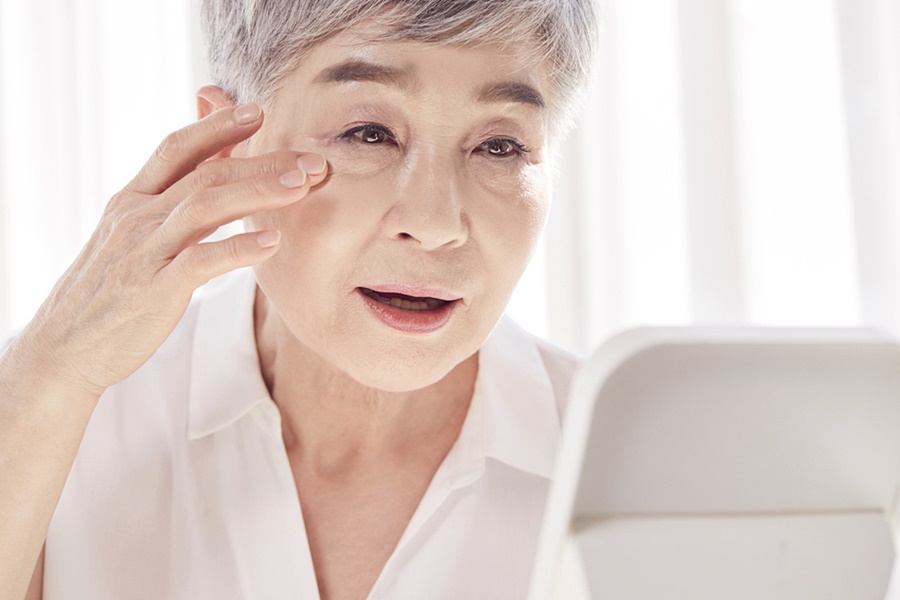
Have you ever looked in the mirror and suddenly thought, "My face doesn't seem the same as before"?
Do you find yourself sighing as the nasolabial folds deepen every time you smile, or as the jawline gradually becomes less defined? Many people end up worrying about their angle every time they take a photo and feel the passage of time when comparing old pictures with current ones.
Today, we will take some time to learn about skin elasticity decline and Gangnam Station Dermatology Thermage.
A beauty consultation that gives you something valuable
I am dermatologist Lee Yudeuk.
Why does skin elasticity
fade away?
A decline in skin elasticity is
a natural part of aging.
In the dermis layer of our skin,
collagen and elastin,
protein fibers, are tightly
woven together like a net.
These fibers support the skin
like a spring.
But as we age,
the rate at which these proteins
are produced gradually slows.
Existing ones can also be
damaged by ultraviolet rays,
stress, lack of sleep, and poor
dietary habits.
According to research,
collagen is known to decrease
by about 1% each year starting
in the mid-20s.
As a result, the structure
supporting the skin weakens,
which can lead to sagging and
wrinkles.
In particular, areas with frequent
facial expressions, such as the
eyes, mouth, and forehead, can
show changes more quickly.
Due to the effects of gravity,
the cheeks and jawline may also
feel as though they are gradually
drooping over time.
What is the lifting method?
Gangnam Station Dermatology Thermage
is a lifting method that uses
radiofrequency energy.
To put it simply,
it is similar to making a stretched
rubber band contract again.
By delivering radiofrequency heat
to the deep dermis and fascial
layer rather than the skin surface,
it can help collagen fibers
contract.
At the same time, it can also
have a positive effect on the
formation of new collagen.
This method is characterized by
transmitting thermal energy to
deep layers while having minimal
effect on the skin surface.
It is designed so that it can act
on the dermis while protecting
the epidermis.
How does it work?
The key is delivering the
appropriate temperature to the
correct depth.
As radiofrequency energy is
delivered deep into the skin,
heat of about 55 to 65 degrees
Celsius is known to be generated.
This temperature range is one
at which collagen protein
denaturation can occur.
Just as raw meat contracts when
cooked, you can understand it as
creating changes in stretched
collagen fibers.
This thermal stimulus can induce
the skin's natural response.
Over the next few months,
you can expect the process of
new collagen being formed.
In other words, the characteristic
of Gangnam Station Dermatology
Thermage is that it can be viewed
from two aspects: an immediate
response and sustained changes
that may appear gradually over
time.
What are the main features?
First, because it is a non-surgical
method that does not involve
cutting the skin, the recovery
period may be relatively short.
It has the advantage of allowing
a quick return to daily life.
Second, it can work on deep
layers of the dermis, allowing for
a more fundamental approach.
Rather than surface-level care,
it is a method that can affect the
internal structure of the skin,
which is one of its defining
features.
Third, it is also good to know that
both the changes immediately after
the procedure and the changes over
the following months can be
anticipated.
However, please note that there
may be heat and a tingling
sensation during the procedure.
In most cases, it is at a tolerable
level, and if necessary, a
numbing cream can be used to
reduce discomfort.
How should you care for your
skin after Thermage?
Post-procedure care after Gangnam
Station Dermatology Thermage can
help maintain the results for a
long time.
For the first two to three days,
there may be slight swelling or
redness, but it usually subsides
soon.
For about a week, it is best to
avoid saunas, steam rooms, and
overly strenuous exercise.
This is because the skin that has
been exposed to heat needs time
to stabilize.
Makeup is often possible starting
the next day, but this can vary
depending on your skin condition,
so it is best to consult the
treating medical staff.
When washing your face, use
lukewarm water and avoid water
that is too hot or too cold.
It is recommended to cleanse
gently with a mild cleanser.
This can be helpful.
The importance of sunscreen and
moisturizing
Above all, sun protection is most
important.
During the process of new
collagen formation, exposure to
ultraviolet rays is known to speed
up skin aging.
Rather than applying sunscreen
only once in the morning, it is
better to reapply every two to
three hours.
Even indoors, there are UV rays
coming through windows, so be
sure to apply it thoroughly.
Using hats, parasols, and
sunglasses is also a good method.
It is said that combining physical
and chemical sun protection can
be even more effective.
Moisturizing care is also very
important.
Your skin needs to retain enough
moisture in order to help maintain
elasticity.
It is good to aim for drinking
about two liters of water a day.
Applying moisturizer within three
minutes after washing your face is
the most effective.
This is because when you apply
moisturizer while moisture remains
on the skin, it can help trap that
moisture.
Daily habits for healthy skin
For elastic skin, your usual
lifestyle habits can also be
important.
Regular sleep is an essential
element in skin recovery.
The time between 11 p.m. and 2
a.m. is known to be when skin
regeneration occurs most actively.
Getting deep sleep during this time
can help skin health.
A balanced diet is also important.
It is said that eating a variety of
foods such as fruits rich in vitamin
C, fish containing omega-3, and
vegetables high in antioxidants can
be positive for skin health.
Not smoking is the most basic of
the basics when it comes to skin
health.
Smoking can constrict blood
vessels in the skin, interfere with
nutrient supply, and increase free
radicals, which may speed up
aging.
Do not forget stress management,
either.
It is said that chronic stress can
cause skin inflammation and
promote collagen breakdown.
It would also be good to find your
own way to relieve stress, such as
meditation, yoga, or walking.
Skin aging is a natural process
that comes to everyone, but it may
be possible to slow it down and
age healthily through effort.
What matters is accurately
understanding your own skin
condition and consistently
practicing care methods suited to
it.
Rather than dramatic changes,
pursuing natural normalization and
sustainable care rather than one-
time efforts can be a wise
approach.
If you are concerned about skin
elasticity, finding a method that
suits you can be one option.
Because every person's skin is
different, finding the direction that
is appropriate for you is the most
important thing.
If you have questions about
Gangnam Station Dermatology
Thermage, please look for more
information anytime and make a
careful decision.