A person was sitting there,
covering a chin marked with
fingernail scratches.
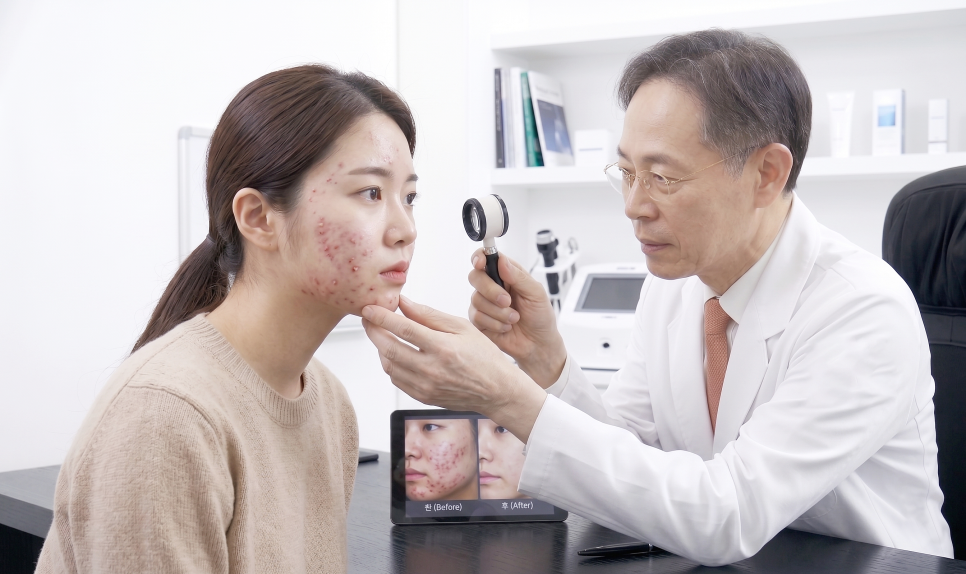
One day, someone sitting in the consultation room was covering their chin with their hand before they even began speaking. They were an office worker in their mid-30s.
They lowered their mask and said these words first:
“ I squeezed it again last night. I thought it would be more noticeable at tomorrow’s meeting if I didn’t.” Then they added something that stayed with me.
“I’ve been doing this for five years. The acne goes away, but the marks just keep increasing.” Their face was scattered with red marks from places they had touched in the past, more than with newly developed acne.
This is also the kind of face I most often encounter while treating patients at a Gangnam Station acne dermatology clinic. Today, as Director Lee Yideuk, I would like to share exactly what I told that person. Please follow along as we look at why the statement “you have to squeeze it for it to heal quickly” is only half true.
When squeezing feels relieving,
why do marks remain?
They asked me:
“After I squeeze it, it definitely seems to go down faster,
so why do I get a mark every time?”
I first explained
what acne is.
Acne begins when sebum
cannot escape from the pores
and becomes mixed with dead skin cells.
When acne-causing bacteria
settle in, the body creates
an inflammatory response
to defend itself.
The redness, swelling, and
throbbing when touched
are all signs of inflammation.
In other words, the visible white
particle is the result,
while the real problem
lies underneath it.
What would happen if you poured no water on a burning spot and simply swept up the ashes?
It might look tidy on the surface,
but the embers would still remain.
The relief you feel after squeezing
is not a sign that the inflammation
has disappeared.
It is closer to the sensation
of compressed pressure being
released temporarily.
Not a stain on wallpaper,
but water damage inside the wall
So I shared this analogy:
If you think of the skin as a wall,
acne is not a stain on the wallpaper.
It is more like water damage
that has seeped inside the wall.
If you scrape the surface away
with a fingernail, the stain may
disappear temporarily,
but the wall itself becomes gouged
and a mark remains.
The force used to squeeze with your hands
is stronger than you might think.
Instead of coming out,
the inflammation may spread
to the side or deeper underneath.
What they had been repeating for five years was not really removing acne.
In fact, it was closer to creating marks.
Among the people who visit a Gangnam Station acne dermatology clinic, many are more distressed by the traces left behind than by the acne itself.
Rather than understanding “you have to squeeze it to heal” as a complete lie, I hope you understand that the outcome can vary greatly depending on who handles which type of acne and how.


The answer I gave that day was “sequence”
The answer I gave them
was not the name of a new device.
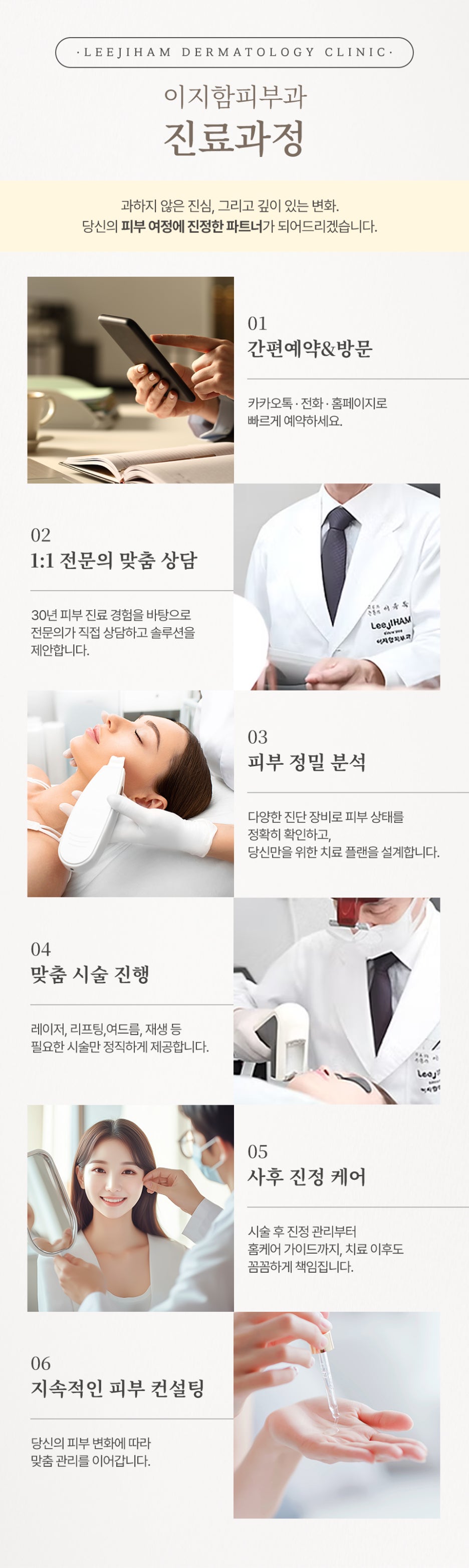
It was about changing the order
of what we do.
First, when the inflammation
is vividly red and active,
do not touch it.
Focus on calming it down.
Second, assess the skin condition
and the type of acne separately.
If sebum production is high
and enlarged pores are also
a concern, we may discuss
a laser such as Artlaser.
If red marks or pigmentation
remain, we work to even out
the skin tone with Dual Toning
or IPL.
If indented scars have already
formed, we also consider approaches
to refine the skin texture,
such as a CO2 laser or
CLO Scar Restoration.
However, as we always explain
at a Gangnam Station acne dermatology clinic,
no device is equally suitable
for every skin type.
During treatment, you may feel
stinging and warmth.
If needed, we can reduce discomfort
with numbing cream.
The skin may temporarily become
redder or appear darker after treatment.
The speed and degree of recovery
vary from person to person.
Marks and scars: These two must be distinguished first
This was the part
that surprised them most.
Many people use “marks” and
“scars” as if they mean the same thing,
but they are actually different.
Red or brown discoloration
is primarily a color issue—
what we call a mark.
By contrast, skin that is indented
or uneven involves a structural issue
and is considered a scar.
Color may gradually fade
over time,
but structure does not easily
fill back in on its own.
That is why
at a Gangnam Station acne dermatology clinic,
we set aside ample time early
in the consultation to distinguish
between the two.
Preventing the skin from becoming
more deeply indented is far more important
than hurriedly erasing the redness
you see right now.
“So what should I do tonight?”
They asked before leaving.
I did not give them
anything elaborate.
Wash your face twice a day
with lukewarm water and gentle motions.
Excessive cleansing can instead
make the skin more sensitive.
Rather than applying several new products
all at once,
it is better to add them one by one
while observing how your skin responds.
Above all, please keep your hands
and fingernails away from your acne.
The thought of “just this one”
creates next month’s mark.
Apply sunscreen consistently.
It can help slow the darkening
of remaining redness.
The skin slowly remembers
the way we treat it every day.
I also suggested spending
slightly less time standing
in front of the mirror.
The longer you look,
the more likely your hand is
to move toward your face.
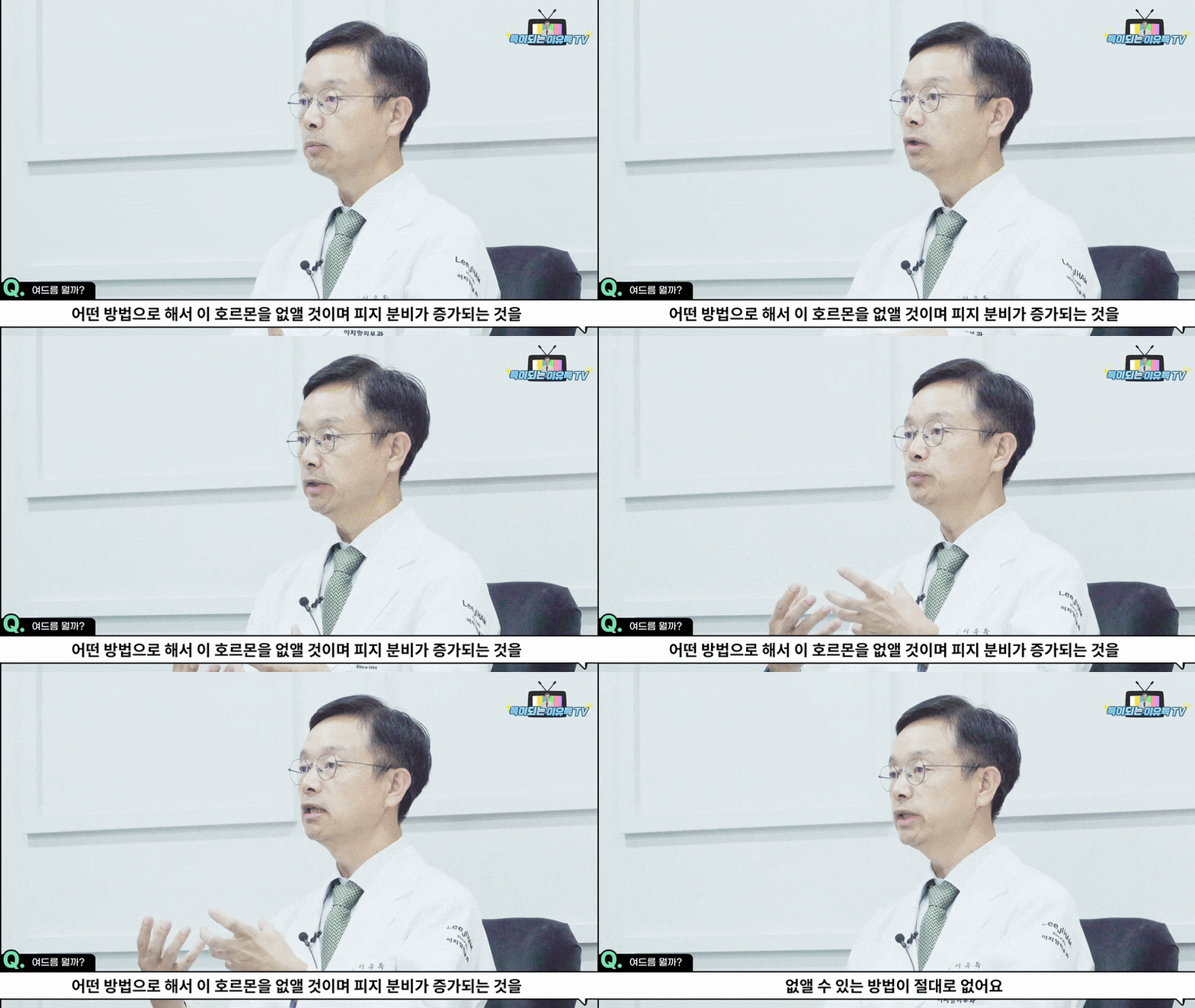
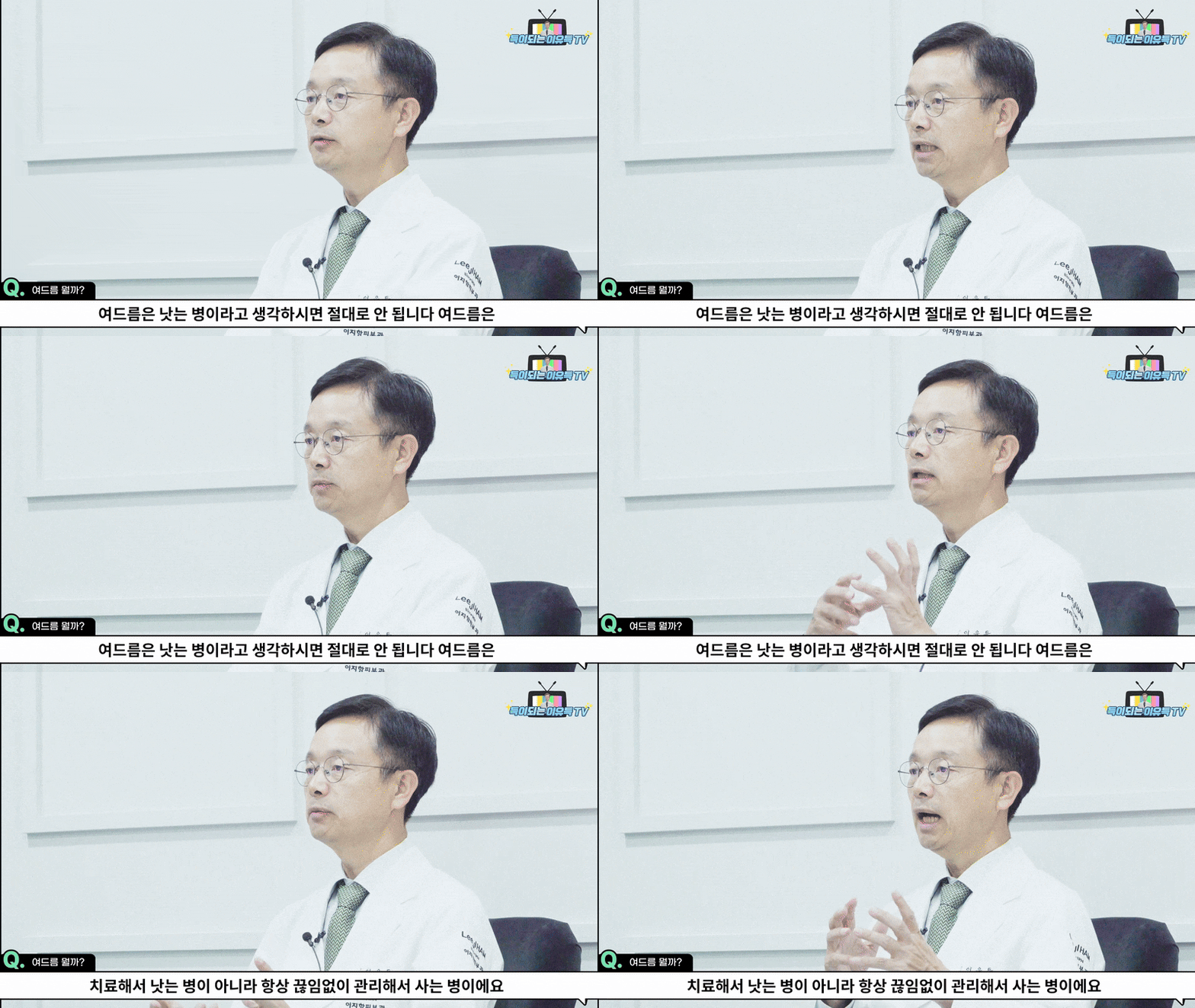
Look at the face you will have in a year,
not just today’s acne
That day, they stood up
with a slightly lighter expression.
I think it was because they realized
that “getting rid of one today”
and “protecting the face you will have
one year from now” are different things.
Acne is a skin condition
in which impatience becomes
one of the biggest obstacles.

Resisting the urge to touch your skin
once tonight may be the first step,
before any treatment.
This is also why we have maintained
the principles of a comfortable,
natural-looking face,
honest consultations, and proven treatments,
rather than excessive change.
As Director Lee Yideuk, treating patients
at a Gangnam Station acne dermatology clinic,
I will continue considering with you
the direction that helps your skin
feel a little more comfortable than it does now.

The director answers your questions directly
Q1. Does squeezing acne
really make it worse?
A. It depends on the situation.
However, forcefully squeezing with your hands
can cause inflammation to spread
into the surrounding tissue,
increasing the likelihood of marks or indentations.
Fingernails are stronger tools
than you might think.
Q2. Why does acne keep appearing
in the same places?
A. Areas with active sebaceous glands
and enlarged pores already have
the conditions that make acne more likely.
Hormonal changes, sleep,
stress, and friction also
play a role.
Q3. How can I distinguish
between a mark and a scar?
A. If only discoloration remains,
it is considered a mark.
If the surface is indented,
it is considered a scar.
Because it is often difficult
to judge by sight alone,
we examine the skin during a consultation
by changing the lighting and viewing angles.
Q4. I already have scars.
Is it too late?
A. There is no need to conclude
that it is too late.
The approach varies depending
on the shape and depth,
and the degree of improvement
varies from person to person.
Q5. Is treatment very painful?
A. You may feel stinging
or warmth.
If you are sensitive to pain,
numbing cream can be used,
so please let us know in advance.
There is no need to endure it.

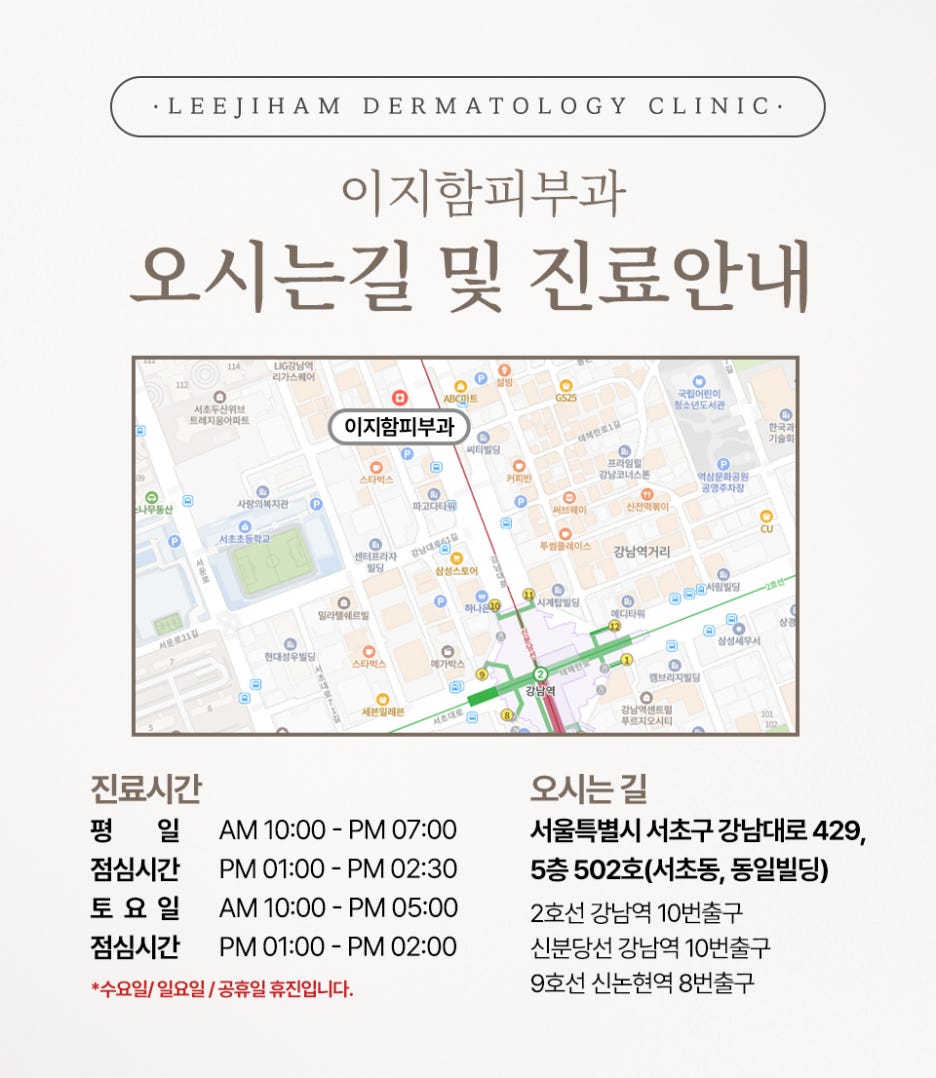
📍 Location
429 Gangnam-daero, Seocho-gu,
Seoul, 5th floor, Suite 502
(Seocho-dong, Dongil Building)
Located near Gangnam Station
and Sinnonhyeon Station.
📞 Phone
02-567-5900
🕘 Consultation Hours
· Monday, Tuesday, Thursday, Friday: 10:00–19:00
· Saturday: 10:00–17:00
· Lunch break: Weekdays, 13:00–14:30
· Closed: Wednesday, Sunday, and public holidays